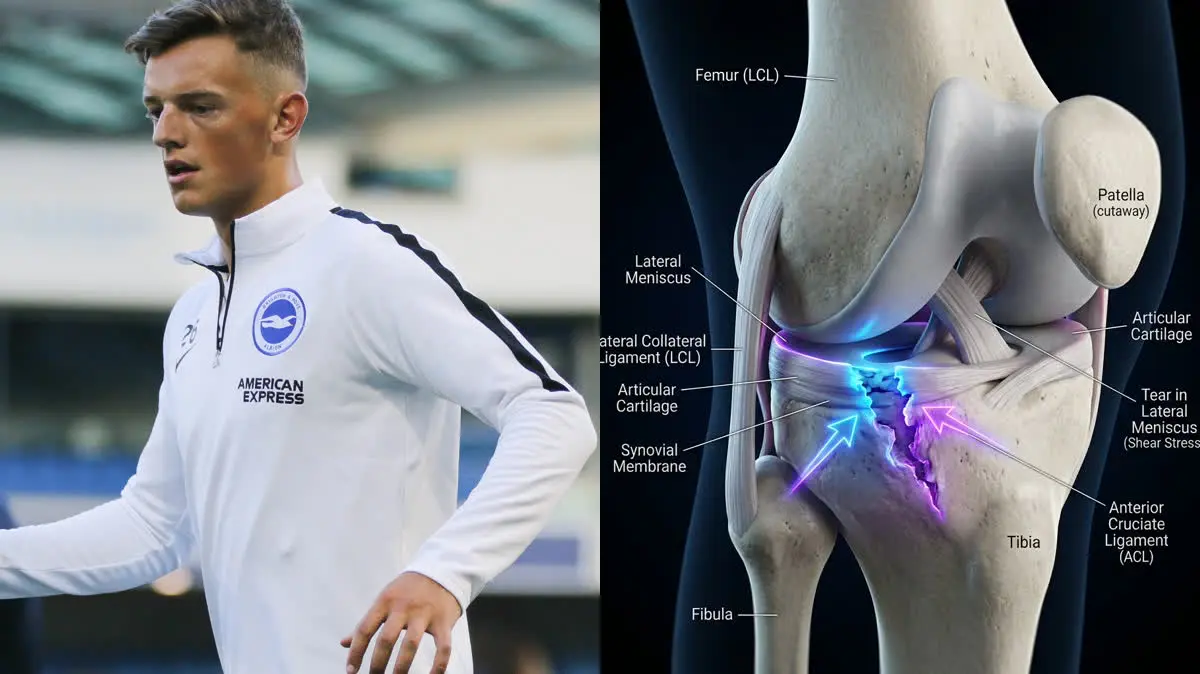
"A lateral meniscus tear is a mechanical threat to a football player's career — cutting, pivoting, and decelerating without a functioning lateral wedge concentrates massive shear forces directly on the femur."
The defensive stability of Arsenal's backline faced a major test with the release of medical updates regarding their key defender. The official news of the severe Ben White injury sent ripples through both the Premier League and sports medicine circles. When an elite athlete suffers a significant knee injury, it challenges their ability to perform high-velocity cuts and pivot drills safely.
The meniscus is a crescent-shaped cartilage disc that sits between the femur and tibia, acting as a crucial shock absorber. During competitive play, the knee must constantly withstand forces that combine bending, twisting, and sudden loading. If these forces exceed the structural capacity of the cartilage, a tear occurs, threatening the long-term health of the joint.
Managing this condition requires a deep understanding of lateral meniscus shear and its impact on performance. The recovery process is highly delicate, demanding precise rehabilitation to protect the joint from early wear. Let us analyze the biomechanics of meniscus injuries and map out the clinical protocols needed to restore athletic mobility.
The Load-Bearing Wedge: Meniscus Function under Rotation
The knee joint contains two menisci: the medial wedge on the inside and the lateral wedge on the outside. While the medial meniscus is relatively fixed, the lateral meniscus is highly mobile, sliding forward and backward during knee movement. This mobility allows the lateral cartilage to distribute load across the outer compartment of the knee.
During sports activities, the lateral meniscus absorbs a significant portion of the total joint load. However, when the knee undergoes simultaneous flexion and rotation, the cartilage is subjected to extreme shear stress. This twisting motion slides the round end of the femur across the tibia, pinching and tearing the meniscus fibers.
If the injury involves the outer edge, which has a good blood supply, it can sometimes heal with targeted therapy. However, tears in the inner, avascular zone cannot heal on their own, often requiring surgery. In either case, the loss of meniscus tissue leads to localized knee cartilage damage that must be managed carefully.
- The lateral meniscus absorbs up to 70% of the lateral compartment load, shielding the bone from wear.
- Combined knee flexion and rotational movements increase the risk of meniscus tears by 3.5 times under load.
- Following a partial meniscus removal, the localized contact stress on the cartilage spikes by up to 230%.
- Up to 40% of athletes show signs of early joint wear within 5 years of a meniscus tear if joint alignment is not restored.
Why Ice and Rest Fail to Repair Knee Cartilage
The traditional treatment for a swollen knee is rest, compression, and ice. While these methods help manage acute swelling, they do not restore joint function or repair the torn cartilage. In fact, prolonged inactivity leads to muscle wasting in the quadriceps, which actually increases the load on the knee when movement resumes.
My clinical view is that relying solely on rest and ice to manage a meniscus tear is a serious mistake. Cartilage relies on movement and pressure changes to absorb nutrients from the joint fluid. Without active, controlled compression, the cartilage remains starved of nutrients, delaying recovery and weakening the joint.
Instead of complete rest, we must implement progressive joint loading. Moving the knee through pain-free ranges under light load stimulates the flow of joint fluid. This active approach preserves cartilage health and maintains the strength of the surrounding muscles.
"In football, a defender must react instantly, placing high twisting loads on the knee. When analyzing Ben White's knee mechanics, we must look beyond the joint itself to the hip and ankle. If hip control is weak, the knee will cave inward, putting extreme shear forces on the lateral meniscus. Our rehabilitation program focuses on building hip stability and training the hamstrings to control knee rotation, shielding the lateral cartilage from further shear."
Reclaiming Knee Stability: Meniscal Rehab Protocols
A successful return to sport requires structured meniscal rehabilitation protocols. The primary objective is to restore the knee's alignment, ensuring that force is distributed evenly across the joint. This requires strengthening the muscles that control knee rotation and absorption.
Rehab begins with non-weight-bearing exercises to restore range of motion and reduce swelling. We then progress to closed-chain exercises like leg presses and squats, keeping the knees aligned over the toes. This alignment is critical to avoid pinching the healing meniscus fibers.
Finally, we introduce dynamic drills and agility training. This phase teaches the athlete to cut and pivot while maintaining stable hip and knee alignment. Implementing this progression is the key to protecting the knee and ensuring long-term athletic success.
Step-by-Step Meniscus Rehab Protocol
Perform this progressive stabilization sequence under clinical supervision. Stop immediately if you experience clicking, catching, or sudden swelling in the knee joint:
-
1Phase 1: Isometric Quadriceps Sets (3 sets of 10 repetitions, 10-second holds) Sit with your leg straight and place a small rolled towel under your knee. Contract your thigh muscle, pressing the back of your knee down into the towel, and hold for 10 seconds before relaxing. This basic exercise maintains thigh muscle activation and helps clear joint fluid without putting stress on the meniscus.
-
2Phase 2: Closed-Chain Leg Press with Neutral Alignment (3 sets of 12 repetitions) Sit in a leg press machine, placing your feet hip-width apart. Slowly lower the weight plate until your knees are bent to 60 degrees, then press back up, keeping your knees aligned over your second toes. This controlled movement allows us to load the joint while avoiding the shear forces of deep squats.
-
3Phase 3: Single-Leg Balance with Ankle Twists (3 sets of 8 repetitions per side) Stand on your injured leg with your knee slightly bent. Slowly rotate your torso and hips from left to right, forcing the knee and ankle to stabilize against the rotational forces. This exercise trains the hip and foot muscles to control knee rotation, reducing football knee biomechanics risks during play.
Securing Long-Term Knee Integrity
Long-term joint health requires a strong, balanced leg structure. If you are managing shin pain alongside knee stiffness, check out our guide on shin splints rehabilitation and tibial mechanics. If you want to improve your hamstring strength, read our analysis of hamstring rehabilitation for high-velocity running. To learn more about foot and ankle stability, view our guide on plantar-fasciitis and posterior chain intrinsics.
Your meniscus is a vital shock absorber for your knee. Protect it by keeping your leg aligned, building strong stabilizing muscles, and managing joint forces.
Are you training the muscles around your knee to act as active shock absorbers, or are you hoping a simple knee brace will protect your cartilage from twisting forces?
Featured image attribution: Left portrait "Ben White 2018" by James Boyes, licensed under CC BY 2.0. Right graphic is a clinical 3D rendering of knee joint anatomy showing a tear in the lateral meniscus under shear stress. Composited and modified for AyurPhysio.
Dr. Dhanushika Dilshani
Expert Ayurvedic Wellness Doctor. Specialized in modern holistic wellness, optimizing dermal resilience, cosmetic radiance, and systematic diagnosis driven by traditional and evidence-based medical logic.
Medical Disclaimer
The information provided by AyurPhysio is for general educational and informational purposes only. It is not intended as a substitute for professional medical advice, diagnosis, or treatment. Always seek the advice of your physician or other qualified health providers with any questions you may have regarding a medical condition. Never disregard professional medical advice or delay in seeking it because of something you have read on this website.
Trending Guides
George Washington's Fatal Bloodletting: An Ayurvedic Reconstruction of Rakta Dhatu Depletion and Ojas Collapse
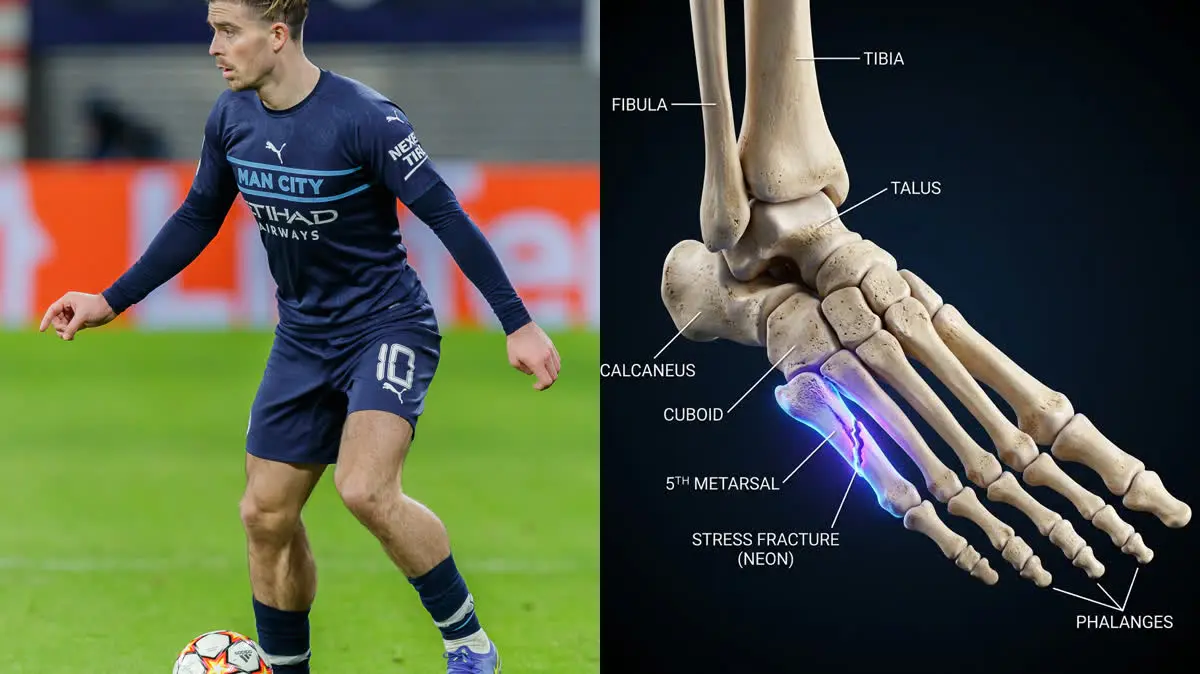
8 min readJack Grealish's stress fracture of the foot: Soccer Biomechanics, Fifth Metatarsal Load, and Surgical Rehab
8 min readBen White's Severe Knee Injury: A Biomechanical Analysis of Lateral Meniscus Shear and Joint Longevity
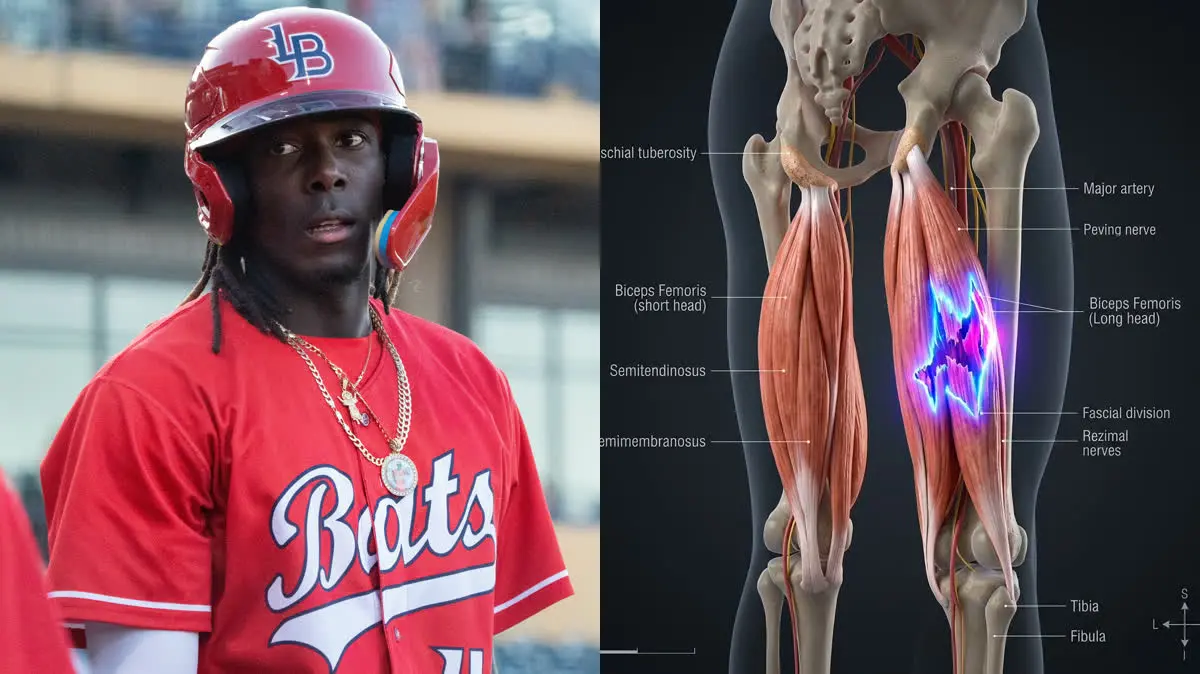
8 min readElly De La Cruz's Hamstring Strain: The Biomechanics of Sprint Deceleration
8 min readTotal Knee Replacement (TKR): Post-Op Protocols for Restoring Extension
9 min readWeekly Wellness
Don't miss the next guide
Join 5,000+ subscribers getting holistic health tips every Tuesday.
Related Healing Guides
View All Guides →
George Washington's Fatal Bloodletting: An Ayurvedic Reconstruction of Rakta Dhatu Depletion and Ojas Collapse
Jack Grealish's stress fracture of the foot: Soccer Biomechanics, Fifth Metatarsal Load, and Surgical Rehab