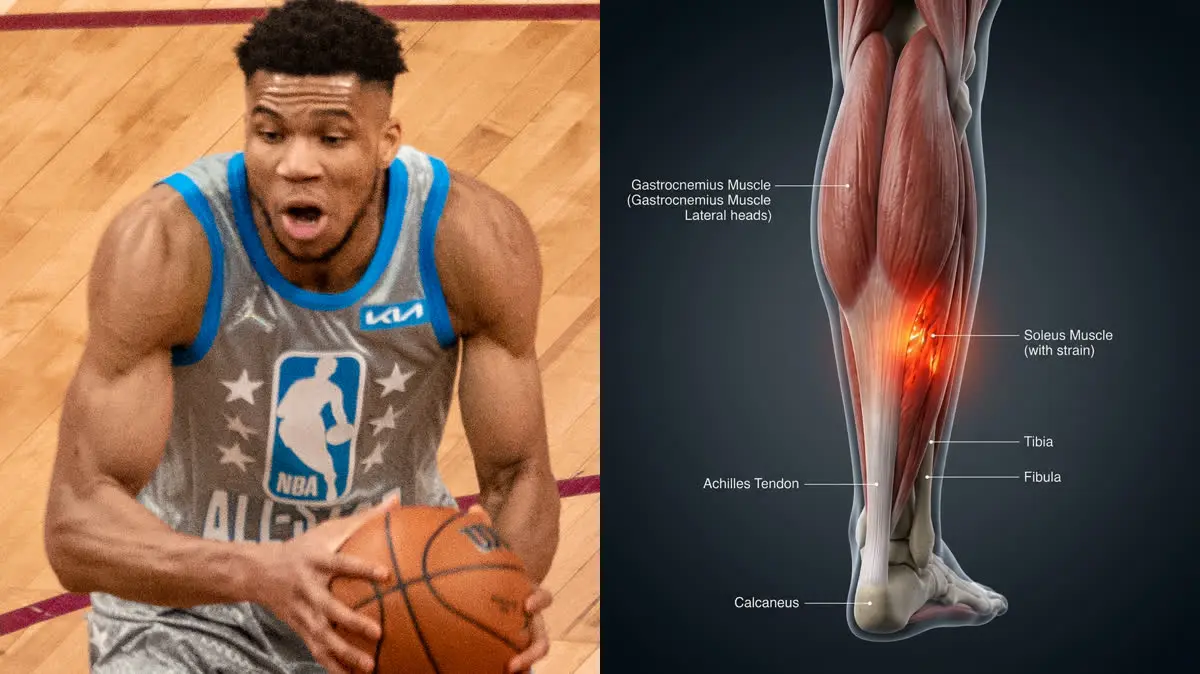
“The soleus muscle is the deep powerhouse of the calf, carrying up to eight times body weight during explosive drives. Because it is hidden beneath the gastrocnemius, injuries are frequently misdiagnosed as simple tightness, leading to high recurrence rates when players return to play.”
In April 2024, the Milwaukee Bucks suffered a devastating blow just before the NBA playoffs when their superstar forward, Giannis Antetokounmpo, limped off the court with a non-contact calf injury. Initial fears of an Achilles tendon rupture were quickly dispelled, with diagnostics confirming a soleus strain. Although not as catastrophic as an Achilles tear, a soleus injury presents a complex rehabilitation challenge, particularly for an elite athlete whose playstyle relies on explosive deceleration, long strides, and sudden changes of direction.
The soleus muscle is the workhorse of the lower leg. While the superficial gastrocnemius gets the glory for high-flying dunks, the deep soleus is the true driver of acceleration and vertical power. When this muscle is strained, it disrupts the entire kinetic chain, requiring meticulous biomechanical correction and targeted tissue healing. In this clinical guide, we will analyze the unique anatomy and biomechanics of the soleus, contrast it with the gastrocnemius, explore Ayurvedic strategies to accelerate muscle tissue repair, and outline a progressive 3-step rehabilitation protocol to ensure a safe return to competitive play.
Pathophysiology of the Soleus: The Deep Powerhouse
To understand why soleus strains are so limiting, we must look at its anatomical structure. The calf complex (triceps surae) is comprised of the gastrocnemius and the soleus, which merge to form the Achilles tendon. However, their functional roles are vastly different:
- Biarticular vs. Uniarticular: The gastrocnemius is a biarticular muscle, meaning it crosses both the knee and ankle joints. It is highly active during movements with an extended knee, such as sprinting. The soleus is a uniarticular muscle, crossing only the ankle joint. Because it does not cross the knee, its loading increases dramatically as the knee flexes.
- Fiber Composition: The gastrocnemius consists primarily of fast-twitch glycolytic fibers, built for high-velocity, explosive contractions. The soleus is comprised of up to 80% slow-twitch oxidative fibers, designed for posture, endurance, and continuous low-to-moderate force production.
- Venous Return: The soleus contains a massive network of blood vessels known as the soleal sinuses. This structure acts as a peripheral muscle pump, pushing deoxygenated blood back up to the heart. While this rich blood supply aids healing, a tear in the muscle can result in significant localized pooling, deep swelling, and stiffness.
During basketball movements, such as a low defensive stance, driving past a defender, or landing from a rebound, the knee is deeply flexed. In this position, the gastrocnemius is structurally slackened, forcing the soleus to absorb the vast majority of the eccentric ground reaction forces. If the muscle-tendon unit is fatigued or lacks sufficient eccentric capacity, the micro-fibers tear, most commonly at the medial myotendinous junction.
Clinical data from professional sports groups reveals distinct patterns for soleus trauma:
- 1Load Distribution ShareWhen the knee is bent at 90 degrees, the soleus bears over 70% of total plantarflexion force.
- 2Force MultiplicationDuring a hard deceleration or drop-step, the soleus handles forces equivalent to 6.5 to 8 times body weight.
- 3Recurrence Risk RateDue to premature return-to-sport protocols, soleus strains exhibit a 15% to 20% recurrence rate.
- 4Optimal Seated LoadingIsolating the soleus requires a minimum of 30 degrees of knee flexion to suppress gastrocnemius recruitment.
The 3-Step Soleus Rehabilitation Protocol
Rehabilitating a soleus strain requires a progressive loading program that gradually increases the muscle's tolerance to high-velocity eccentric forces under varying degrees of knee flexion.
Step 1: Early Isometric Loading & Unloading
In the early stages of recovery, complete rest must be avoided to prevent muscle atrophy and disorganized scar tissue formation. Once the patient can tolerate weight-bearing, initiate seated isometric calf raises. Sit in a chair with your knees bent at 90 degrees, place a weight on your thighs, and lift your heels off the ground. Hold the contraction at the top for 30 to 45 seconds. Perform 4 sets of 5 repetitions daily. This isolated, static contraction engages the soleus, promotes healthy tendon remodeling, and stimulates the venous pump to clear swelling without placing shearing forces on the tear.
Step 2: Progressive Concentric-Eccentric Seated Loading
As pain subsides, transition from static holds to full range-of-motion seated calf raises. Sit with knees bent at 90 degrees on a calf raise machine or with a barbell across your knees. Slowly lower your heels over the edge of a step for a 3-second eccentric count, hold the stretch at the bottom for 1 second, and then raise your heels dynamically, squeezing at the top. Perform 3 sets of 12 to 15 repetitions, 3 times weekly. Gradually increase the load to build muscle thickness and improve eccentric tissue tolerance.
Step 3: Bent-Knee Plyometrics & Kinetic Chain Power
To prepare for the demands of basketball, the soleus must be trained to absorb and release energy rapidly. Begin standing, bent-knee calf hops: stand on one leg with a slight bend in your knee (approx. 20-30 degrees) and perform small, rapid vertical hops, landing softly on the ball of your foot. The goal is to minimize ground contact time, forcing the soleus and Achilles tendon to act as a dynamic spring. Perform 3 sets of 20 seconds, twice weekly. Progress to lateral jumping drills to build dynamic stability for multi-directional driving.
Featured image attribution: "Giannis Antetokounmpo" by Erik Drost, licensed under CC BY 2.0. Modified by cropping and compositing.
Dr. Dhanushika Dilshani
Expert Ayurvedic Wellness Doctor. Specialized in modern holistic wellness, optimizing dermal resilience, cosmetic radiance, and systematic diagnosis driven by traditional and evidence-based medical logic.
Medical Disclaimer
The information provided by AyurPhysio is for general educational and informational purposes only. It is not intended as a substitute for professional medical advice, diagnosis, or treatment. Always seek the advice of your physician or other qualified health providers with any questions you may have regarding a medical condition. Never disregard professional medical advice or delay in seeking it because of something you have read on this website.
Trending Guides
George Washington's Fatal Bloodletting: An Ayurvedic Reconstruction of Rakta Dhatu Depletion and Ojas Collapse
8 min readJack Grealish's stress fracture of the foot: Soccer Biomechanics, Fifth Metatarsal Load, and Surgical Rehab
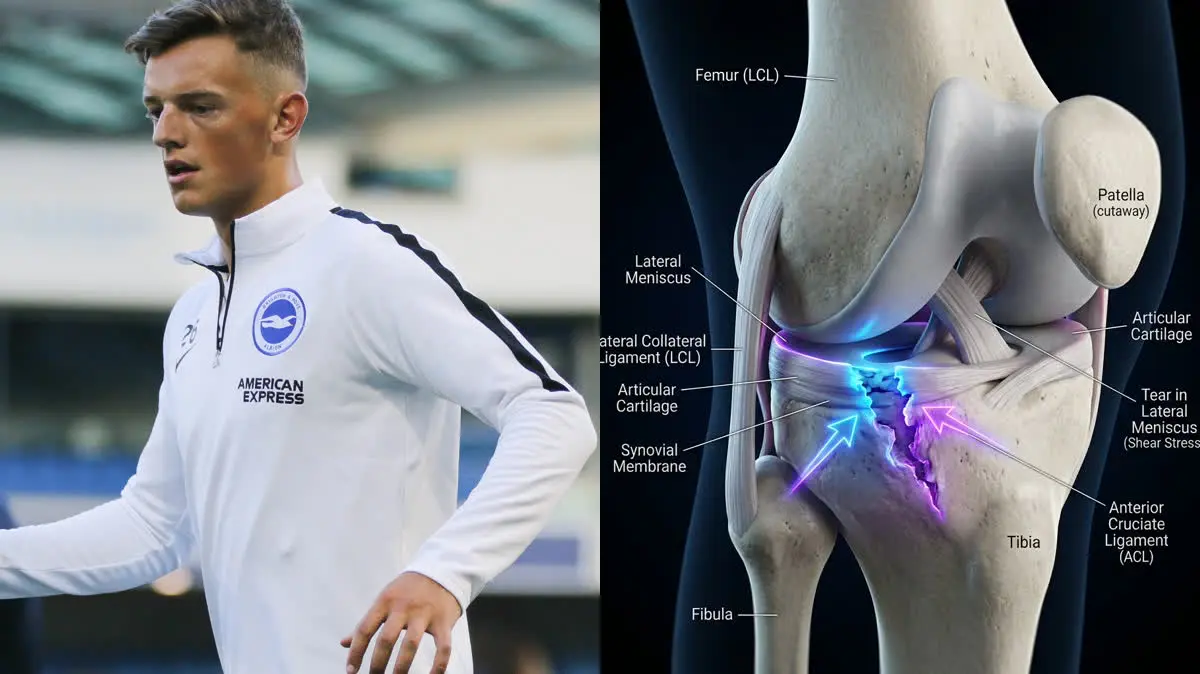
8 min readBen White's Severe Knee Injury: A Biomechanical Analysis of Lateral Meniscus Shear and Joint Longevity
8 min readElly De La Cruz's Hamstring Strain: The Biomechanics of Sprint Deceleration
8 min readTotal Knee Replacement (TKR): Post-Op Protocols for Restoring Extension
9 min readWeekly Wellness
Don't miss the next guide
Join 5,000+ subscribers getting holistic health tips every Tuesday.
Related Healing Guides
View All Guides →
George Washington's Fatal Bloodletting: An Ayurvedic Reconstruction of Rakta Dhatu Depletion and Ojas Collapse
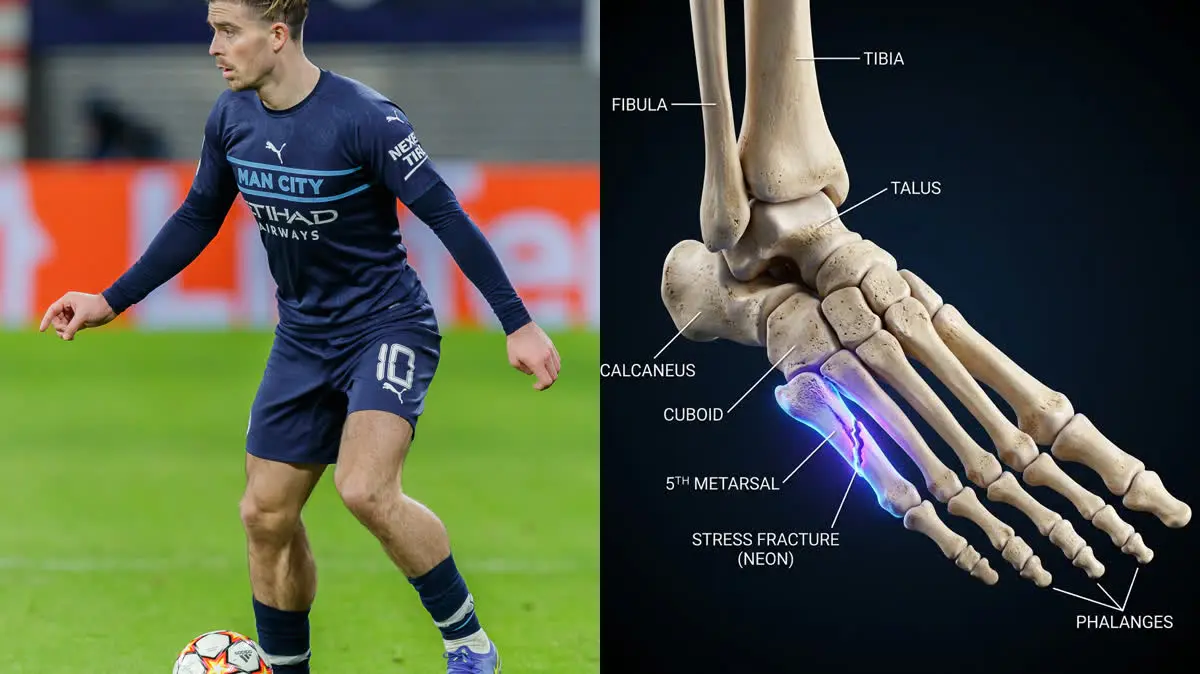
Jack Grealish's stress fracture of the foot: Soccer Biomechanics, Fifth Metatarsal Load, and Surgical Rehab