
“Vata is the king of the Doshas. It is the wind that moves the clouds, the electricity that sparks the thought, and the vital force behind every breath. When it storms, the entire system trembles.”
If your mind feels like a swarm of hyperactive bees caught in a wind tunnel, or if your joints reliably crack and pop like dry twigs every time you stand up, you are intimately familiar with the symptoms of Vata excess. In our fast-paced modern world, characterized by constant digital stimulation, erratic schedules, and cold, raw food trends, Vata imbalance is the quiet driver behind a vast majority of chronic health complaints.
According to traditional Ayurvedic medicine, Vata governs the principle of movement within our bodies. It controls the nervous system, the heart's rhythm, the elimination of waste, and the lightning-fast transmission of impulses through the brain. When Vata is balanced, we are creative, energetic, and adaptable. When it overflows its natural pathways, it triggers a cascade of dry, cold, and hyperactive symptoms—manifesting as anxiety, insomnia, chronic constipation, and cracking joints.
To reclaim peace and structural comfort, you must learn the art of grounding this erratic element and understanding how to calm vata dosha at its roots.
The 80 Disorders of Wind: Ayurvedic Pathology Explained
In Western medicine, anxiety, digestive spasms, and joint arthritis are treated as completely unrelated conditions belonging to separate specialists. In Ayurveda, we see them as various branches of a single root: a disturbed Vata Dosha.
The Primacy of Vata: Eighty Classical Pathologies
The ancient text Charaka Samhita documents that while Pitta is responsible for 40 distinct inflammatory disorders and Kapha for 20 congestive disorders, Vata alone drives 80 distinct types of nanatmaja (constitutive) disorders—more than both other Doshas combined! This is because Vata is the only moving force; Pitta and Kapha are passive ("pangu") and must be carried by Vata's wind to trigger disease.
Because Vata is composed of the Air and Space elements, its core qualities are dry, cold, light, rough, and mobile. When you expose your mind and body to these identical qualities—through cold weather, dry crackers, excessive travel, or hyperactive multi-tasking—your native Vata increases exponentially. This cold dryness physically dehydrates the joints (leading to friction) and over-stimulates your nervous system's electrical channels, leading to sensory exhaustion.
An overactive Prana Vayu (the sub-dosha of the head) triggers erratic electrical signals in the brain, manifesting as circular thoughts, acute worry, and difficulty falling asleep at night. Grounding this axis is key to ayurvedic treatment for anxiety.
When dry Vata settles in the bony spaces (Asthi Dhatu), it absorbs the natural lubricating synovial fluids. This triggers joint clicking, bone-on-bone friction, and chronic morning stiffness, which can be resolved using targeted herbal remedies for joint stiffness.
Why Your Morning Iced Latte is Biological Violence
If you suffer from high anxiety and morning joint stiffness, your first instinct might be to grab a cold, iced matcha or an oat milk latte to jump-start your sluggish energy.
My strong, decisive opinion is that consuming cold, caffeinated, and raw beverages on an empty stomach is a form of biological violence to an already hyper-excited Vata system. Caffeine is highly drying and hyper-stimulates the adrenal glands, mimicking the "flight-or-fight" response. When combined with ice, it instantly freezes your digestive fire (Agni), causing immediate gas and bloating while amplifying joint stiffness.
To ground Vata, you must replace these cold stimulants with warm, spiced, and naturally sweet alternatives—such as warm ginger-cardamom tea or hot golden milk with a teaspoon of pure ghee.
👤 Patient Spotlight: Priya's Restoration
The Patient: Priya, a 34-year-old freelance copywriter, presented with severe sleep-onset insomnia, chronic digestive bloating, and dry, painful clicking in both knees.
The Mistake: Priya skipped breakfast, drank two iced Americanos on an empty stomach, worked late under artificial lights, and ate raw kale salads for dinner to stay healthy.
The Solution: We immediately stopped the raw food and cold drinks, established a strict vata balancing dinacharya (eating warm, cooked kitchari meals, sleeping by 10:00 PM), and guided her to perform a warm sesame oil self-massage daily.
The Outcome: Within 10 days, Priya's bloating resolved completely, she fell asleep within 15 minutes of turning off the lights, and her knee joint clicking reduced by 80% as her tissues rehydrated.
Three Pillars of a Vata-Balancing Daily Routine
To calm the winds of Vata and restore biological stability, you must establish a grounding vata balancing dinacharya using these three traditional interventions:
- Daily Warm Sesame Self-Massage (Abhyanga): Warm a quarter cup of organic, unrefined sesame oil. Before bathing, massage it thoroughly into your skin from head to toe, focusing on your scalp, ears, and the soles of your feet. Let it sit for 15 minutes before rinsing with warm water. This is how to perform self-abhyanga correctly; the heavy, warm, and highly penetrating oil absorbs directly into the nervous system, instantly grounding erratic Vata.
- The Sweet, Sour, and Salty Spiced Diet: Avoid dry crackers, raw salads, and cold foods. Prioritize warm, moist, cooked dishes like oatmeal, spiced stews, and kitchari. Cook with Vata-calming spices like ginger, cumin, cardamom, and a pinch of hing (asafoetida). These warm elements rehydrate your colon—the primary seat of Vata—eliminating chronic bloating.
- Consistent Solar Chronobiology: Vata thrives on rhythm because it is naturally erratic. Wake up before 6:00 AM, eat your meals at the exact same times every day, and turn off all screens by 9:00 PM to sleep by 10:00 PM. Establishing a rigid, predictable schedule acts like an anchor, calming the overactive nervous system passively.
Restore Your Inner Calm
Ultimately, healing Vata is not about fighting your active nature—it is about nurturing it with warmth, oil, and consistency. By replacing cold, dry habits with warm, grounding rituals, you can soothe your overactive nerves, lubricate your stiff joints, and live with creative, joyful vitality.
Dr. Dhanushika Dilshani
Expert Ayurvedic Wellness Doctor. Specialized in modern holistic wellness, optimizing dermal resilience, cosmetic radiance, and systematic diagnosis driven by traditional and evidence-based medical logic.
Medical Disclaimer
The information provided by AyurPhysio is for general educational and informational purposes only. It is not intended as a substitute for professional medical advice, diagnosis, or treatment. Always seek the advice of your physician or other qualified health providers with any questions you may have regarding a medical condition. Never disregard professional medical advice or delay in seeking it because of something you have read on this website.
Related Healing Guides
View All Guides →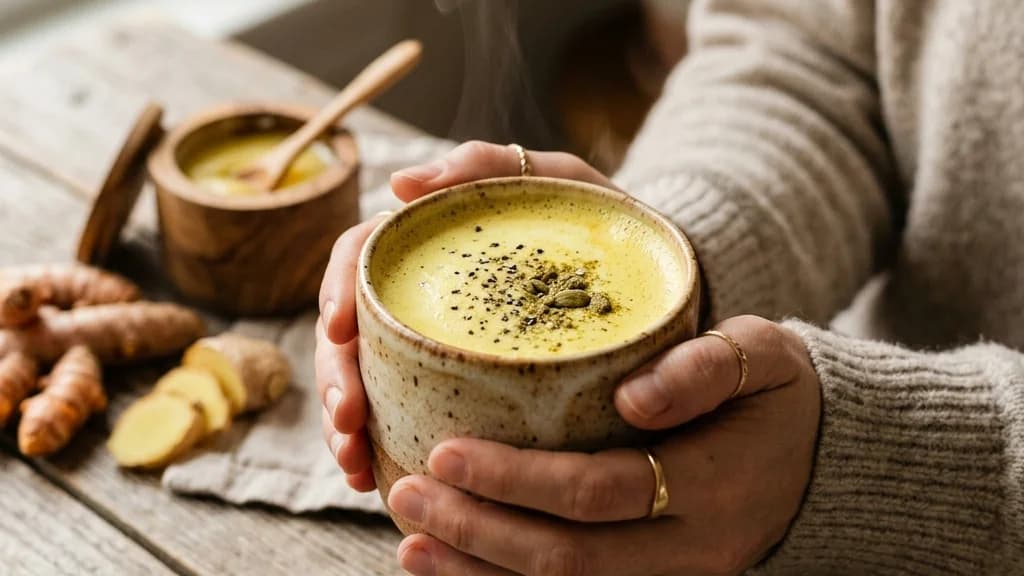
Turmeric & Golden Milk: The Bioactive Anti-Inflammatory Ayurvedic Elixir
Osteoporosis: Asthi Dhatu Nourishing Ghee and Bone-Loading Physical Therapy