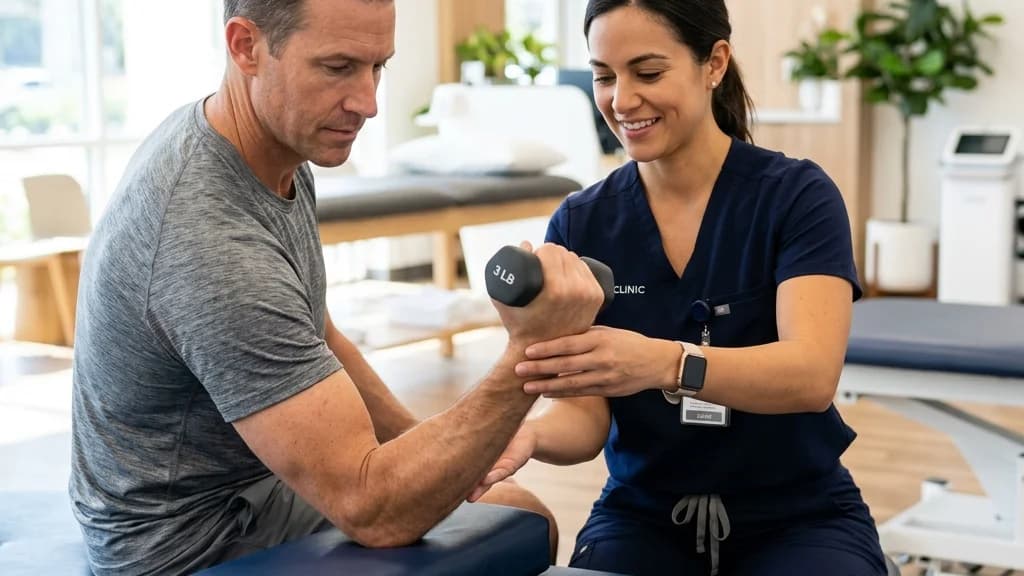
ACL Tear Rehabilitation: Post-Surgery Milestone Protocols (Weeks 1-24)
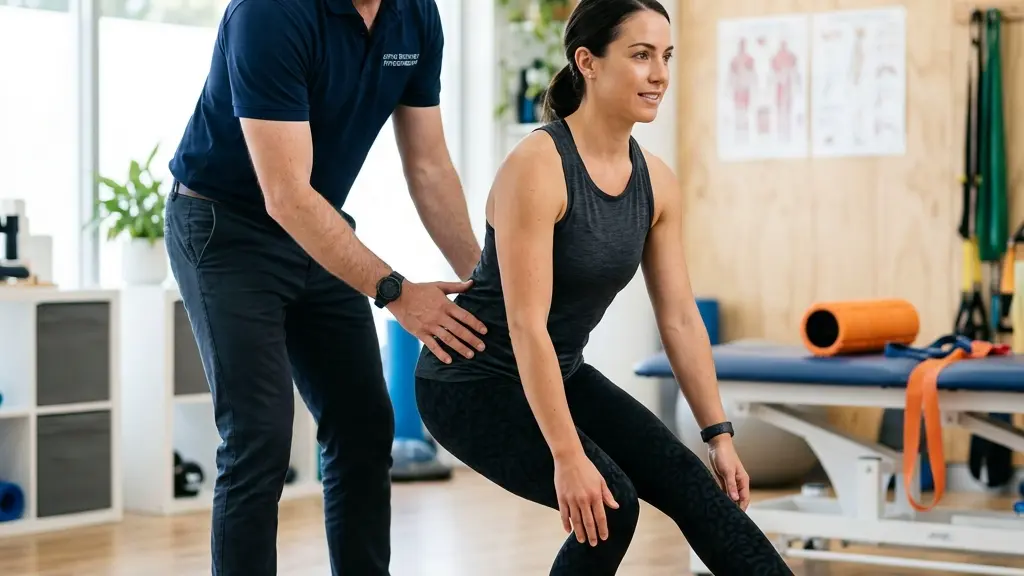
"ACL rehabilitation is not about racing to return to the field. It is a biological process of ligamentization—teaching a reconstructed tendon how to become a strong, responsive knee ligament."
An Anterior Cruciate Ligament (ACL) tear is one of the most physically and emotionally challenging injuries an athlete can face. Whether your goal is to return to professional pivoting sports or to simply walk down stairs without your knee giving way, post-operative rehabilitation is the single most critical factor in your long-term success.
Surgical reconstruction only provides a new structural "rope" in your knee. Re-educating your nervous system, restoring quad bulk, and reclaiming joint stability is the work of progressive, science-backed physical therapy.
The 24-Week Post-Surgery Rehabilitation Roadmap
Recovery is measured in biological phases, not merely in weeks. Here is your clinical milestone-based post-op protocol:
-
1Phase 1: Protection & Extension (Weeks 1-4) The absolute priority in the first 28 days is restoring full passive terminal knee extension (0 degrees) and managing local joint effusion. Work on passive knee hanging, ankle pumps, and quad sets to prevent muscle atrophy. If you lose terminal extension now, you are at risk of a permanent "limping gait."
-
2Phase 2: Closed Kinetic Chain Loading (Weeks 5-8) Once swelling is controlled and you can walk without a limp, focus on closed kinetic chain exercises (feet in contact with the ground). Initiate bilateral leg presses, bodyweight squats, and terminal knee extensions using resistance bands to rebuild quad and glute bulk safely.
-
3Phase 3: Single-Leg Strength & Balance (Weeks 9-12) This is the core-strengthening phase. Focus heavily on single-leg squatting, step-ups, single-leg deadlifts, and balance board training. Re-establishing knee proprioception (your brain's awareness of your knee's position) is critical to prevent future tear recurrences.
-
4Phase 4: Plyometrics & Introduction to Running (Weeks 13-16) When your quadriceps strength on the injured leg is at least 80% of your uninjured side, begin a structured, straight-line jogging program. Introduce light plyometric jumps, focusing heavily on landing mechanics (quiet landings, knees aligned with toes).
-
5Phase 5: Pivoting & Return to Sport Prep (Weeks 17-24) Introduce cutting drills, shuttle runs, and sport-specific training. Your physical therapist will conduct a comprehensive "Return to Play" assessment, verifying hamstring-to-quad ratios, single-leg hop test distances, and psychological readiness before clearing you for play.
Between Weeks 6 and 12 post-surgery, your tendon graft is at its weakest. During this phase, the graft undergoes cellular necrosis and remodeling—it is structurally weaker than it was on Day 1. Many athletes feel great during this time and attempt to jump or twist prematurely, leading to high failure rates. Avoid open-chain knee extensions (like leg extension machines) during this sensitive biological window.
Why Your Brain Needs Rehab, Too
An ACL tear does more than tear physical tissue—it breaks the neural pathways connecting your knee to your brain. Millions of mechanoreceptors inside your native ligament are lost, resulting in decreased reaction times and altered movement patterns. That is why physical therapy is not just about muscle building—it is neurological training. By challenging your knee with eyes-closed balance drills, perturbations, and reactive training, we teach your brain how to protect your knee automatically.
Do not rely on time alone to return to play. Studies show that for every month you delay return to sport up to 9 months, your re-injury risk drops by 51%. Ensure you achieve at least a 90% Limb Symmetry Index (LSI) on quad strength and single-leg hop tests before competing.
Reclaiming Your Athletic Power
A successful ACL recovery requires patience, hard work, and a meticulous, step-by-step approach. By respecting the biology of your healing graft and remaining disciplined with your daily home exercise program, you can return to your favorite sports stronger, more stable, and more resilient than ever before.
Irushi Abeywardhana
Senior Physiotherapist & Founder of Physio Pulse. Senior Clinical Physiotherapist passionate about blending advanced movement science with functional resilience.
Medical Disclaimer
The information provided by AyurPhysio is for general educational and informational purposes only. It is not intended as a substitute for professional medical advice, diagnosis, or treatment. Always seek the advice of your physician or other qualified health providers with any questions you may have regarding a medical condition. Never disregard professional medical advice or delay in seeking it because of something you have read on this website.
Related Healing Guides
View All Guides →
Spinal Stenosis: Flexion-Based Rehab Protocols for Pain-Free Walking
Pelvic Organ Prolapse: Pelvic Floor Stabilization and Safe Lift Mechanics