Pelvic Organ Prolapse: Pelvic Floor Stabilization and Safe Lift Mechanics
"Managing pelvic floor pressure without coordinating your breath is like squeezing a sealed tube of toothpaste in the middle. The pressure has nowhere to go but to push down against the weakest point at the bottom."
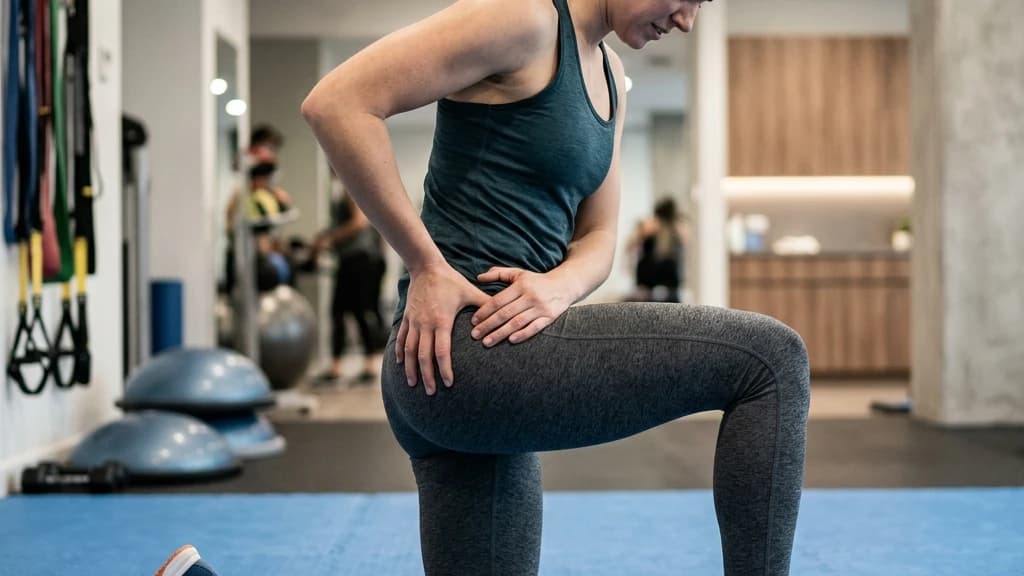
If you feel a constant, heavy sensation of pressure or dragging in your pelvis, or if you live in fear that lifting your toddler or grocery bags will worsen your bladder descent, you are not alone. Pelvic organ prolapse (POP)—the downward displacement of the bladder, uterus, or bowel—is a remarkably common structural issue that affects many women.
The standard medical advice is often highly limiting: patients are told to stop lifting anything over 10 pounds and to do hundreds of Kegels a day. But telling a mother of young children to never lift her child is like telling a pilot to fly a plane without touching the controls; it is a nice theory, but completely impossible in the real world.
To achieve lasting non surgical prolapse rehabilitation, we must move beyond fear-based avoidance. The pelvic floor is not a passive hammock; it is a dynamic muscle group designed to manage pressure. By mastering safe lifting mechanics prolapse protocols and coordinating your breath, you can lift confidently and protect your pelvic organs.
The Pressure Canister: How Pelvic Loading Works
The core of your body acts like a pressurized canister. The top of the canister is your diaphragm, the sides are your abdominal muscles, and the bottom is your pelvic floor. When you inhale, your diaphragm moves down, pushing your abdominal organs downward and causing your pelvic floor to relax and stretch.
When you lift an object, hold your breath, and strain (a movement known as the Valsalva maneuver), you create a massive spike in intra abdominal pressure pelvic floor load. Since the abdominal muscles are braced, that pressure has only one escape route: downward against the pelvic floor.
If the connective tissues supporting your organs are already stretched, this repetitive downward pressure worsens the prolapse. Rebuilding stability requires teaching the pelvic floor to contract and lift in synchronization with your breathing, ensuring the pressure canister is managed safely.
My strong clinical opinion is that performing thousands of isolated Kegels is a highly ineffective way to manage pelvic organ prolapse. Kegels are often done incorrectly—many women squeeze while holding their breath or pushing down, which actively worsens the prolapse.
Furthermore, the pelvic floor does not work in isolation. It is designed to work in synergy with your breathing, your deep transverse abdominis, and your glutes. If you only strengthen the pelvic floor without training safe lifting mechanics, you will continue to overload your support structures the moment you lift a heavy object. Squeezing is not enough; we must train coordination.
Safe Lift Mechanics: Exhale on Exertion
The single most important rule for lifting with prolapse is to coordinate the movement with your breath. We call this the "exhale on exertion" technique.
By exhaling as you lift, you allow the diaphragm to rise, which naturally reduces the pressure inside your abdomen. Simultaneously, the exhalation triggers a reflex lift in the pelvic floor, providing active muscular support just as the load is applied.
Pay close attention to how you lift or stand. If you catch yourself holding your breath and pushing down into your pelvis to generate power, stop immediately.
This "bearing down" habit is the primary driver of prolapse progression. Always blow out through your mouth like you are blowing through a straw during the hardest part of any movement.
Three Exercises for Pelvic Floor Stabilization
Incorporate these three functional pelvic floor muscle stabilization drill sequences into your rehabilitation to build pressure tolerance:
Lie on your back with knees bent. Inhale and let your belly and pelvic floor expand. As you begin to exhale slowly, gently contract and lift your pelvic floor (as if stopping the flow of urine) and pull your lower belly inward. Inhale to release. Repeat for 10 slow breaths.
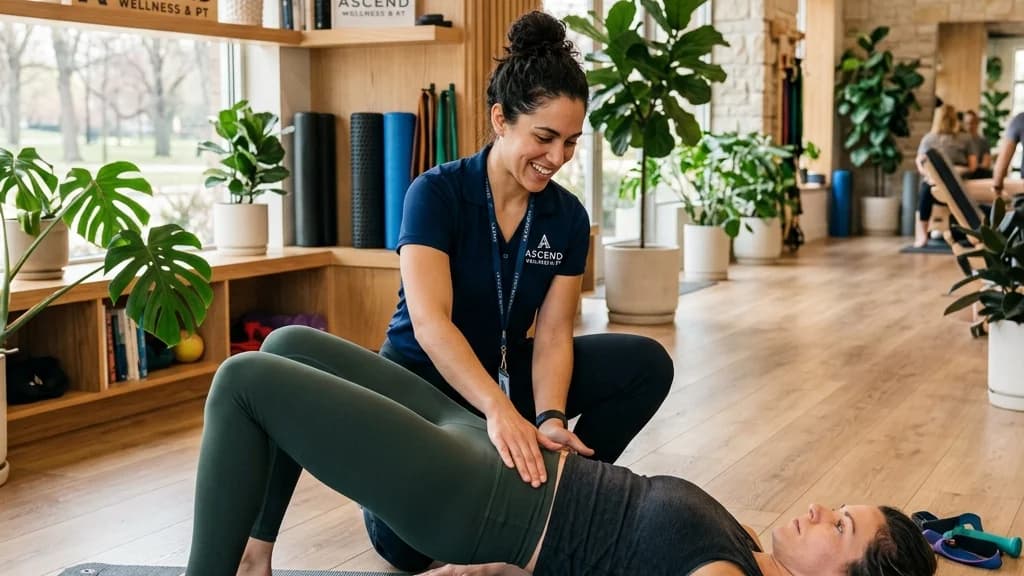
Lie on your back with knees bent. Inhale deeply. As you exhale, lift your pelvic floor, brace your core, and squeeze your glutes to lift your hips into a bridge. Inhale as you slowly lower your hips back down. Perform 3 sets of 10 repetitions.
Stand in front of a light object. Inhale as you lower into a squat, keeping your chest up. As you grip the object, begin to exhale, contract your pelvic floor, and stand up, pushing through your heels. Ensure you do not hold your breath at any point. Repeat for 8 reps.
If you want to understand more about general pelvic muscle dysfunction and its impact on your posture, read our comprehensive guide on Pelvic Floor Dysfunction in Women to explore adjacent rehab methods.
The Patient: Sarah, a 38-year-old mother of two, was diagnosed with a Stage 2 bladder prolapse (cystocele) and felt a constant dragging sensation when standing.
The Mistake: Her doctor told her to never lift her 30-pound toddler, which was impossible. She was performing isolated Kegels while holding her breath, which actually increased her symptoms.
The Solution: We stopped her isolated Kegels and taught her to coordinate her breathing with lifting. We trained her to exhale and lift her pelvic floor *before* picking up her child, while building her glute and hip strength.
The Outcome: Within eight weeks, Sarah's heavy pelvic sensation disappeared completely. She returned to picking up her toddler and carrying groceries without any dragging symptoms, reclaiming her active life.
Reclaiming Your Strength
A pelvic organ prolapse is not a sentence to a fragile life of avoidance. By understanding the biomechanics of abdominal pressure and training your body to manage loads through proper breathing, you can build lasting resilience.
If you are looking to address postural issues that could affect your pelvic alignment, explore our guide on postural corrections at Anterior Pelvic Tilt Correction Exercises to build a fully aligned pelvis.
Train your breath, lift with mechanical control, and support your pelvic floor. Your body is built to move and carry loads with ease.
Irushi Abeywardhana
Senior Physiotherapist & Founder of Physio Pulse. Senior Clinical Physiotherapist passionate about blending advanced movement science with functional resilience.
Medical Disclaimer
The information provided by AyurPhysio is for general educational and informational purposes only. It is not intended as a substitute for professional medical advice, diagnosis, or treatment. Always seek the advice of your physician or other qualified health providers with any questions you may have regarding a medical condition. Never disregard professional medical advice or delay in seeking it because of something you have read on this website.
Related Healing Guides
View All Guides →
Spinal Stenosis: Flexion-Based Rehab Protocols for Pain-Free Walking
Medial Epicondylitis (Golfer's Elbow): Flexor Tendon Rehabilitation