Medically Reviewed byIrushi Abeywardhana
Pelvic Floor Dysfunction in Women: Assessment and Kegel-Free Rehab Protocols
I
Irushi AbeywardhanaAuthor & Expert
Audited OnMay 8, 2026
FormatComparison Directory
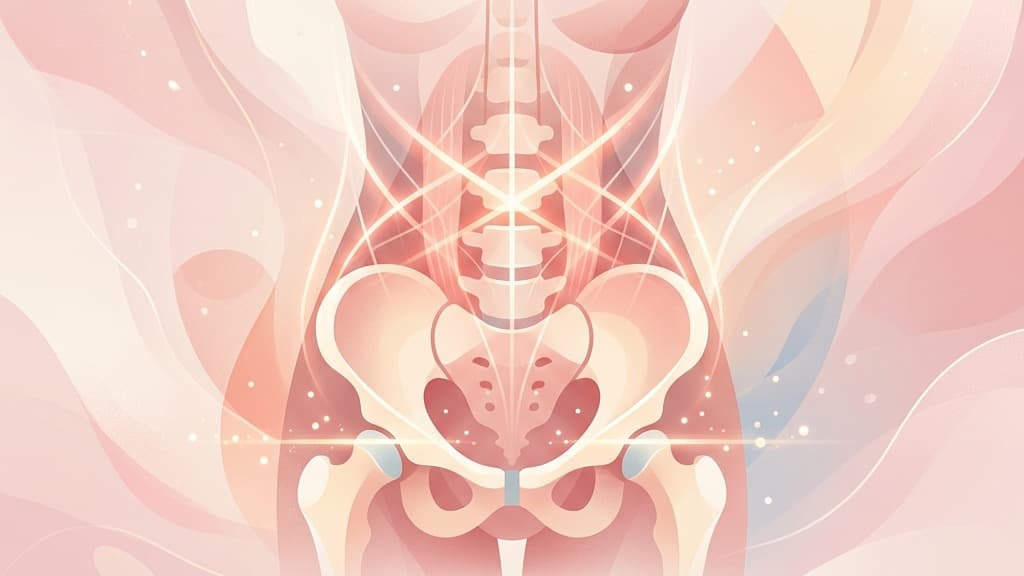
"The pelvic floor is not a muscle that operates in isolation. It is the dynamic trampoline at the base of your deep core, constantly moving in sync with your breathing and posture."
Pelvic floor dysfunction is an incredibly common, yet rarely discussed, condition affecting millions of women worldwide. From post-pregnancy bladder leaks and chronic pelvic pain to lower back tightness that refuses to resolve, a compromised pelvic floor can deeply impact your physical comfort, athletic performance, and emotional well-being.
For decades, the standard medical advice given to women suffering from these symptoms has been frustratingly simple: *"Just do your Kegels."*
However, modern clinical physiotherapy and ancient Ayurvedic wisdom both reveal a complex truth: standard Kegels are not only insufficient—for many women, they actually make symptoms **much worse**.
## The Hypertonic (Tight) Pelvic Floor Myth
When we think of pelvic floor dysfunction, we immediately assume the muscle is weak, lax, and needs to be tightened. We associate incontinence or pelvic organ prolapse strictly with weakness.
In clinical practice, however, we frequently diagnose a **hypertonic pelvic floor**—meaning the muscles are already overly tight, spasmed, and unable to relax.
If your pelvic floor is hypertonic, it is like a bicep muscle that is kept fully contracted 24 hours a day. It becomes exhausted, painful, and ironically, very weak because it cannot move through its full functional range of motion.
Performing Kegels (active, isolated contractions) on a hypertonic pelvic floor is like performing heavy bicep curls on a muscle that is already cramping. It increases inflammation, worsens pelvic pain, exacerbates urinary urgency, and can trigger severe lower back pain. Before we can strengthen the pelvic floor, we must first learn to **relax** it.
## The Ayurvedic Perspective: Apana Vata Dysfunction
Ayurveda views the pelvic region as the primary seat of **Apana Vata**, the sub-dosha of Vata responsible for downward and outward movement. Apana Vata governs elimination, menstruation, sexual function, and childbirth.
When a woman experiences chronic stress, trauma, or holds tension in her body (often from a hyper-paced modern lifestyle), Apana Vata becomes disturbed. Its downward flow reverses, causing the pelvic floor muscles to "grip" and spasm upward in a constant state of fight-or-flight protection.
- **Vata Aggravation Symptoms:** Dryness, sharp pain, constipation, and irregular menstruation.
- **The Ayurvedic Fix:** To heal a hypertonic pelvic floor, Ayurveda emphasizes *grounding* Apana Vata. This is achieved not through intense physical contraction, but through deep relaxation, warm oil therapies, and breathwork that signals safety to the nervous system.
## The Kinetic Chain: The Pelvic Floor and Lower Back Pain
Your pelvic floor does not exist in a vacuum. It forms the base of your abdominal "cylinder."
- **Top:** The Diaphragm
- **Front:** Transversus Abdominis (deep core)
- **Back:** Multifidus (deep spinal muscles)
- **Bottom:** The Pelvic Floor
If your pelvic floor is spasmed or weak, this entire core pressure system fails. When the base drops out or locks up, your lower back muscles are forced to work overtime to keep your spine stable and upright. This results in chronic, stubborn lower back pain that completely fails to respond to standard hamstring stretches or foam rolling. By rehabilitating the pelvic base, we resolve the back pain permanently.
## Three Clinical, Kegel-Free Physical Therapy Exercises
To safely restore tone, coordination, and functional strength to your pelvic floor, we utilize a diaphragm-centered, global core approach that integrates perfectly with Ayurvedic grounding principles.
### 1. The Diaphragmatic Breath 360
The diaphragm and pelvic floor are neurologically linked like a piston.
- **The Drill:** Lie on your back with your knees bent and feet flat on the floor. Place your hands on your lower rib cage. As you inhale deeply through your nose, focus on expanding your ribs outward (360 degrees) and let your belly rise. As this happens, visualize your pelvic floor gently dropping, blooming, and relaxing downwards toward your feet. As you exhale naturally, feel the pelvic floor gently recoil back to its resting state. Do not force a contraction.
- **The Goal:** 10 deep breaths daily to retrain the brain-muscle connection.
### 2. The Deep Supported Squat (Malasana)
This position places the pelvic floor in a fully lengthened, non-loaded state, promoting deep muscle relaxation and relieving Apana Vata stagnation.
- **The Drill:** Hold onto a sturdy doorframe, counter, or heavy post for support. Drop your hips back and down into a deep squat, allowing your tailbone to untuck and point toward the floor. Keep your heels flat if possible. Take 5 slow, deep diaphragmatic breaths in this deep squat, focusing on sending the breath all the way down to your perineum.
### 3. The Glute Bridge with Inner Thigh Squeeze
Once the pelvic floor can relax, we build strength using co-contraction. The adductor (inner thigh) and gluteal muscles work in deep coordination with your pelvic floor.
- **The Drill:** Lie on your back with a small Pilates ball, yoga block, or rolled towel squeezed gently between your knees. Squeeze the ball lightly to activate your inner thighs, then perform a glute bridge by lifting your hips toward the ceiling. The activation of the inner thighs naturally engages the pelvic floor upward and inward without you having to consciously "Kegel." Hold for 3 seconds, lower slowly, and repeat 15 times.
## Ayurvedic Therapies for Pelvic Health
Integrating Ayurvedic self-care can drastically accelerate your physical therapy progress by directly addressing the nervous system holding the tension.
- **Yoni Pichu (Vaginal Oil Application):** The application of sterile cotton soaked in warm, medicated sesame oil or *Dhanwantharam thailam* can deeply soothe the vaginal walls and hypertonic pelvic floor muscles. The warmth pacifies Vata, relieves spasms, and improves local blood flow. *(Please consult an Ayurvedic practitioner before attempting internal therapies).*
- **Warm Sitz Baths:** Sitting in a warm, shallow bath infused with a strong decoction of Dashamoola (ten roots) relaxes the entire pelvic basin and eases chronic pain.
- **Castor Oil Packs:** Applying a warm castor oil pack over the lower abdomen and pubic bone draws circulation to the area, breaks up fascial adhesions, and calms uterine cramping.
## When to see a Pelvic Floor Physical Therapist
If you suffer from persistent pelvic pain, painful intimacy (dyspareunia), urine leaks when laughing or coughing, or a sensation of heaviness in the pelvis (a potential sign of prolapse), it is vital to seek a specialized pelvic floor physical therapist.
They are licensed to perform an internal assessment to tell you exactly if your pelvic floor is hypertonic (needs relaxation therapies) or hypotonic (needs strengthening protocols). Do not guess.
## Reclaim Your Pelvic Freedom
Pelvic health is a crucial, non-negotiable pillar of a woman's overall physical vitality and structural balance. By moving away from generic Kegels and adopting a global, breathing-focused reconditioning routine grounded in both clinical science and Ayurvedic wisdom, you can restore natural, pain-free resilience to your entire pelvic ring.
IA
Expert AuthorMedical Fact-Checked
Irushi Abeywardhana
Senior Physiotherapist & Founder of Physio Pulse. Senior Clinical Physiotherapist passionate about blending advanced movement science with functional resilience.
University of Peradeniya
SLMC Registered Physiotherapist
Certified Dry Needling Practitioner
Diploma in Sports Physiotherapy
Medical Disclaimer
The information provided by AyurPhysio is for general educational and informational purposes only. It is not intended as a substitute for professional medical advice, diagnosis, or treatment. Always seek the advice of your physician or other qualified health providers with any questions you may have regarding a medical condition. Never disregard professional medical advice or delay in seeking it because of something you have read on this website.
Tags:pelvic floor healthwomens healthkegelscore stabilityphysical therapyApana VataAyurvedic womens health
Related Healing Guides
View All Guides →
Physiotherapy
May 21, 20268 min read
Spinal Stenosis: Flexion-Based Rehab Protocols for Pain-Free Walking
Learn why standing straight hurts and how to restore pain-free walking with spinal stenosis using clinically proven Williams flexion protocols.
Irushi AbeywardhanaRead Article →
Physiotherapy
May 21, 20267 min read
Pelvic Organ Prolapse: Pelvic Floor Stabilization and Safe Lift Mechanics
Stop avoiding lifting. Learn how to manage pelvic organ prolapse and stabilize the pelvic floor with safe lifting mechanics and breath coordination.
Irushi AbeywardhanaRead Article →
Physiotherapy
May 21, 20268 min read
Medial Epicondylitis (Golfer's Elbow): Flexor Tendon Rehabilitation
Stop resting your elbow. Learn how to fix medial epicondylitis and restore grip strength with progressive flexor tendon eccentric loading exercises.
Irushi AbeywardhanaRead Article →