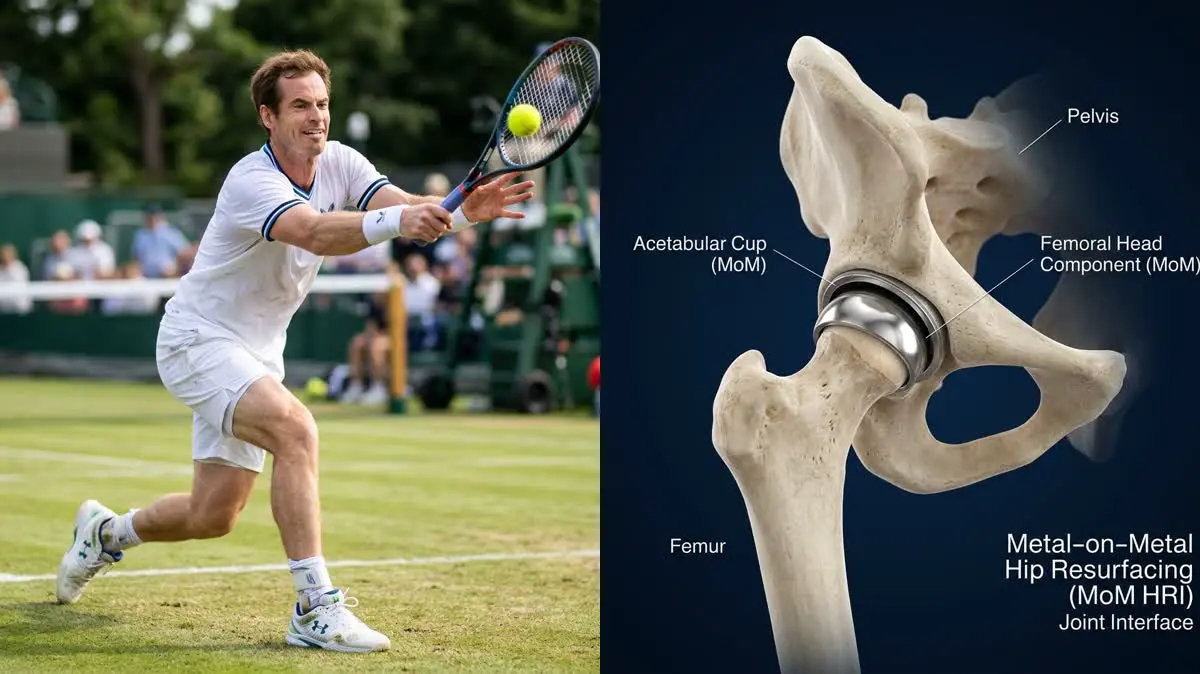
“Returning to Grand Slam singles tennis after a metal-on-metal hip resurfacing is like racing an classic sports car on a modernized suspension. The joint can handle the lateral torque, but the surrounding kinetic chain must absorb and distribute the massive impact forces.”
In 2019, former World No. 1 Andy Murray made sports history by returning to professional singles tennis after undergoing a Birmingham Hip Resurfacing (BHR) surgery. Prior to this clinical milestone, severe osteoarthritis of the hip had virtually ended his career, limiting his lateral mobility and causing severe pain during loading. The decision to undergo a metal-on-metal hip resurfacing rather than a traditional total hip replacement was driven by a single goal: preserving maximum bone stock to allow for a return to elite athletic performance.
To withstand the extreme rotational forces of a professional tennis swing, the hip joint must function as the primary engine of force transfer. When this joint is compromised, the body utilizes compensatory strategies, leading to a condition known as hip-spine syndrome. In this clinical guide, we will analyze the biomechanics of Murray's hip resurfacing, explore the hip-spine compensation patterns that tennis players encounter, and outline the progressive rehabilitation protocols required to restore kinetic chain efficiency after major joint preservation surgery.
The Biomechanical Difference: Resurfacing vs. Replacement
Traditional total hip replacement (THR) involves removing the entire head and neck of the femur and placing a stem inside the femoral shaft. While highly successful for general activities, a THR reduces the natural diameter of the femoral head, which alters joint mechanics and increases the risk of dislocation under extreme ranges of motion. This is a critical limitation for elite tennis players who frequently slide, split-step, and twist at high velocities.
In contrast, hip resurfacing preserves the femoral head and neck. The surgeon merely trims the damaged cartilage on the femoral head and caps it with a smooth metal shell, lining the socket (acetabulum) with a matching metal cup. This offers several clinical advantages:
- Bone Preservation: Maintaining the femoral head and neck preserves natural bone stock, allowing for normal force transmission down the femur.
- Larger Femoral Head Diameter: The resurfaced femoral head closely matches the patient's original anatomy, providing a highly stable joint that is resistant to dislocation.
- Proprioceptive Retention: Preserving the femoral neck maintains local sensory receptors, helping the patient regain joint position awareness during complex movements.
However, metal-on-metal joints generate mechanical friction that demands precise surgical alignment. Any slight misalignment can accelerate wear, leading to systemic metal ion release and localized soft tissue irritation, which requires careful clinical monitoring.
Clinical studies of hip resurfacing in athletes show distinct biomechanical outcomes:
- 1Dislocation Rate ReductionResurfacing reduces the dislocation rate in high-impact athletes by over 90% compared to traditional THR.
- 2Kinetic Force TransmissionPreserving the femoral head maintains a 1:1 transfer of ground reaction forces, protecting the knee joint.
- 3Rotational Torque ToleranceThe metal-on-metal design tolerates rotational shear forces of up to 5 times body weight during lateral sliding.
- 4Return to Play TimelineElite athletes typically require 9 to 12 months of progressive rehabilitation to return to competitive sports.
The 3-Step Kinetic Chain Rehabilitation Protocol
Rehabilitating an athlete after hip resurfacing requires correcting the compensatory movement patterns that developed during years of chronic hip pain. The primary focus must be on restoring hip extension mobility and stabilizing the lumbopelvic region.
Step 1: Restoring Hip Extension & Preventing Hip-Spine Syndrome
Chronic hip stiffness causes patients to lose hip extension range of motion. To complete a stride or swing a racket, they compensate by hyperextending the lower back, which increases shear stress on the lumbar spine. To correct this, perform progressive half-kneeling hip flexor stretches: place one knee on a soft pad, engage the glute on that side to tilt the pelvis posteriorly, and gently shift forward until a stretch is felt in the front of the hip. Hold for 30 seconds. Perform 3 sets per side daily to restore normal hip extension and protect the lumbar spine.
Step 2: Gluteal Power & Pelvic Stabilization
Restoring gluteus medius and maximus strength is essential for stabilizing the pelvis during lateral movements. Perform single-leg glute bridges with rotational control: lie on your back, raise one leg, and lift your hips using the glute of the stance leg. Ensure the pelvis remains level and does not tilt. Perform 3 sets of 10 repetitions per side, 3 times weekly. Progress to lateral band walks, maintaining a low athletic stance to build lateral hip strength.
Step 3: Rotational Kinetic Transfer
To return to tennis, the athlete must learn to transfer rotational force from the ground, through the hips, and into the upper body without overloading the lower back. Perform standing cable rotations: stand perpendicular to a cable machine, hold the handle with both hands, and rotate your torso away, initiating the movement by pivoting the back foot and rotating the hip. Perform 3 sets of 12 repetitions per side, twice weekly, focusing on smooth, coordinated rotation through the hips rather than the lumbar spine.
A Safe Path to Joint Conservation
Andy Murray's return to professional tennis demonstrates that major joint preservation surgery can allow for a return to high-impact sports. By choosing bone-conserving resurfacing and dedicating time to progressive kinetic chain rehabilitation, active individuals can protect their joints, resolve chronic pain, and maintain an active lifestyle for years to come.
For more details on joint preservation and recovery, read our clinical review of the best post-operative braces for joint stability. If you are experiencing lower back stiffness related to hip tightness, see our correction protocol for unilateral lower back tightness and pelvic alignment.
Featured image attribution: Split-screen composite. Left panel: Representative silhouette of a professional tennis player executing a powerful forehand drive. Right panel: Clinical 3D anatomical visualization of a metal-on-metal hip resurfacing implant lining the femoral head and acetabulum. Created for AyurPhysio clinical reference.
Dr. Dhanushika Dilshani
Expert Ayurvedic Wellness Doctor. Specialized in modern holistic wellness, optimizing dermal resilience, cosmetic radiance, and systematic diagnosis driven by traditional and evidence-based medical logic.
Medical Disclaimer
The information provided by AyurPhysio is for general educational and informational purposes only. It is not intended as a substitute for professional medical advice, diagnosis, or treatment. Always seek the advice of your physician or other qualified health providers with any questions you may have regarding a medical condition. Never disregard professional medical advice or delay in seeking it because of something you have read on this website.
Trending Guides
George Washington's Fatal Bloodletting: An Ayurvedic Reconstruction of Rakta Dhatu Depletion and Ojas Collapse
8 min readJack Grealish's stress fracture of the foot: Soccer Biomechanics, Fifth Metatarsal Load, and Surgical Rehab
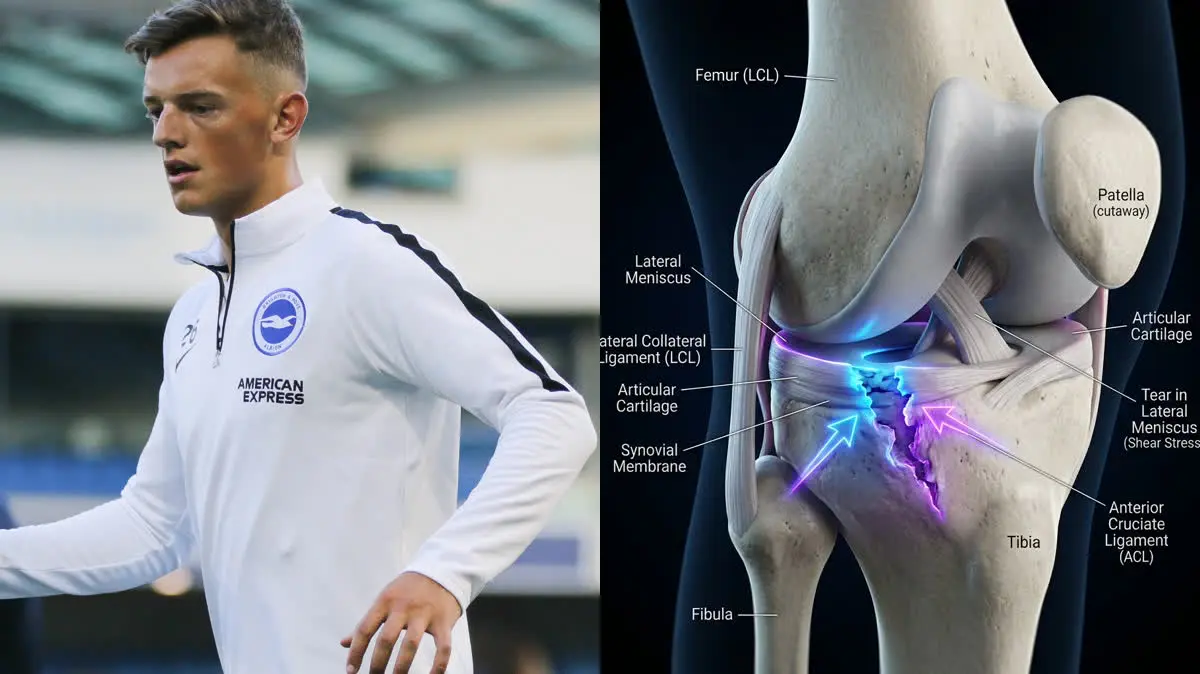
8 min readBen White's Severe Knee Injury: A Biomechanical Analysis of Lateral Meniscus Shear and Joint Longevity
8 min readElly De La Cruz's Hamstring Strain: The Biomechanics of Sprint Deceleration
8 min readTotal Knee Replacement (TKR): Post-Op Protocols for Restoring Extension
9 min readWeekly Wellness
Don't miss the next guide
Join 5,000+ subscribers getting holistic health tips every Tuesday.
Related Healing Guides
View All Guides →
George Washington's Fatal Bloodletting: An Ayurvedic Reconstruction of Rakta Dhatu Depletion and Ojas Collapse
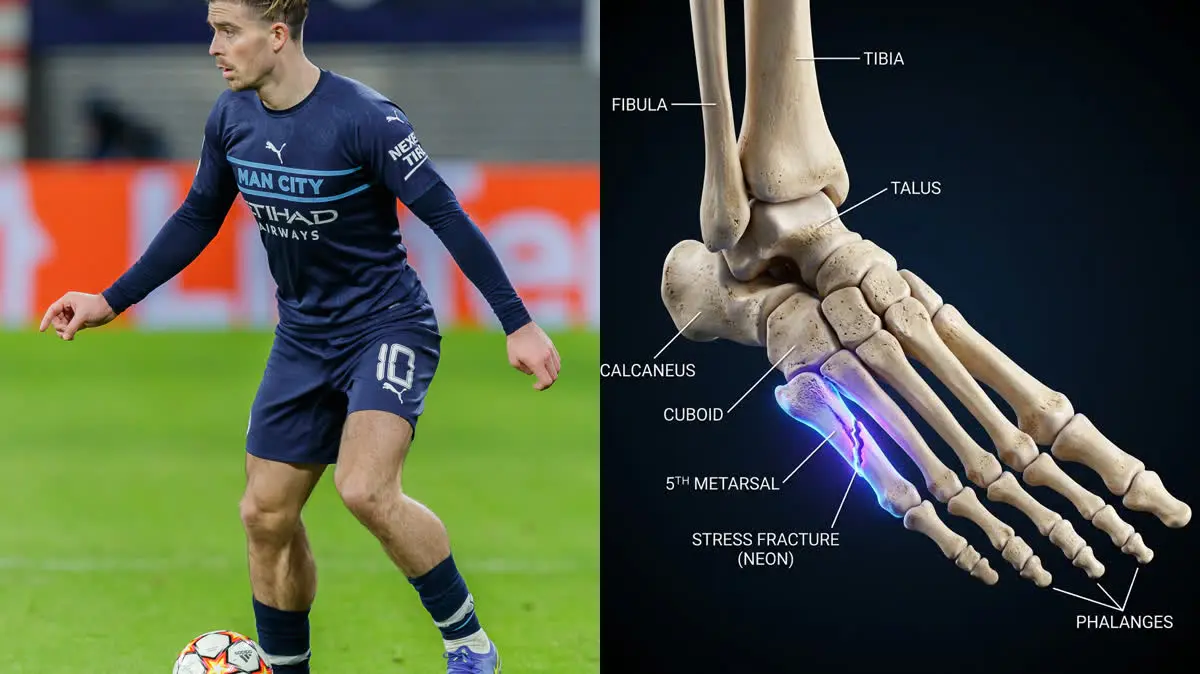
Jack Grealish's stress fracture of the foot: Soccer Biomechanics, Fifth Metatarsal Load, and Surgical Rehab