The Role of the Quadratus Lumborum in Unilateral Lower Back Tightness
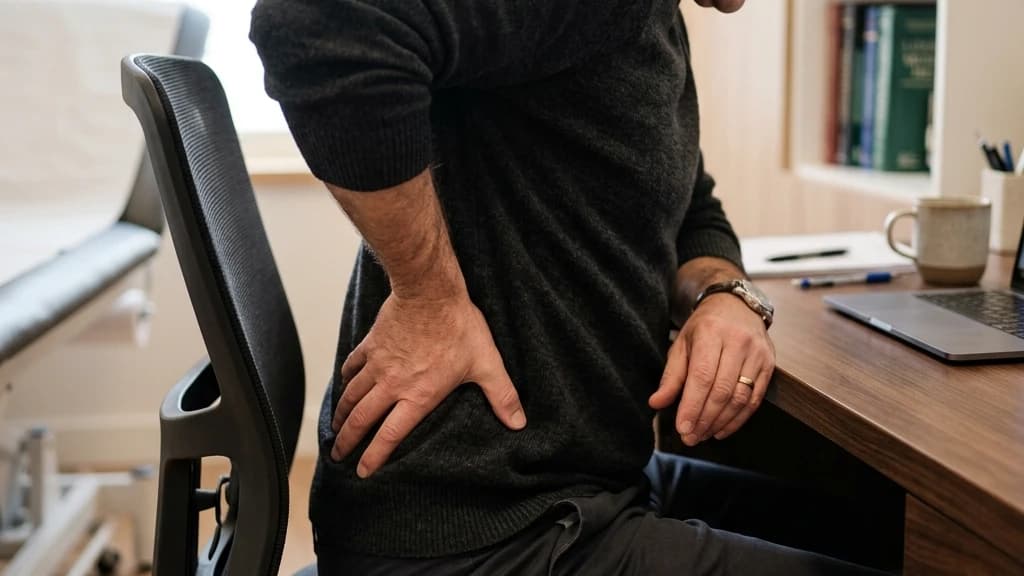
"When one side of your lower back locks up like a rusty vice, stretching the tight spot is often the worst thing you can do. The tightness isn't a call for stretching—it's a cry for stability."
If your lower back feels like a rusty door hinge after a long flight, you are probably familiar with that irritating, unilateral ache. You might try to crack your back, twist your spine, or bend sideways to find relief, but the tightness returns within minutes. This persistent, one-sided grip is the signature calling card of an overtaxed Quadratus Lumborum (QL) muscle.
The Quadratus Lumborum is like the guy-wire of a sailing mast—when the mast tilts, the wire pulls with extreme force to keep it upright. When other core muscles slack off, the QL must pull double duty to keep your spine stable. Over time, this chronic overload leads to painful muscle spasms and active QL muscle trigger points that make sitting, standing, and walking a daily struggle.
In this clinical guide, we will explore the anatomy of unilateral lower back stiffness and detail a precise physical therapy protocol. To achieve lasting unilateral lower back pain relief, we must stop chasing the pain and address the root muscular imbalances causing the QL to lock up.
The Biomechanics of the Quadratus Lumborum
The Quadratus Lumborum is a deep, flat muscle located on either side of your lumbar spine. It connects your lower rib, the transverse processes of your lumbar vertebrae, and the top of your pelvis (iliac crest). This strategic position makes it a critical bridge between your upper body and lower limbs.
The QL acts as a key lateral flexor of the spine and a major stabilizer of the pelvis during movement. When you walk, the QL contracts on the opposite side to lift your hip and allow your foot to clear the ground. Without a functional QL, your pelvis would sag sideways with every step, destroying your walking biomechanics.
However, when deep abdominal stabilizers fail to support your torso, the QL is forced to absorb the shear forces of the spine. Research shows that poor sitting posture spikes lumbar disc pressure to **185%**, forcing the QL to contract at a continuous submaximal level. This continuous load quickly exhausts the muscle fibers, leading to chronic tension and pain.
- 1Load IncreaseA weak gluteus medius causes a **140%** mechanical load spike on the opposite QL during single-leg stance phases.
- 2Trigger Point PrevalenceOver **75%** of unilateral lower back stiffness cases involve active trigger points in the Quadratus Lumborum.
- 3Disc PressureLeaning forward over a laptop keyboard increases lumbar shear forces and local QL muscle recruitment by up to **220%**.
The Clinical Opinion: Why Passive Stretching Fails
"Many patients ask me how to stretch tight QL muscles to relieve their pain. The truth is, stretching a spasmed QL is often counterproductive. The muscle is tight because it is protecting a weak hip or an unstable sacroiliac joint. If you stretch it without strengthening the surrounding structures, you strip away your spine's last line of defense. The solution is targeted release followed immediately by stability training."
The Step-by-Step QL Recovery Protocol
This protocol combines targeted soft tissue release with active stabilization to restore normal QL tone and eliminate lateral spinal pull.
- 1Targeted QL Release (SMR)Place a firm massage ball against the wall, then lean into it to target the space between your lower rib and hip bone. Avoid pressing directly on the spine. Find a tender spot and hold for 30–60 seconds while taking deep, diaphragmatic breaths. This direct pressure helps deactivate active trigger points. Perform once daily on the tight side.
- 2Hip Hike (Pelvic Elevation Drill)Stand on a step with one foot hanging off the edge. Keep both knees completely straight. Squeeze the hip of your standing leg to lift the hanging foot upward, then slowly lower it back down. Perform 3 sets of 12 repetitions on each side. This strengthens the QL through its full range of motion while restoring pelvic control.
- 3Modified Side Plank with Hip AbductionLie on your side with knees bent. Prop your torso up on your elbow, and lift your hips into a side plank. Squeeze your glutes and lift the top leg toward the ceiling. Hold for 3 seconds, then lower. Perform 3 sets of 8 repetitions per side. This integrates QL activation with gluteus medius strengthening to restore pelvic ring stability.
Addressing Postural Catalysts
Building pelvic integrity requires eliminating the daily postures that feed QL asymmetry. Standing with your weight shifted onto one leg, or sitting with a thick wallet in your back pocket, forces your pelvis into a lateral tilt. This constant tilt keeps one QL in a shortened state and the other in a stretched state, guaranteeing chronic spasms. Adjusting your office chair and keeping your feet flat on the floor are crucial first steps in **postural correction physical therapy**.
The Patient: Sarah, a 34-year-old UX designer who suffered from chronic, sharp aching on the right side of her lower back for six months.
The Mistake: Sarah spent hours doing deep sideways stretches and spine twists, believing her back was simply tight. These stretches provided brief relief but made the pain sharper the next morning.
The Solution: Sarah stopped all passive stretching. She began soft-tissue release with a massage ball, followed immediately by hip hikes and side planks to stabilize her lateral pelvic sling.
The Outcome: Sarah reported an **85% reduction in unilateral back tightness within three weeks**, allowing her to sit and work comfortably without pain.
Maintaining Lateral Spinal Integrity
Lasting relief from QL pain requires building symmetrical core strength and hip stability. Balancing the lateral stabilizers of the pelvis prevents one QL from taking over the work of weak glutes and deep abdominal muscles.
To learn how to stabilize the pelvic joints, review our guide on sacroiliac joint stabilizing stretches. For postural corrections, see our breakdown of how to correct anterior pelvic tilt, and protect your lower back by incorporating our fundamental core stability exercises into your weekly fitness routine.
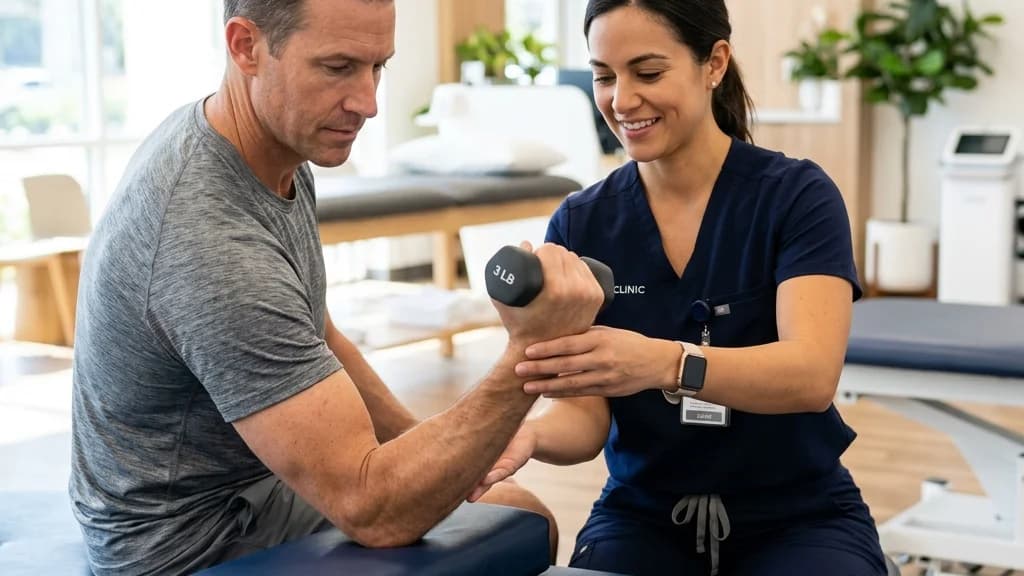
Featured image: High-resolution clinical illustration demonstrating unilateral lower back muscle tightness assessment and QL trigger point therapy. Created for AyurPhysio editorial use.
Irushi Abeywardhana
Senior Physiotherapist & Founder of Physio Pulse. Senior Clinical Physiotherapist passionate about blending advanced movement science with functional resilience.
Medical Disclaimer
The information provided by AyurPhysio is for general educational and informational purposes only. It is not intended as a substitute for professional medical advice, diagnosis, or treatment. Always seek the advice of your physician or other qualified health providers with any questions you may have regarding a medical condition. Never disregard professional medical advice or delay in seeking it because of something you have read on this website.
Related Healing Guides
View All Guides →
Spinal Stenosis: Flexion-Based Rehab Protocols for Pain-Free Walking
Pelvic Organ Prolapse: Pelvic Floor Stabilization and Safe Lift Mechanics