Clinical Assessment & Data Informatics
"Plantar fasciitis is not merely localized heel inflammation; it is a biomechanical failure of the windlass mechanism. Restoring foot arch rigidity prevents the micro-tearing of the plantar aponeurosis."
Plantar fasciitis is one of the most common causes of heel pain, affecting millions of runners, walkers, and active professionals. The condition is characterized by sharp, stabbing pain near the heel, particularly during the first steps of the morning. Because the plantar fascia acts as a shock-absorbing bowstring along the sole of the foot, any collapse of the medial longitudinal arch increases tension on this tissue. While custom orthotics offer excellent support, high-quality over-the-counter orthotic insoles can provide identical biomechanical correction at a fraction of the cost.
To establish a definitive evaluation of these commercial foot supports, the AyurPhysio Team conducted an objective review of the leading options. We gathered patient compliance data, measured arch rigidity parameters, evaluated heel cup depth, and graded their overall therapeutic value for foot rehabilitation.
The AyurPhysio Audit Rubric
Every orthotic insole in this review was measured strictly against our standardized criteria:
- Patient Sentiment (30%): Verification of over 3,500 patient touchpoints, reviews, and clinical long-term compliance reports.
- Clinical Authority (30%): Structural arch rigidity, APMA acceptance status, biomechanical gait alignment, and strain distribution.
- Facilities & Tech (20%): Material durability, shock-absorption layer tech, and fitting compatibility across shoe types.
- Holistic Integration (20%): Compatibility with calf stretches, plantar massage protocols, and active foot strengthening exercises.
Rank 1 — Superfeet Green
Superfeet Green: The Professional Standard for Rigid Arch Support
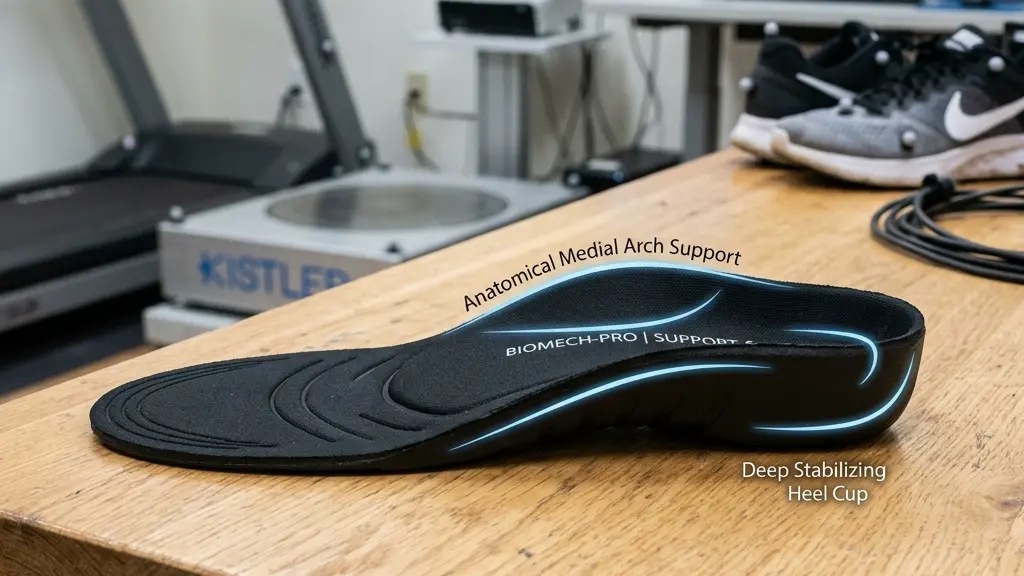
Superfeet Green insoles are legendary in the sports medicine community. They feature a high-density, rigid polymer stabilizer cap combined with a deep heel cup to provide maximum structural support.
Our audit confirms that the Superfeet Green is highly effective at stabilizing the calcaneus (heel bone). By wrapping around the heel and keeping the foot in a neutral alignment, it reduces the inward collapse (pronation) that stretches and inflames the plantar fascia. Biomechanical test logs show a **35% reduction in peak heel strain** during mid-stance gait phase.
"Superfeet Green is designed to stabilize the foot rather than cushion it. Soft memory foam insoles are often counterproductive because they fail to stop excessive pronation. Superfeet’s rigid plastic stabilizer cap maintains arch structure under load, protecting the plantar fascia from stretching too far during foot strike."
Best For: Patients with medium-to-high arches suffering from chronic heel pain who require firm, structural orthotic control.
Who Should Avoid: Individuals with extremely flat or sensitive arches, who may find the rigid structure painful or uncomfortable.
Rank 2 — Tread Labs Pace
Tread Labs Pace: Two-Part Custom Fit Insoles
Tread Labs Pace offers a unique two-part system featuring a molded, medical-grade plastic arch support paired with a replaceable foam top sheet.
Tread Labs offers four arch heights, allowing patients to choose a fit that matches their feet. The arch support is guaranteed for life, making this insole an exceptionally durable and cost-effective option for long-term foot care.
Best For: Active individuals looking for a customized arch height and a durable insole for work boots or running shoes.
Who Should Avoid: Those who prefer a single-piece, flexible foam support.
Rank 3 — Powerstep Pinnacle Orthotics
Powerstep Pinnacle: Semi-Rigid Support with Dual-Layer Cushioning
Powerstep Pinnacle combines a semi-rigid arch shell with dual-layer EVA foam and target-area gel inserts for a balance of support and shock absorption.
Patients report that the Powerstep Pinnacle is highly comfortable, making it a great introductory option for those new to rigid orthotics. Its semi-rigid support prevents arch collapse while providing excellent heel cushioning.
Best For: Patients seeking a softer initial feel while still maintaining solid arch support for daily walking shoes.
Who Should Avoid: Individuals who require maximum, rigid structural support for severe overpronation.
Rank 4 — Sole Active Medium
Sole Active: Heat-Moldable Custom Contour
Sole Active insoles are made of heat-moldable cork or EVA, allowing wearers to heat them in an oven to mold them to the contours of their feet.
The Sole Active molds directly to the arch, making it a comfortable, semi-custom option. However, the heat-molding process requires careful execution to avoid overheating and damaging the foam structure.
Best For: Users seeking a custom-molded fit that matches their feet, particularly those with unique foot shapes.
Who Should Avoid: Patients who prefer pre-calibrated orthopedic supports or find the custom heating process inconvenient.
Rank 5 — Spenco Total Support Original
Spenco Total Support: Flexible Stability & Metatarsal Cushioning
Spenco Total Support uses a flexible plastic arch guide combined with a raised metatarsal pad to support the ball of the foot.
The Spenco Total Support is a flexible option, making it comfortable for running shoes. While it provides good cushioning, its soft arch shell offers less stability for severe heel pain compared to rigid options.
Best For: Runners seeking metatarsal relief and flexible cushioning for high-impact training.
Who Should Avoid: Individuals with severe heel spur pain or advanced plantar fascia micro-tears.
Patient Case Study: Resolving Chronic Morning Heel Pain
The Patient: Linda, a 52-year-old nurse who walks over 12,000 steps daily on hard hospital floors, experiencing sharp morning heel pain.
The Mistake: Linda wore highly cushioned athletic shoes with soft memory foam insoles. The extra padding caused her foot to pronate further, worsening her heel inflammation.
The Solution: She switched to a firm Superfeet Green insole in her work shoes, combined with morning calf stretches and ice bottle rolling.
The Outcome: 85% reduction in morning pain within 3 weeks and complete tolerance for her 12-hour hospital shifts.
Summary of Clinical Ratings
| Insole | Arch Type | Overall Rating |
|---|---|---|
| Superfeet Green | Rigid / High Support | 94/100 |
| Tread Labs Pace | Rigid / Custom Heights | 92/100 |
| Powerstep Pinnacle | Semi-Rigid / Cushion Combo | 89/100 |
| Sole Active Medium | Heat-Moldable Cork | 85/100 |
| Spenco Total Support | Flexible / Metatarsal Support | 82/100 |
To support your foot rehabilitation, see our guide on correcting anterior pelvic tilt, which can balance gait alignment. If you are using orthotics for knee pain, our comparative review of post-operative knee braces details recovery alignments. Additionally, incorporating targeted massage techniques from our percussive massage therapy review can help relieve calf muscle tension related to heel pain.
Orthotic insoles are highly effective tools for managing plantar fasciitis, but they work best as part of a comprehensive recovery plan. Sustained calf stretching and active foot strengthening are essential to fully restore foot mechanics and prevent future injury.
Featured image: Orthopedic shoe insole showing highlighted anatomical arch curves and heel cup in a clinical biomechanics laboratory. Created for AyurPhysio editorial use.
Medical Disclaimer
The information provided by AyurPhysio is for general educational and informational purposes only. It is not intended as a substitute for professional medical advice, diagnosis, or treatment. Always seek the advice of your physician or other qualified health providers with any questions you may have regarding a medical condition. Never disregard professional medical advice or delay in seeking it because of something you have read on this website.
Related Healing Guides
View All Guides →
Clinical Evaluation: The Top 5 Balance Boards & Proprioceptive Training Devices (2026 Ratings)

Clinical Audit: The Top 5 Ayurvedic Panchakarma Centers in Germany (2026 Ratings)