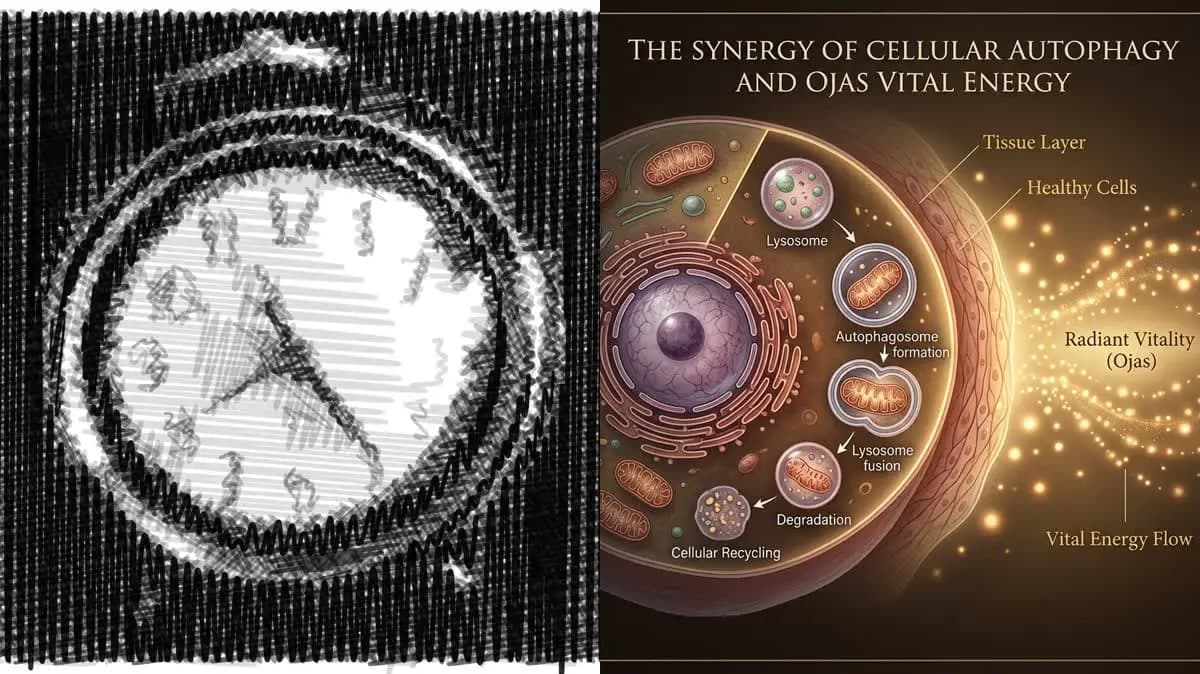
"Fasting is like a wind blowing through an open flame. A small, controlled breeze clears the smoke and brightens the fire, but a continuous gale strips away the fuel and extinguishes the light entirely."
The global wellness community has embraced intermittent fasting, particularly the 16:8 schedule, as a standard tool for cellular cleansing. Proponents point to cellular autophagy—the body's process of clearing damaged cells—as a primary benefit. However, from an Ayurvedic perspective, this universal approach to fasting ignores individual human differences, sometimes leading to tissue depletion (Dhatu Kshaya) and nervous system fatigue.
Applying a single fasting rule to every body type is a mistake. While extended fasting can help heavy, Kapha-dominant constitutions, it can be harmful to dry, Vata-dominant individuals. For these body types, long periods without food can weaken tissue regeneration and deplete vital life energy (Ojas), leading to fatigue, anxiety, and sleep issues.
To safely practice intermittent fasting trend ayurveda, you must learn how cellular clearing interacts with tissue health. This guide compares modern autophagy with Ayurvedic principles and offers a customized approach to cellular autophagy vs dhatu depletion.
Autophagy: The Scientific Case for the Fasting Window
Autophagy is the body's natural recycling mechanism, where cells break down damaged proteins and organelles to maintain cellular health. This process is triggered when energy levels are low, forcing the body to clean house. Research suggests that a fasting window of 16 hours allows insulin levels to drop, promoting fat metabolism and activating cellular repair pathways.
In Ayurveda, this cellular clearing is closely related to the function of Agni, the internal digestive fire. When the digestive tract is empty, Agni shifts from processing food to clearing accumulated metabolic waste (Ama). This state of physiological rest is known as Langhana, or therapeutic fasting, and has been used for thousands of years to reduce inflammation and support systemic health.
However, modern fasting schedules often fail to consider the limits of this cleansing process. Clinical observations indicate that fasting beyond your body's capacity can lead to a state of tissue depletion (Dhatu Kshaya). Instead of simply recycling waste, the body begins to break down healthy structural tissues, reducing overall energy and vitality.
Autophagy peaks after 16 to 18 hours of fasting, encouraging the cell to degrade damaged components and recycle amino acids for energy.
Fasting kindles Agni, allowing the body to digest Ama. However, if extended too long, it begins to consume the structural tissues (Dhatus) themselves.
The Clinical Opinion: Fasting Must Suit Your Constitution
"I see many patients who develop dry skin, anxiety, and sleep issues after starting a strict 16:8 fasting schedule. My clinical opinion is that long fasting windows can worsen Vata imbalances. For a dry, Vata-dominant individual, fasting for 16 hours daily depletes the vital fluid (Rasa Dhatu) and reduces protective energy (Ojas). Fasting must be adjusted according to your unique body type (Prakriti) rather than following a rigid universal schedule."
Personalizing the Fasting Window by Dosha
To avoid tissue depletion while supporting natural cellular cleansing, adjust your fasting schedule based on your dominant dosha.
Vata: Short Windows and Nourishing Foods
Vata-dominant individuals naturally have light, dry, and cool qualities. They are prone to quick depletion and irregular digestion (Vishamagni). Vata types should limit fasting to 12 hours (e.g., eating between 8:00 AM and 8:00 PM). Their meals should be warm, cooked, spiced, and include healthy fats like ghee to soothe their nervous system and protect their tissues. Avoid raw salads or cold water during the eating window.
Pitta: Moderate Windows and Cooling Hydration
Pitta-dominant individuals have a strong, hot digestive fire (Tikshnagni). They are prone to acidity and irritability when hungry. Pitta types should fast for 12 to 14 hours, ensuring they stay hydrated with cooling herbal teas like fennel or coriander. They should avoid spicy, oily, or fried foods, which can increase internal heat and lead to inflammation during their eating window.
Kapha: Longer Windows for Clearing Congestion
Kapha-dominant individuals have a slow, heavy, and cool constitution. They are prone to sluggish digestion (Mandagni) and fluid retention. Kapha types are best suited for the 16-hour fasting window, as it helps clear excess tissue moisture and accumulated Ama. They benefit from warm, light, and spiced meals, avoiding heavy dairy, refined sugars, and cold foods during their eating window.
Guidelines for a Balanced Routine
Maintaining digestive health requires consistency. To support your body's natural rhythms, eat your largest meal at midday when Agni is strongest, and choose light, easily digestible foods for dinner. It is also helpful to stay hydrated with warm water throughout the day, as cold water can dampen your digestive fire and slow down metabolic cleansing.
In addition, focus on getting adequate rest. Depleting your body's energy reserves through late-night work or intense exercise while fasting can lead to Vata imbalance and fatigue. Remember that true health comes from nourishing your tissues, not just cleansing them. Listen to your body and adjust your routines to support your natural constitution.
For more Ayurvedic wellness resources, read our guide on safe Neti Pot nasal cleansing and view our article on herbal teas for dosha balance. To learn about seasonal health, read our guide on Ayurvedic seasonal routines to keep your system in harmony.
Featured image attribution: "Alarm Clock" by Unknown Author, licensed under CC BY 2.0. Modified by cropping and compositing with a cellular autophagy render.
Dr. Dhanushika Dilshani
Expert Ayurvedic Wellness Doctor. Specialized in modern holistic wellness, optimizing dermal resilience, cosmetic radiance, and systematic diagnosis driven by traditional and evidence-based medical logic.
Medical Disclaimer
The information provided by AyurPhysio is for general educational and informational purposes only. It is not intended as a substitute for professional medical advice, diagnosis, or treatment. Always seek the advice of your physician or other qualified health providers with any questions you may have regarding a medical condition. Never disregard professional medical advice or delay in seeking it because of something you have read on this website.
Trending Guides
George Washington's Fatal Bloodletting: An Ayurvedic Reconstruction of Rakta Dhatu Depletion and Ojas Collapse
8 min readJack Grealish's stress fracture of the foot: Soccer Biomechanics, Fifth Metatarsal Load, and Surgical Rehab
8 min readBen White's Severe Knee Injury: A Biomechanical Analysis of Lateral Meniscus Shear and Joint Longevity
8 min readElly De La Cruz's Hamstring Strain: The Biomechanics of Sprint Deceleration
8 min readTotal Knee Replacement (TKR): Post-Op Protocols for Restoring Extension
9 min readWeekly Wellness
Don't miss the next guide
Join 5,000+ subscribers getting holistic health tips every Tuesday.
Related Healing Guides
View All Guides →
George Washington's Fatal Bloodletting: An Ayurvedic Reconstruction of Rakta Dhatu Depletion and Ojas Collapse

Jack Grealish's stress fracture of the foot: Soccer Biomechanics, Fifth Metatarsal Load, and Surgical Rehab