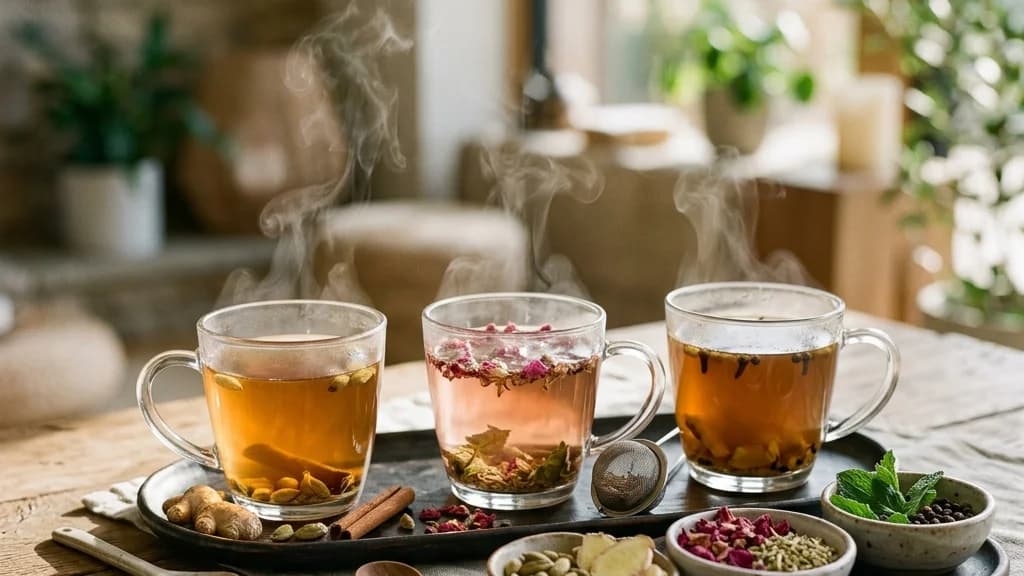
“Water is the carrier of memory and medicine. When infused with the correct therapeutic herbs, it acts as a gentle wind that sweeps away toxic residue while kindling the inner metabolic fire.”
If you regularly consume iced drinks, you are committing a silent daily offense against your digestion. We are taught to hydrate constantly, yet many people complain of bloating, fatigue, and heavy limbs. This paradox occurs because the temperature and composition of what you drink can either nourish your cells or freeze your metabolic enzymes.
In Ayurvedic science, warm water is considered a potent therapeutic vehicle. When combined with specific herbs, it becomes an infusion capable of clearing blockages, soothing an overactive mind, or stimulating sluggish circulation. Using targeted herbal remedies for dosha regulation allows you to restore biological balance from the inside out.
To balance your unique constitution, you must understand the art of formulating warm infusions. By selecting the correct ayurvedic digestive tea blends, you can maintain steady energy and clarity throughout the day. This grounding practice is a key component of a complete vata balancing dinacharya to keep your mind and joints fluid.
The Spatial Flame: How Liquid Temperature Rules Agni
The human body is composed of approximately 60% water, but Ayurveda views hydration through the lens of digestive fire, known as Agni. Classical texts identify 13 distinct types of Agni that govern metabolic breakdown. Drinking cold water is like pouring ice water over hot charcoal, leaving you with nothing but gray steam and ash.
Over 70% of modern digestive complaints stem directly from this habit of drinking cold, raw liquids. This cold shock freezes stomach secretions, halts the release of bile, and leads to the formation of Ama (toxic metabolic residue). When Ama builds up, it travels through the bloodstream and deposits in weak areas, causing chronic stiffness and pain.
To digest your meals and clear these toxins, you must drink liquids that are warm or at room temperature. Warm herbal teas act like a gentle broom, sweeping clean the micro-channels of your digestive tract while maintaining optimal metabolic heat.
The Myth of the Modern "Detox" Tea
My strong clinical opinion is that commercial "detox" teas are a disaster for your endocrine and digestive systems. Most of these blends rely heavily on strong laxative herbs like senna leaf or high-stimulant green tea extracts.
These ingredients over-excite your colon, stripping your body of vital fluids and essential electrolytes while dry-frying your delicate Vata dosha. True detoxification is not a violent flush; it is a gentle, metabolic kindle. We must abandon these harsh, dehydrating trends and return to mild, spiced infusions that support your body's natural pathways without creating dependency.
Three Classical Blends for Dosha Harmony
Every dosha requires a distinct thermal and energetic approach. Choosing the wrong blend is like throwing dry kindling onto a raging forest fire, worsening the very imbalance you are trying to soothe.
Vata is naturally cold, dry, and erratic. This blend utilizes the heating qualities of ginger and the sweet, grounding properties of licorice and cardamom to lubricate the digestive tract. It helps soothe anxiety and serves as one of the best herbal remedies for joint stiffness by keeping the tissues hydrated.
Pitta is characterized by heat, acidity, and sharp intensity. This classical formula, known as CCF tea with a touch of rose, cools the internal organs, reduces acidity, and calms hyperactive liver energy. It is highly recommended when dealing with systemic inflammation or skin sensitivity.
Kapha is heavy, cold, and wet. To counter this sluggishness, we use hot, drying spices that burn through congestion and stimulate lazy digestion. This blend increases circulation, clears mucus from the chest, and helps eliminate fluid retention.
How to Calm Vata Dosha Through Hydration
If you suffer from constant overthinking or dry skin, you need to understand how to calm vata dosha using your daily liquids. Drinking plain, dry water can sometimes pass right through a dehydrated body without absorbing.
By infusing your water with warming spices and natural sweetness, you change its physical quality, making it heavier and more penetrative. This allows the moisture to seep deep into your tissues, lubricating the nervous system.
To achieve the best results, sip your warm Vata tea in small amounts throughout the day, especially during the dry afternoon hours when Vata naturally rises. This simple habit keeps your nervous system anchored and your mind quiet.
👤 Patient Spotlight: Robert's Inflamed Joints
The Patient: Robert, a 45-year-old software architect, suffered from morning finger joint pain, severe acid reflux, and general mental burnout.
The Mistake: Robert drank ice-cold green tea and lemon water all day, believing the antioxidants would cool his inflammation, which instead froze his Agni.
The Solution: We stopped the cold drinks and raw green tea. We prescribed warm Pitta tea (coriander and rose) between meals to soothe his reflux, and warm Vata tea (ginger and cardamom) in the morning to address his joint stiffness.
The Outcome: Within two weeks, Robert's acid reflux disappeared, his morning joint stiffness reduced by 70%, and his mind felt calm and focused without the erratic spikes of caffeine.
Creating a Simple Kitchen Ritual
Preparing these infusions does not require expensive equipment or rare ingredients. You can easily blend these spices in your kitchen, turning a daily habit into a meditative healing ritual.
Boil your selected spices in pure water for 5 to 10 minutes, strain, and transfer to a thermos to sip warm throughout the day. Avoid using white sugar, which can disturb all three doshas; if you need sweetness, add a touch of raw honey once the tea has cooled to lukewarm.
If you want to explore more ways to ground your nervous system and support your joints, read our comprehensive guide on managing Vata imbalance. To learn how to calm inflammatory heat, check out our protocol on Pitta imbalance and inflammation. By aligning your hydration with your body's needs, you can cultivate lasting vitality.
Dr. Dhanushika Dilshani
Expert Ayurvedic Wellness Doctor. Specialized in modern holistic wellness, optimizing dermal resilience, cosmetic radiance, and systematic diagnosis driven by traditional and evidence-based medical logic.
Medical Disclaimer
The information provided by AyurPhysio is for general educational and informational purposes only. It is not intended as a substitute for professional medical advice, diagnosis, or treatment. Always seek the advice of your physician or other qualified health providers with any questions you may have regarding a medical condition. Never disregard professional medical advice or delay in seeking it because of something you have read on this website.
Related Healing Guides
View All Guides →
Chronic Lower Back Pain: Integrating Deep Core Activation with Weekly Kati Basti
Turmeric & Golden Milk: The Bioactive Anti-Inflammatory Ayurvedic Elixir