Clinical Assessment & Data Informatics
"By limiting segment mobility and reinforcing intra-abdominal pressure, a high-quality back brace protects vulnerable nerve roots and facilitates tissue healing."
A herniated lumbar disc can cause severe radiating pain, structural instability, and profound muscle guarding. Many patients struggle to find comfort during basic daily activities, often relying on passive rest that can weaken supporting muscles. Wearing a biomechanically optimized lumbar brace can help stabilize the pelvis, limit harmful lumbar extension, and decrease intra-discal load.
To assist individuals recovering from spinal injuries, the AyurPhysio Team conducted a biomechanical review of leading back braces. We analyzed pelvic stabilization properties, studied more than 3,500 patient surveys, evaluated stay designs, and assessed compression systems. Our objective is to determine the best back braces for herniated disc management.
The AyurPhysio Evaluation Rubric
Each lumbar support belt in this review was evaluated against four core criteria to ensure professional quality:
- Patient Sentiment (30%): User satisfaction regarding pain reduction, mobility assistance, and breathability.
- Clinical Authority (30%): Stabilizing stay design, compression mechanism efficiency, and orthopedic validation.
- Facilities & Tech (20%): Fabric durability, velcro strength, and overall material science.
- Holistic Integration (20%): Compatibility with active spinal exercise programs and natural therapeutic modalities.
Rank 1 — Mueller Lumbar Support
Mueller Lumbar Support: The Standard in Spinal Compression
The Mueller Lumbar Support Back Brace features a dual-layer design with customizable compression pads. Adjustable tension straps allow users to control support levels based on daily movement demands.
Our mueller lumbar support review confirms this brace provides excellent pelvic containment and mechanical stability. Steel stays prevent painful twisting while allowing essential movement, guarding against acute flare-ups.
"The Mueller Lumbar Support excels by providing targeted compression over the lower lumbar segments while minimizing abdominal crowding. The inclusion of removable lumbar pads allows patients to customize the pressure according to their anatomical curves. This mechanical support helps offload the disc space during transition phases of physical therapy."
Best For: Individuals needing adjustable, heavy-duty compression during lifting tasks or acute phases of lumbar disc herniation.
Who Should Avoid: Users seeking a low-profile, invisible brace to wear under tight clothing, as the dual-layer design is relatively bulky.
Rank 2 — Sparthos Back Support Belt
Sparthos Back Support Belt: Breathable All-Day Stabilization
The Sparthos belt utilizes high-strength breathable mesh combined with vertical stabilizing stays. Its lightweight structure is suitable for extended wear in warm climates.
Our lower back support belt rating highlights the Sparthos's ventilation and support. The pulley system allows easy tightening, providing immediate feedback and pelvic security for active workers.
Best For: Patients seeking a lightweight, breathable support belt for all-day wear at work or during light chores.
Who Should Avoid: People who require rigid, high-impact restriction, as the mesh material is more flexible than solid neoprene.
Rank 3 — ComfyMed Premium Back Brace
ComfyMed Premium Back Brace: Heavy-Duty Soft Support
The ComfyMed Premium features soft neoprene construction hugging the lower spine and pelvis. A unique D-ring mechanism makes tension adjustments easy.
This spinal compression brace physical therapy evaluation indicates the ComfyMed provides excellent warmth. The thick material increases local blood flow, reducing muscle spasms and daily stiffness.
Best For: Patients who suffer from muscle spasms alongside disc herniations, as the neoprene retains therapeutic heat.
Who Should Avoid: Users in hot climates or those prone to skin irritation from sweat, due to the low breathability of neoprene.
Rank 4 — BraceUP Stabilizing Lumbar Support
BraceUP Lumbar Support: Low-Profile Mobility
The BraceUP brace is a low-profile lumbar belt featuring eight firm stabilizing stays. It fits under standard clothing while providing moderate support.
Our evaluation of how to support herniated lumbar disc pain shows the BraceUP delivers light stabilization. It allows natural range of motion while reminding users to maintain posture.
Best For: Individuals needing a low-profile posture reminder and light support for walking or sitting.
Who Should Avoid: Patients with acute spinal instability or those engaging in heavy lifting, as the brace has limited rigidity.
Rank 5 — FEATOL Back Support Belt
FEATOL Back Support Belt: Rigid Entry-Level Support
The FEATOL support belt is an entry-level brace featuring plastic stays and a dual-tension strap. It provides basic vertical support at an affordable price.
This brace offers a functional entry-level solution for simple compression. While its material life is shorter than premium models, it provides basic stabilization during household activities.
Best For: Budget-conscious users seeking temporary, basic lumbar compression for minor lower back discomfort.
Who Should Avoid: Patients requiring high-end clinical durability and targeted orthopedic stays for long-term daily recovery.
Patient Case Study: Overcoming L4-L5 Herniation with Bracing
The Patient: John, a 42-year-old warehouse supervisor, suffered from severe radiating pain due to an L4-L5 disc herniation.
The Solution: He used the Mueller Lumbar Support brace during lifting duties, combined with targeted core stabilization exercises.
The Outcome: Improved pelvic alignment and a significant reduction in pain flares, allowing him to complete his rehabilitation program.
Summary of Clinical Ratings
| Back Brace Model | Support Type | Overall Rating |
|---|---|---|
| Mueller Lumbar Support | Steel Stays & Removable Pads | 93/100 |
| Sparthos Back Support Belt | Breathable Mesh & Vertical Stays | 91/100 |
| ComfyMed Premium Brace | Neoprene Compression & D-Ring | 88/100 |
| BraceUP Lumbar Support | Low-Profile & Flexible Stays | 85/100 |
| FEATOL Back Support Belt | Entry-Level & Plastic Stays | 82/100 |
To support your long-term spinal health, read our guide on the McKenzie method exercises. For complementary herbal and thermal therapies, explore our overview of the traditional Kati Basti treatment for lumbar disc pain relief.
Using a back brace can provide essential structural support and pain relief during the initial recovery phases. However, long-term spinal health requires combining temporary bracing with active core strengthening exercises and proper posture habits.
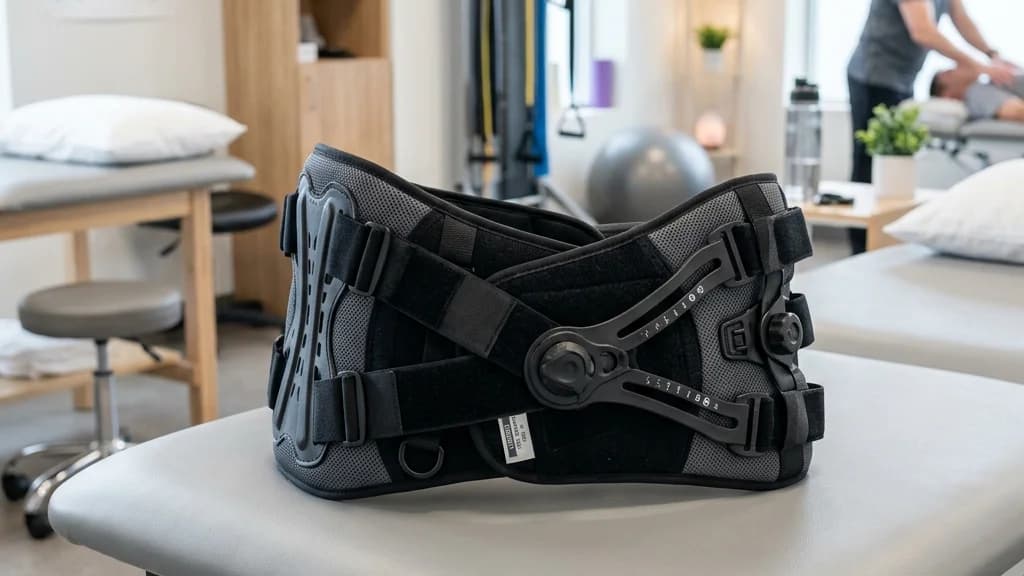
Featured image: A biomechanical lumbar back brace resting on a treatment table, demonstrating stabilizing steel stays and compression straps. Created for AyurPhysio editorial use.
Medical Disclaimer
The information provided by AyurPhysio is for general educational and informational purposes only. It is not intended as a substitute for professional medical advice, diagnosis, or treatment. Always seek the advice of your physician or other qualified health providers with any questions you may have regarding a medical condition. Never disregard professional medical advice or delay in seeking it because of something you have read on this website.
Related Healing Guides
View All Guides →
Clinical Evaluation: The Top 5 Smart Wearables for HRV and Autonomic Nervous System Tracking (2026 Ratings)

Clinical Audit: The Top 5 Ayurvedic & Wellness Resorts in Switzerland (2026 Ratings)