Knee Pain While Climbing Stairs: Causes, Biomechanics, and Exercises

"Your knee is not a simple hinge joint; it is a complex pulley system. When you climb a single stair, that pulley system must bear four times your body weight—making even a tiny muscle imbalance feel like a sledgehammer hitting your kneecap."
If your knee joint sounds like a bowl of Rice Krispies popping in milk every time you take a step, or if climbing down a flight of stairs has become a slow, sideways-shuffling ordeal, you are dealing with a classic structural imbalance. In clinical practice, knee pain while climbing stairs is one of the most common complaints we encounter. It affects active runners, busy schoolteachers, and middle-aged adults alike.
Many patients present saying, "I can walk on flat ground for hours with zero discomfort... but the moment I face a flight of stairs, my kneecaps feel like they are burning." This highly localized pain is not a random occurrence. It is a direct mechanical warning sign that your kneecap is no longer tracking smoothly in its designated groove.
Understanding the exact biomechanics of why this friction occurs is the first critical step to finding the best exercises for knee pain relief and restoring comfortable, active mobility.
The Biomechanics of Stairs: The 4X Load Multiplication
To understand why stairs trigger pain while flat walking does not, we must examine the physics of the patellofemoral joint. Your kneecap (patella) sits inside a deep tendon, sliding up and down in a bony groove (the trochlear groove) on your thigh bone.
During flat-surface walking, the compression force pressing your kneecap into that groove is relatively low—roughly equivalent to 0.5 times your body weight. However, as you bend your knee to climb a stair, the angle of the joint changes, and the levers of gravity shift dramatically.
Clinical biomechanical research has mapped the exact exponential force placed on your kneecap during different functional movements:
- Flat-Ground Walking: 0.5 times your body weight in compression.
- Climbing Stairs (Going Up): Spikes to 3.3 times your body weight of direct joint compression.
- Descending Stairs (Going Down): Spikes to an astonishing 4 times your body weight of force.
- Deep Squatting: Spikes to 7 to 8 times your body weight of mechanical force.
This explains why knee hurts when climbing stairs so acutely. For a 150-pound (68 kg) individual, taking a single step down a stair exerts a crushing 600 lbs of mechanical force directly behind the kneecap. If your quadriceps muscles are weak or your knee alignment is off, this massive force is concentrated on a tiny, unlubricated area of cartilage.
Why Wearing Tight Knee Sleeves is Making Your Joints Weaker
When patients experience sharp stair pain, their immediate reaction is to seek external support. They buy thick neoprene knee sleeves, wrap their joints in tight elastic bandages, or take paracetamol daily to numb the dull ache.
My strong, decisive professional opinion is that depending on tight knee sleeves or daily painkillers is a biological distraction—it does nothing to fix the tracking issue and actually weakens your joint. When you wear a tight sleeve all day, your nervous system registers the external compression and decreases the activation of your vastus medialis obliquus (VMO)—the key inner quad muscle responsible for keeping your kneecap centered. Over time, this muscle atrophies, causing your kneecap to drift even further out of its groove.
To achieve permanent relief, you must discard passive sleeves and actively build dynamic, muscular support using targeted knee strengthening exercises.
The Patient: Jane, a 52-year-old middle school teacher, presented with severe pain around both kneecaps when going up and down school stairs, which forced her to take the elevator and avoid active playground duty.
The Mistake: Jane was wearing tight elastic knee sleeves daily, taking ibuprofen before her shifts, and performing deep bodyweight squats—which was actually worsening her patellofemoral pain syndrome by compressing her inflamed cartilage.
The Solution: We immediately discarded the knee sleeves, stopped the deep squats, initiated isometric inner quadriceps activations (VMO sets), strengthened her weak hip abductors, and coached her in slow, controlled step-up movements.
The Outcome: Within 3 weeks, Jane's stair pain reduced by 85%. By week 6, she was climbing three flights of school stairs comfortably with zero clicking, zero swelling, and complete physical confidence.
Three Clinical Exercises for Patellar Tracking and Knee Relief
To realign your kneecap, strengthen your quadriceps safely, and eliminate friction during stair climbing, perform these three clinical exercises daily:
-
1The Isometric Inner Quad Activator (VMO Sets) Sit on the floor with your leg straight. Place a small rolled-up towel directly under your knee. Slowly tighten your thigh muscle, pressing the back of your knee down into the towel while actively focusing on squeezing the inner part of your quad (just above your kneecap). Hold for 10 seconds. Repeat 12 times. This builds the exact muscle needed to pull your kneecap back into its centered groove.
-
2The Side-Lying Hip Abductor Lift (Gluteus Medius Strength) Lie on your side with your bottom leg bent and top leg straight. Keeping your hips stacked perfectly and top toe pointed slightly down, raise your top leg upward and slightly backward toward the ceiling. Hold for 2 seconds, then lower slowly. Perform 3 sets of 15 lifts on each side. Strengthening your outer hips prevents your thigh bone from rolling inward during stair climbing, which is key to correcting kneecap tracking.
-
3The Slow-Lower Step-Down (Functional Eccentric Control) Stand on a low, 2-inch step box. Keep your non-injured foot hovering off the side. Slowly bend your injured knee to lower your opposite heel down to touch the floor gently (take a full 4 seconds to lower). Ensure your standing knee stays aligned over your second toe and does not collapse inward. Push through your heel to stand back up. Perform 3 sets of 10 controlled step-downs. This is the ultimate functional exercise for building stair control.
Take Active Control of Your Knees
Your joints are built to move, but they must move in alignment. No matter how many anti-inflammatories you take, you cannot out-medicate a structural tracking issue. Prioritize targeted inner quadriceps strengthening, build robust hip stability, and practice controlled functional movements. By taking active control of your joint biomechanics today, you can look forward to climbing every flight of stairs with complete, pain-free freedom.
Irushi Abeywardhana
Senior Physiotherapist & Founder of Physio Pulse. Senior Clinical Physiotherapist passionate about blending advanced movement science with functional resilience.
Medical Disclaimer
The information provided by AyurPhysio is for general educational and informational purposes only. It is not intended as a substitute for professional medical advice, diagnosis, or treatment. Always seek the advice of your physician or other qualified health providers with any questions you may have regarding a medical condition. Never disregard professional medical advice or delay in seeking it because of something you have read on this website.
Trending Guides
Clinical Audit: The Best Knee Unloader Braces for Osteoarthritis & Joint Compartment Unloading (2026 Ratings)
10 min readUsain Bolt's Elite Sprinting with Scoliosis: A Biomechanical Breakdown of Asymmetrical Kinetic Chain Compensation and Hamstring Strain Risk
8 min readRetrolisthesis: Understanding Posterior Vertebral Slippage and Rehab
6 min readQuadratus Lumborum Trigger Points: The Secret Driver of Deep Hip Pain
7 min readNerve Flossing Techniques for Sciatic Nerve Mobilization
6 min readWeekly Wellness
Don't miss the next guide
Join 5,000+ subscribers getting holistic health tips every Tuesday.
Related Healing Guides
View All Guides →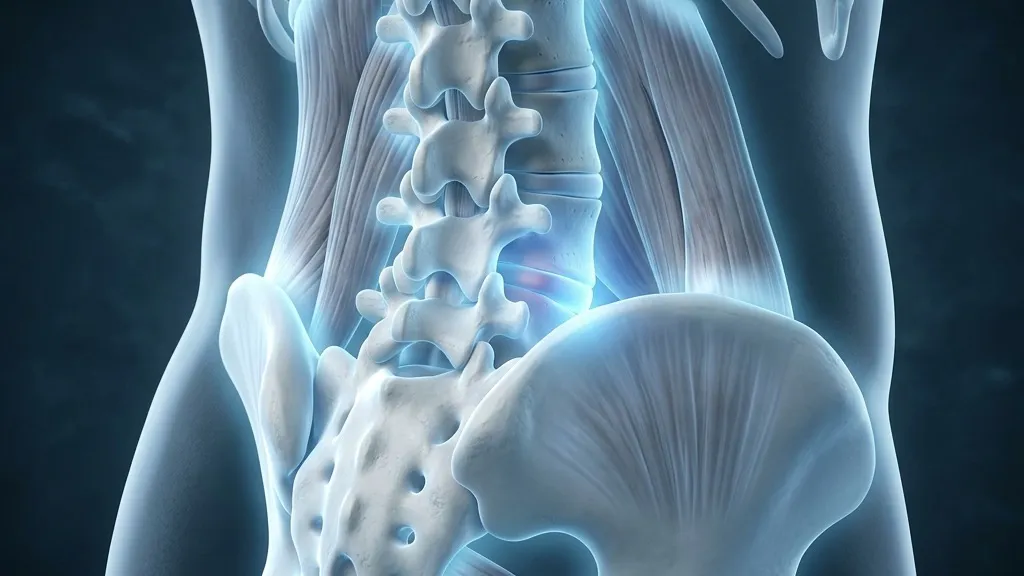
Retrolisthesis: Understanding Posterior Vertebral Slippage and Rehab
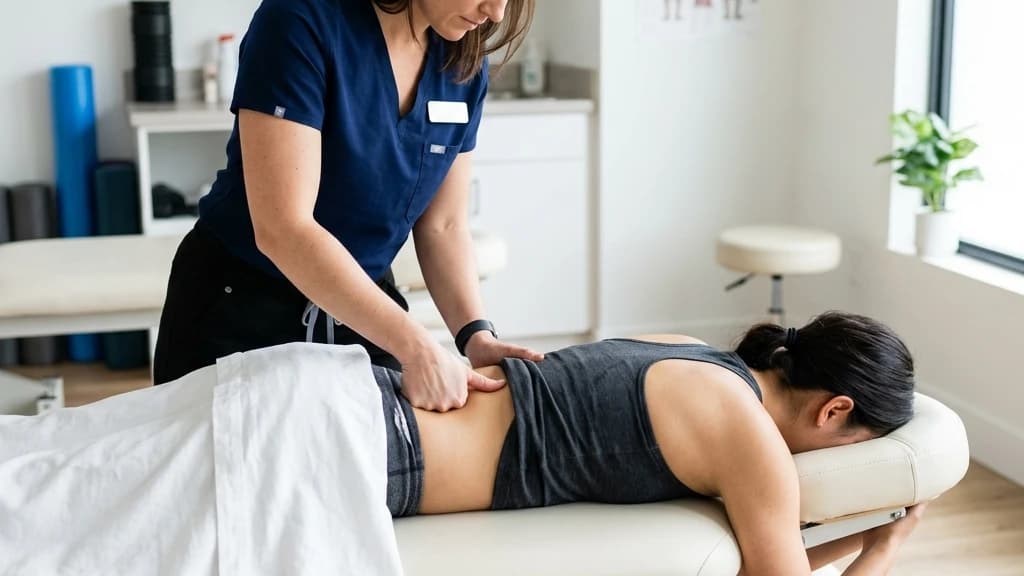
Quadratus Lumborum Trigger Points: The Secret Driver of Deep Hip Pain