Quadratus Lumborum Trigger Points: The Secret Driver of Deep Hip Pain
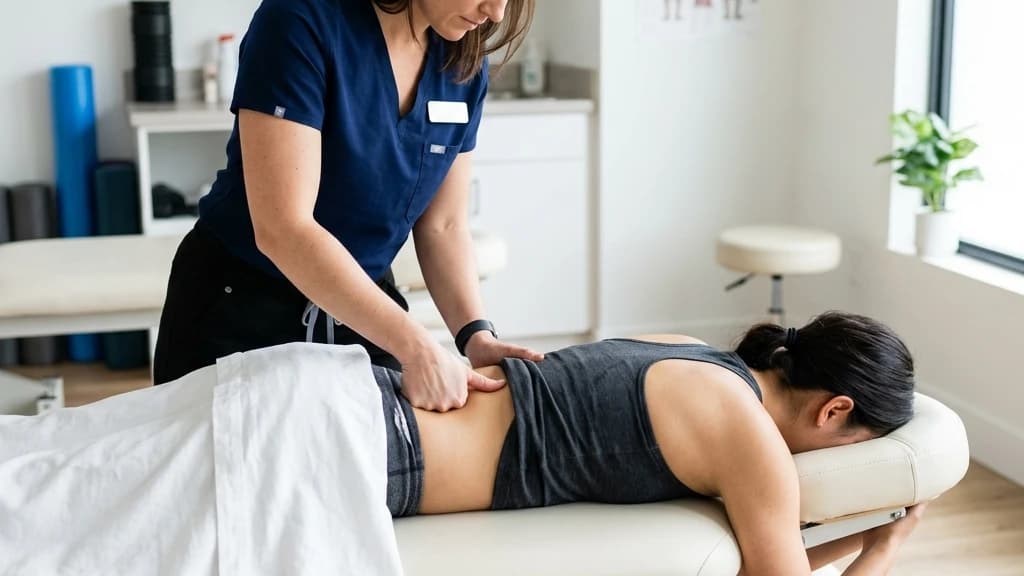
"A tight quadratus lumborum is like a tense puppet master pulling on one side of your pelvis, forcing your hip joint to sit crookedly in its socket and grind with every step."
If you experience a deep, burning ache in your outer hip that flares up when standing on hard floors, or if you find yourself limping slightly because one hip feels "higher" than the other, you are likely dealing with referred pain. The hidden driver is a deep muscle located in your flank: the quadratus lumborum (QL).
The QL muscle is the primary lateral stabilizer of your lower back, connecting your lowest rib to your pelvis and spine. However, because it is located adjacent to major nerve pathways, active trigger points in this muscle can refer severe, shooting pain down into your hip, mimicking joint conditions.
Resolving this **hip pain referred from back** requires a shift away from hip-centric treatments, focusing instead on targeted **ql stretch exercises** that release the deep spasms and restore pelvic lateral stability.
The Referral Pathway: Why Back Spasms Mimic Hip Pain
To understand why QL trigger points cause hip pain, we must look at the referred pain pathways of the posterior spine. The nerves that supply the outer hip and buttock traverse directly past the QL muscle belly.
Active QL trigger points mimic hip bursitis in up to 60% of misdiagnosed cases. This leads to ineffective hip-centric treatments.
A locked QL muscle tilts the pelvis laterally, throwing off joint mechanics:
- Pelvic Hike: A unilateral QL spasm can elevate (hike) one side of the pelvis by up to 1.5 inches.
- Joint Compressive Force: The pelvic tilt increases mechanical pressure across the lumbar facet joints by up to 150%.
- Outer Hip Referral: Trigger points in the QL refer deep pain directly to the greater trochanter and outer gluteal area.
This mechanical tilt explains why walking or standing worsens your hip pain. Treating the hip directly with cortisone injections or foam rolling fails to address the underlying QL spasm.
Why Hip Massage is Failing to Resolve Your Outer Hip Pain
When patients experience outer hip pain, their immediate reaction is to massage the hip or use a hard foam roller along the IT band. They spend hours rolling the tender area in hopes of forcing the tight fibers to release.
My decisive clinical opinion is that massaging the outer hip is useless if the pain is referred from QL trigger points—you must release the QL muscle and restore pelvic lateral stability to unload the joint. Massaging the referred pain site is a biological distraction. To resolve the issue, you must target the deep flank muscles and restore lateral balance.
Addressing this is the first step to correcting unilateral lower back tightness. In some cases, the radiating pain can mimic sciatica; refer to our guide on resolving sciatica-like referred pain. For deep, locked spasms, incorporating clinical dry needling techniques is highly recommended.
The Patient: Jonathan, a 45-year-old warehouse supervisor, presented with severe pain on the outside of his right hip, which made standing on concrete floors torture.
The Mistake: Jonathan had received two cortisone injections in his hip and performed aggressive IT band foam rolling, neither of which brought relief.
The Solution: We identified a massive trigger point in his right QL muscle, released it using manual pressure, and strengthened his weak outer hip stabilizers.
The Outcome: Within 3 weeks, Jonathan experienced a 90% pain reduction and returned to full standing work shifts comfortable and pain-free.
Three Exercises to Release the Quadratus Lumborum
To release your QL trigger points, restore pelvic alignment, and eliminate referred hip pain, perform these three exercises daily:
-
1The Lat-QL Bench Stretch (Lateral Decompression) Sit sideways on a bench or chair. Reach the arm of your tight side high overhead. Bend your torso directly to the opposite side, keeping your chest open and avoiding twisting. Hold onto the edge of the bench with your opposite hand to stabilize your pelvis. Breathe deeply, focusing on expanding the side of your ribs and waist. Hold for 30 seconds, repeating 3 times.
-
2The Side-Lying Hip Drop (QL Lengthening) Lie on your side on the edge of a bed, with your tight side facing up. Let your top leg hang off the back edge of the bed toward the floor, keeping your knee straight. This allows the weight of your leg to gently pull your pelvis down, stretching the tight QL muscle on the top side. Hold for 30 to 45 seconds, repeating 3 times.
-
3The Standing Wall-Supported Hip Hike Stand sideways next to a wall, supporting yourself with one hand. Stand on a small block or step with your inside foot, letting your outside foot hover. Keeping your standing knee straight, slowly raise (hike) your outside hip upward, then lower it down as far as comfortable. Perform 3 sets of 12 repetitions. This strengthens the QL on the opposite side and builds lateral pelvic stability.
Restoring Pelvic Balance
Your hips and lower back work in tandem. When your QL muscle locks up, it acts like a puppet master, tilting your pelvis and forcing your hip joint to bear uneven, wear-inducing loads.
By prioritizing lateral QL stretching, practicing hip hikes, and building outer hip stability, you can release the deep trigger points, restore pelvic balance, and walk with complete, pain-free freedom.
Irushi Abeywardhana
Senior Physiotherapist & Founder of Physio Pulse. Senior Clinical Physiotherapist passionate about blending advanced movement science with functional resilience.
Medical Disclaimer
The information provided by AyurPhysio is for general educational and informational purposes only. It is not intended as a substitute for professional medical advice, diagnosis, or treatment. Always seek the advice of your physician or other qualified health providers with any questions you may have regarding a medical condition. Never disregard professional medical advice or delay in seeking it because of something you have read on this website.
Trending Guides
Clinical Audit: The Best Knee Unloader Braces for Osteoarthritis & Joint Compartment Unloading (2026 Ratings)
10 min readUsain Bolt's Elite Sprinting with Scoliosis: A Biomechanical Breakdown of Asymmetrical Kinetic Chain Compensation and Hamstring Strain Risk
8 min readRetrolisthesis: Understanding Posterior Vertebral Slippage and Rehab
6 min readQuadratus Lumborum Trigger Points: The Secret Driver of Deep Hip Pain
7 min readNerve Flossing Techniques for Sciatic Nerve Mobilization
6 min readWeekly Wellness
Don't miss the next guide
Join 5,000+ subscribers getting holistic health tips every Tuesday.
Related Healing Guides
View All Guides →
Retrolisthesis: Understanding Posterior Vertebral Slippage and Rehab
Nerve Flossing Techniques for Sciatic Nerve Mobilization