Retrolisthesis: Understanding Posterior Vertebral Slippage and Rehab
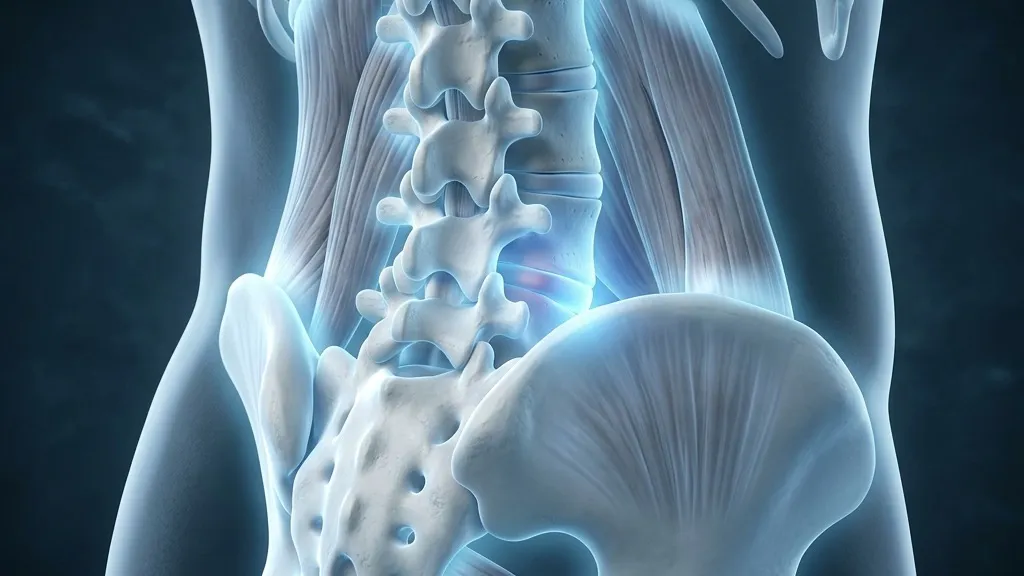
"A spine with retrolisthesis is like a stack of child's building blocks where one block has slipped backward out of alignment, threatening to pinch the delicate electrical cords running down the back."
If you have been diagnosed with spinal slippage after an X-ray or MRI, you are likely familiar with the anxiety that comes with knowing a vertebra is out of alignment. While most people have heard of forward slippage (spondylolisthesis), backward slippage—known in clinical physical therapy as retrolisthesis—is a distinct spinal condition that requires a completely different rehabilitation approach.
Retrolisthesis occurs when a single vertebra slips backward relative to the segment below it. This posterior displacement is frequently driven by degenerative disc disease, which reduces joint spacing and allows the vertebrae to shift out of their normal vertical alignment.
Achieving a successful retrolisthesis recovery requires a shift away from standard back-stretching routines, focusing instead on targeted **lumbar slippage exercises** that stabilize the joint and prevent further posterior translation.
The Biomechanics of Posterior Slippage: Shear Force and Nerve Pinch
To understand why certain movements aggravate retrolisthesis, we must look at the mechanics of the posterior spine. When a vertebra slips backward, it narrows the spinal canal and the foraminal openings where nerves exit.
Retrolisthesis accounts for up to 20% of all spinal displacement cases, occurring most commonly in the highly mobile L4-L5 and L5-S1 regions.
Backward vertebral displacement narrows nerve pathways and irritates surrounding tissues:
- Degenerative Shift: Loss of spinal disc height increases posterior slippage forces by up to 150%.
- Extension Compression: Bending backward (extension) physically pushes the displaced vertebra further backward into the spinal canal.
- Flexion Decompression: Gentle forward bending (flexion) helps glide the displaced segment forward, opening the nerve openings.
This mechanical reality explains why bending backward or standing for long periods increases your lower back pain. Performing extension stretches is highly dangerous when a segment is displaced posteriorly.
Why McKenzie Extensions and Cobra Stretches are Dangerous
When patients experience back pain, many practitioners immediately prescribe McKenzie extension protocols (like prone press-ups). While these are highly effective for disc bulges, they are a serious clinical error for retrolisthesis.
My decisive clinical opinion is that performing forced lumbar extensions when you have a retrolisthesis is a severe clinical mistake—it forces the displaced vertebra further backward, compressing the local nerve roots. The spinal muscles spasm to prevent you from extension. To recover, you must adopt flexion-biased stability exercises and build the deep core strength needed to resist posterior shear.
This flexion-biased approach is highly aligned with spondylolisthesis safe movements, though the direction of slippage is opposite. To lock the joints in place, you must integrate targeted spinal stabilization drills. Re-activating the deep posterior stabilizers is also key; refer to our guide on multifidus activation exercises.
The Patient: Gary, a 52-year-old heavy machinery operator, presented with severe, localized lower back pain that flared when sitting or leaning backward in his loader seat.
The Mistake: Gary was doing deep back extensions daily and receiving high-force spinal adjustments, which worsened his symptoms.
The Solution: We diagnosed a Grade 1 retrolisthesis, stopped all extension stretching, initiated a flexion-biased isometric core routine, and stabilized his pelvis.
The Outcome: Within 4 weeks, Gary experienced a 90% pain reduction and returned to operating his loader machinery comfortable and pain-free.
Three Flexion-Biased Exercises for Retrolisthesis Recovery
To stabilize your pelvis, reduce posterior shear, and eliminate lower back pinching, perform these three **retrolisthesis rehab exercises** daily:
-
1The Posterior Pelvic Tilt (Floor-Assisted) Lie on your back with knees bent and feet flat on the floor. Contract your lower abdominals and tilt your pelvis backward, pressing your lower back flat against the floor. Squeeze your lower abs throughout the motion. Hold this flat position for 6 seconds, then release. Perform 3 sets of 12 repetitions. This trains the muscles needed to tilt your pelvis, preventing posterior slippage.
-
2The Flexion-Biased Deadbug Lie on your back, raising your arms straight toward the ceiling and bending your knees and hips to 90 degrees. Press your lower back firmly into the floor. Slowly lower your right arm overhead and your left leg toward the floor, keeping your lower back flat against the mat. Return and alternate. Perform 3 sets of 10 controlled extensions. This trains your core to resist extension forces.
-
3The Cat Stretch (Flexion Focus) Get on all fours. Slowly arch your back upward toward the ceiling, tucking your chin toward your chest. Focus on expanding the lower back area. Hold this rounded position for 3 seconds, then return to a neutral position (do not let your lower back sag into extension). Repeat 12 times. This gentle movement helps mobilize the displaced segments in a safe direction.
Unlocking Spine Stability
Your spinal column relies on a balance of disc spacing and muscle support. When a vertebra shifts backward due to degenerative changes, you must adapt your movement patterns to resist posterior shear and protect the nerves.
By prioritizing flexion-biased exercises, practicing posterior pelvic tilts, and building deep core stability, you can stabilize the displaced segments, eliminate sharp pinching, and walk with complete, pain-free freedom.
Irushi Abeywardhana
Senior Physiotherapist & Founder of Physio Pulse. Senior Clinical Physiotherapist passionate about blending advanced movement science with functional resilience.
Medical Disclaimer
The information provided by AyurPhysio is for general educational and informational purposes only. It is not intended as a substitute for professional medical advice, diagnosis, or treatment. Always seek the advice of your physician or other qualified health providers with any questions you may have regarding a medical condition. Never disregard professional medical advice or delay in seeking it because of something you have read on this website.
Trending Guides
Clinical Audit: The Best Knee Unloader Braces for Osteoarthritis & Joint Compartment Unloading (2026 Ratings)
10 min readUsain Bolt's Elite Sprinting with Scoliosis: A Biomechanical Breakdown of Asymmetrical Kinetic Chain Compensation and Hamstring Strain Risk
8 min readRetrolisthesis: Understanding Posterior Vertebral Slippage and Rehab
6 min readQuadratus Lumborum Trigger Points: The Secret Driver of Deep Hip Pain
7 min readNerve Flossing Techniques for Sciatic Nerve Mobilization
6 min readWeekly Wellness
Don't miss the next guide
Join 5,000+ subscribers getting holistic health tips every Tuesday.
Related Healing Guides
View All Guides →
Quadratus Lumborum Trigger Points: The Secret Driver of Deep Hip Pain
Nerve Flossing Techniques for Sciatic Nerve Mobilization