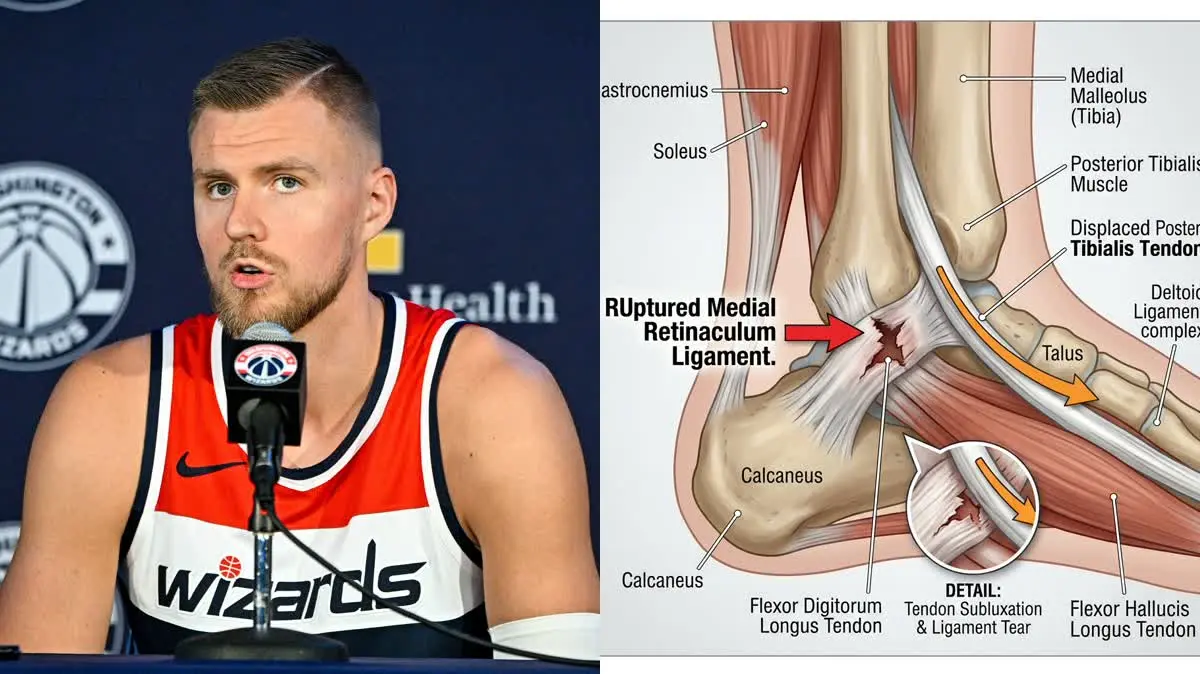
"When the medial retinaculum ruptures, your inner ankle tendon loses its physical seatbelt. Attempting to sprint or jump without fixing this structural sleeve is like driving a high-speed train on a curved track with a broken outer rail—eventually, the train will jump the tracks."
For basketball fans and athletic trainers alike, the sports news cycles of the NBA finals highlighted a rare, complex injury: Kristaps Porziņģis' medial retinaculum tear. This injury, occurring in the inner ankle, is completely different from a standard ankle sprain. It immediately compromises the structural stability of the foot's primary support tendon, leaving athletes unable to push off effectively.
Standard ankle rehabilitation protocols are highly dangerous here. Simply performing lateral band walks or balance drills on an unstable ankle bone will repeatedly pull the posterior tibialis tendon out of its groove, grinding the tissue. To recover, you must follow a structured, protected load progression.
To safely navigate a medial retinaculum tear recovery, you must understand the unique mechanics of the posterior tibialis tendon and prevent its subluxation. This article breaks down the anatomy of this injury and presents progressive sports physical therapy guidelines.
The Inner Ankle Seatbelt: Medial Retinaculum Anatomy
The posterior tibialis muscle originates in the deep calf and travels down the leg, transitioning into a thick tendon. This tendon hooks sharply behind the medial malleolus, the bony bump on the inside of the ankle, before inserting into the navicular bone of the foot. The tibialis posterior is the primary dynamic stabilizer of the inner foot arch, preventing the foot from collapsing inward during landing.
To keep this tendon in place as it bends around the ankle bone, a thick fibrous band called the flexor retinaculum wraps over it. A tear in this retinaculum allows the posterior tibialis tendon to slip forward over the bone (subluxation) whenever the foot is flexed upward and turned outward. This subluxation causes severe friction, inflammation, and loss of arch control.
Clinical sports data indicates that posterior tibialis tendon subluxation accounts for less than 0.5% of all athletic ankle injuries, making it a frequently misdiagnosed condition. The tendon shifts by 5 to 8 millimeters out of its groove during movement, causing an audible snap and immediate loss of foot arch support. Rebuilding the structural support is critical to prevent tendon degeneration.
Biomechanical testing shows how retinaculum tears alter inner foot mechanics:
- 1Tendon DisplacementA torn retinaculum allows the tendon to migrate up to 8 millimeters over the bone, causing severe snapping and friction.
- 2Arch Dynamic CollapseLoss of tibialis posterior tension causes a 40% collapse in the height of the medial longitudinal arch during push-off.
- 3Groove Anatomy DeficitOver 65% of subluxation patients possess a shallow retromalleolar groove, increasing the risk of retinaculum failure.
- 4Surgical Success RateSurgical reconstruction of the retinaculum combined with groove deepening achieves a 90% return-to-play rate in elite athletes.
The Clinical Opinion: Avoid Early Lateral Ankle Balancing
"My clinical opinion is that treating a retinaculum tear with standard lateral balancing exercises is a grave mistake. When the ankle is unstable, lateral movements force the tibialis posterior to contract aggressively, which pulls the tendon out of its damaged sheath. We must stop all unstable balance training and keep the foot strictly immobilized in a neutral boot to allow the retinaculum fibers to heal first."
The Progressive Retinaculum Rehab Protocol
Rehabilitation must prioritize preventing subluxation while gradually restoring tendon strength. Move through these phases only when pain-free.
Phase 1: Protected Immobilization and Swelling Control
In the acute stage, the torn retinaculum must be protected from stretching. The foot is placed in a rigid walking boot with a medial arch support insert to prevent the inner foot from collapsing. Rest, elevation, and compression wraps are used to manage swelling around the medial malleolus. Avoid any active movement that turns the foot outward. Continue this protection for 3 to 4 weeks.
Phase 2: Straight-Line Isometric Strengthening
Once initial healing has occurred, begin isometric strengthening without moving the joint. Sit on the floor with your foot flat against a wall. Press the inner edge of your foot inward against the wall (inversion) without allowing the ankle to bend. Hold this contraction for 10 seconds, then relax. This contraction stimulates the posterior tibialis muscle without causing the tendon to slide. Perform 3 sets of 10 holds daily.
Phase 3: Protected Eccentric Arch Loading
To prepare the tendon for sports loads, perform eccentric arch raising. Stand with the balls of your feet on a flat floor, holding onto a counter for balance. Rise up onto both feet, then shift your weight to your uninjured leg and lower down slowly. Keep your ankle aligned to prevent the foot from rolling inward. Perform 3 sets of 10 slow descents daily, gradually transitioning to single-leg loading.
Rebuilding Inner Ankle Stability
Recovering from a rare tendon injury requires patience and structured care. To protect your foot arch, ensure your athletic footwear features supportive midsoles and avoid running on soft, uneven sand during early recovery.
For related lower limb conditioning guides, read our clinical guide on ankle sprain recovery and our article on Achilles tendon loading. To learn how foot alignment affects the entire leg, see our guide on plantar fascia support to protect your dynamic arch.
Featured image attribution: "Kristaps Porziņģis 2022" by Joe Glorioso, licensed under CC BY-SA 2.0. Modified by cropping and compositing.
Dr. Dhanushika Dilshani
Expert Ayurvedic Wellness Doctor. Specialized in modern holistic wellness, optimizing dermal resilience, cosmetic radiance, and systematic diagnosis driven by traditional and evidence-based medical logic.
Medical Disclaimer
The information provided by AyurPhysio is for general educational and informational purposes only. It is not intended as a substitute for professional medical advice, diagnosis, or treatment. Always seek the advice of your physician or other qualified health providers with any questions you may have regarding a medical condition. Never disregard professional medical advice or delay in seeking it because of something you have read on this website.
Trending Guides
George Washington's Fatal Bloodletting: An Ayurvedic Reconstruction of Rakta Dhatu Depletion and Ojas Collapse
8 min readJack Grealish's stress fracture of the foot: Soccer Biomechanics, Fifth Metatarsal Load, and Surgical Rehab
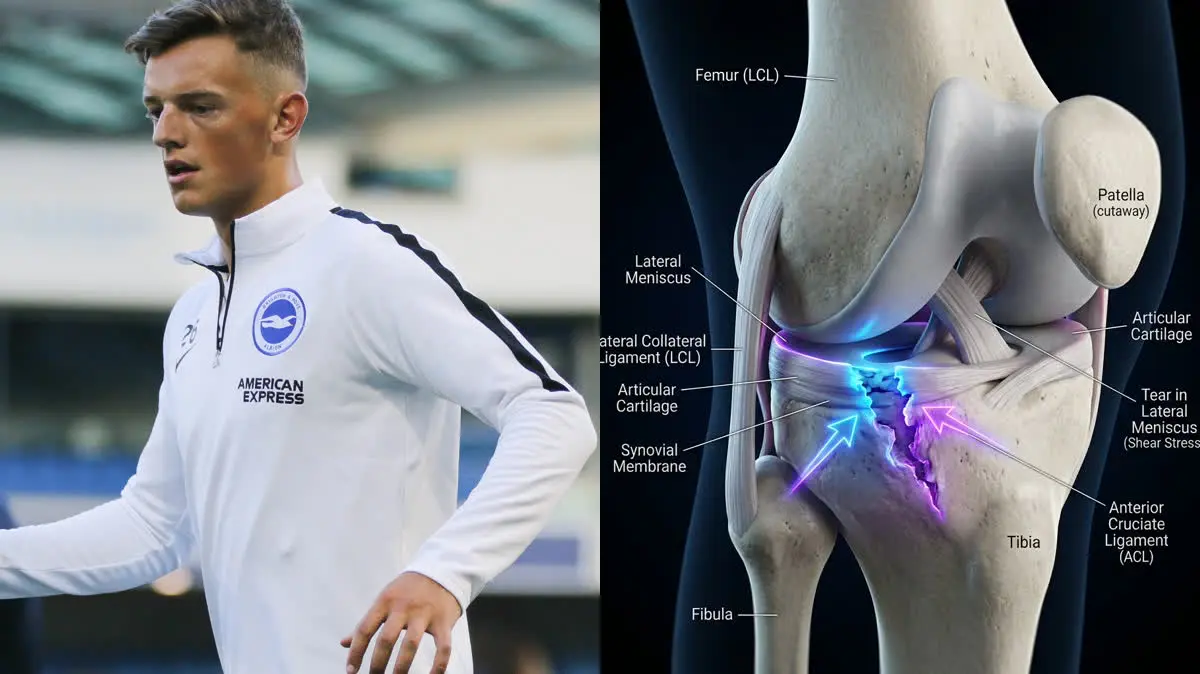
8 min readBen White's Severe Knee Injury: A Biomechanical Analysis of Lateral Meniscus Shear and Joint Longevity
8 min readElly De La Cruz's Hamstring Strain: The Biomechanics of Sprint Deceleration
8 min readTotal Knee Replacement (TKR): Post-Op Protocols for Restoring Extension
9 min readWeekly Wellness
Don't miss the next guide
Join 5,000+ subscribers getting holistic health tips every Tuesday.
Related Healing Guides
View All Guides →
George Washington's Fatal Bloodletting: An Ayurvedic Reconstruction of Rakta Dhatu Depletion and Ojas Collapse
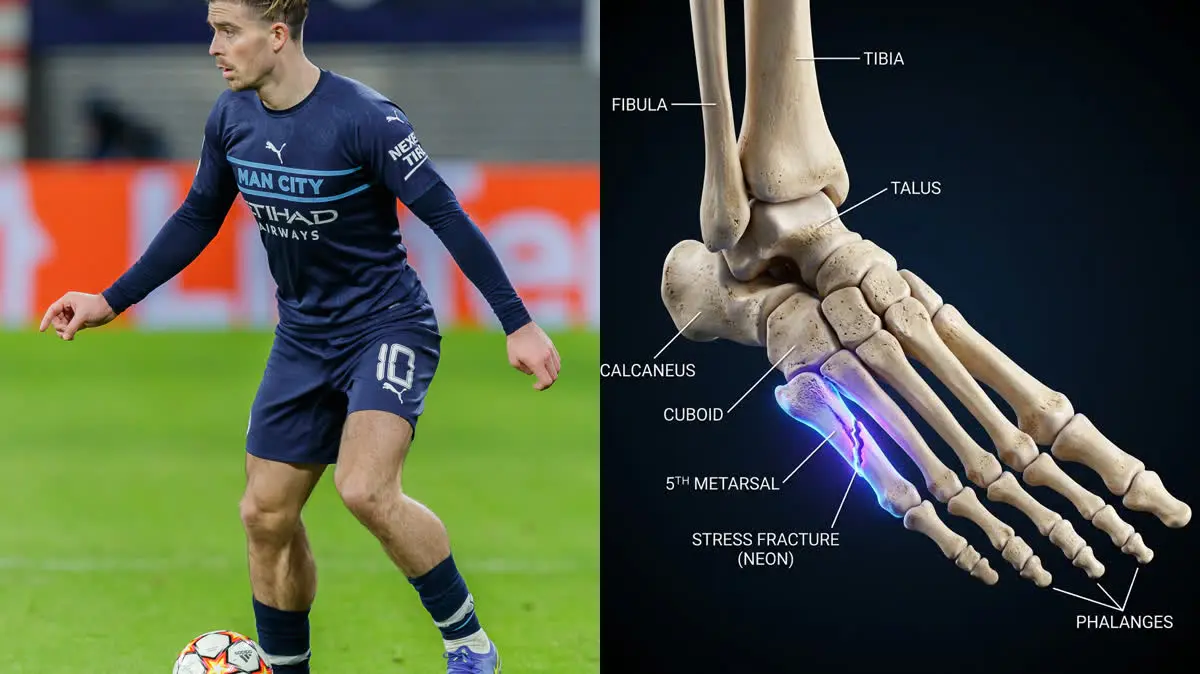
Jack Grealish's stress fracture of the foot: Soccer Biomechanics, Fifth Metatarsal Load, and Surgical Rehab