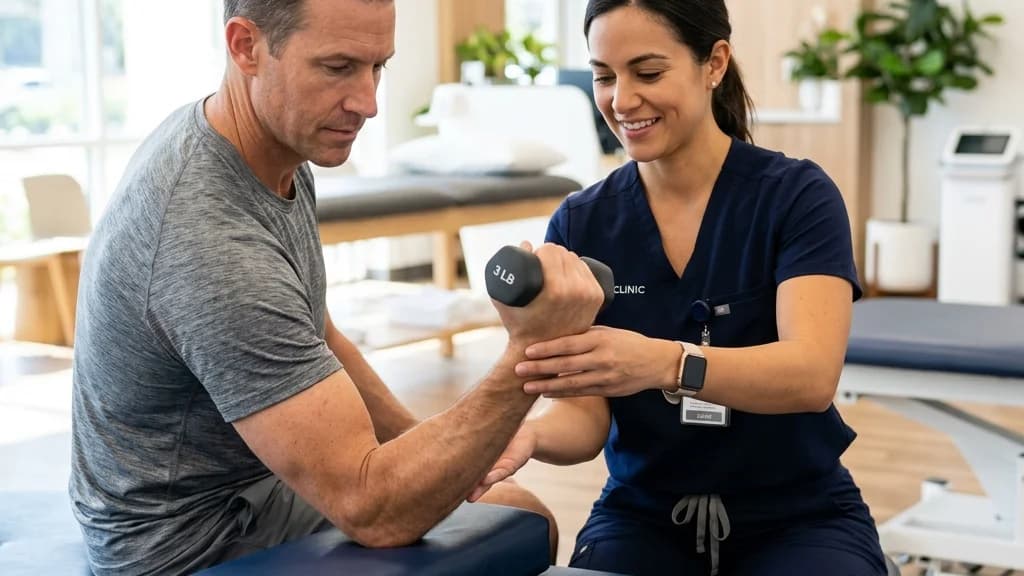
Lateral Epicondylitis (Tennis Elbow): Eccentric Training with the Tyler Twist
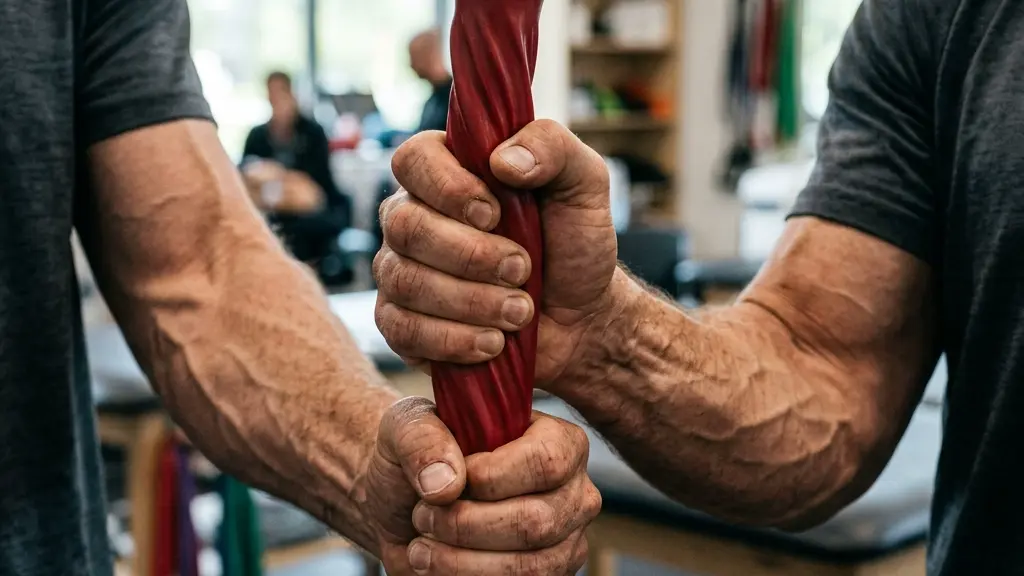
“Tendon rehabilitation is not like healing a cut on your skin. It is like reweaving an unraveled hemp rope. To force the frayed fibers to line up and bind together, you must pull on them under calculated, heavy tension.”
It starts as a faint ache on the outer knob of your elbow, usually triggered by something minor like shaking someone’s hand or opening a pickle jar. Within weeks, the pain sharpens into an electric, burning sting. Suddenly, even lifting an empty coffee cup feels like a monumental mechanical struggle.
You have developed lateral epicondylitis, commonly known as Tennis Elbow. You have likely tried the standard medical suite: ice, anti-inflammatory pills, rest, and perhaps a velcro forearm strap. Yet, the moment you try to play, type, or lift again, the pain roars back instantly.
This is because traditional rest is a biological dead-end for tendons. Clinical evidence shows that pure rest and passive care only yield a 30% long-term resolution rate, leaving the tendon weak and structurally disorganized. To achieve an **80%+ permanent recovery rate**, you must ditch the rest and initiate active tennis elbow eccentric exercises.
The Myth of 'Inflammation': Why Ice Fails
First, let’s clarify the science. Despite ending in "-itis," chronic Tennis Elbow is rarely an inflammatory condition.
Under a microscope, a chronic tennis elbow tendon doesn't show inflammatory cells; it shows angiofibroblastic hyperplasia—a disorganized, messy tangle of microscopic scar tissue, tiny new blood vessels, and hyper-sensitive nerve endings. The tendon has literally "forgotten" how to build parallel, strong collagen fibers.
When you rest the elbow, you simply allow this disorganized tangle to become stiffer and weaker. The moment you load it again, the stress hits the unraveled fibers, causing microscopic tearing and immediate pain.
To fix a disorganized tendon, we must apply load. But not just any load—specifically, an eccentric (lengthening) load.
Why Eccentrics Are the Cure
Eccentric contractions—where a muscle is loaded while it is actively lengthening—have a unique cellular effect known as mechanotransduction. It signals the tendon cells (tenocytes) to actively synthesize new Type-1 collagen fibers and, crucially, align them in a neat, parallel fashion. It is the physiological equivalent of combing messy hair until it lies smooth and strong.
The Magic Tool: The Tyler Twist Explained
Until recently, isolating the extensor carpi radialis brevis (the primary tendon implicated in Tennis Elbow) in a pure eccentric lengthening phase was mechanically awkward using standard dumbbells.
Enter the **Tyler Twist**—a clinically validated protocol utilizing a flexible rubber resistance bar. In independent sports medicine trials, incorporating the Tyler Twist into standard rehab produced a dramatic, statistically superior reduction in pain and a massive surge in grip strength.
Here is the exact 4-step sequence to perform it correctly at home:
- Step 1: The Grip. Hold the rubber bar vertically in front of you with your painful arm. Extend your wrist fully back (putting it in extension) and grip the lower third of the bar.
- Step 2: The Twist. Reach across with your non-painful hand. Grasp the top of the bar with your palm facing away, and actively twist the bar by flexing that healthy wrist downward.
- Step 3: The Extension. Bring both arms out in front of you horizontally, maintaining the twist tension you just created in the bar. Your painful wrist should still be extended back.
- Step 4: The Eccentric Release. This is the magic phase. Slowly, over a count of 4 full seconds, allow the painful wrist to be pulled down into flexion by the untwisting bar. The non-painful hand does nothing here; it simply holds its ground.
Perform 3 sets of 15 repetitions, once daily. A moderate "discomfort" level (around 3/10 on a pain scale) during the eccentric phase is completely normal and expected; it confirms you are loading the target tissue.
👤 Patient Spotlight: David, The Weekend Climber
The Patient: David, 38, an avid rock climber and weekend tennis player who presented with debilitating outer elbow pain.
The Measurement: His clinical grip strength on his dominant right arm had crashed by 52% compared to his left, rendering him unable to hold onto climbing holds or securely swing his racquet.
The Strategy: We implemented a progressive loading cycle centered around the red (light) flexible bar, performing the Tyler Twist daily for 6 weeks, alongside active soft tissue release of the tight supinator muscle.
The Outcome: By week 6, his grip strength returned to 95% symmetry, his active pain dropped to 0, and he successfully returned to the climbing wall without a single twinge, proving the regenerative power of mechanical loading.
Ergonomic Triggers to Eliminate
While the Tyler Twist rebuilds the tendon structure, you must stop the ongoing micro-damage caused by daily life. Did you know that **incorrect mouse placement or a keyboard with excessive tilt increases lateral epicondyle load by 250%**?
Ensure your wrists are completely straight when typing—not bent backward. Avoid repetitive, tight pinching motions with your fingertips, which place the extensor tendons under peak leverage strain.
Are you ready to stop resting your elbow into chronic weakness? Purchase a flexible resistance bar, initiate the Tyler Twist protocol, and start reweaving your unraveled tendon fibers today.
Irushi Abeywardhana
Senior Physiotherapist & Founder of Physio Pulse. Senior Clinical Physiotherapist passionate about blending advanced movement science with functional resilience.
Medical Disclaimer
The information provided by AyurPhysio is for general educational and informational purposes only. It is not intended as a substitute for professional medical advice, diagnosis, or treatment. Always seek the advice of your physician or other qualified health providers with any questions you may have regarding a medical condition. Never disregard professional medical advice or delay in seeking it because of something you have read on this website.
Related Healing Guides
View All Guides →
Spinal Stenosis: Flexion-Based Rehab Protocols for Pain-Free Walking
Pelvic Organ Prolapse: Pelvic Floor Stabilization and Safe Lift Mechanics