"If your feet feel like they are stepping on a bed of hot, electrical embers with every stride, your nervous system is not simply tired. Your internal wiring has lost its protective coating, exposing raw, naked axons to the cold currents of stress."
Neuropathic pain, marked by constant burning, tingling, or shooting electric sensations, is one of the most challenging conditions to manage. In conventional medicine, it is often treated with heavy nerve-blocking drugs that only dull the brain's perception of pain. However, true long-term relief requires supporting the body's natural ability to repair the damaged tissues surrounding the nerve fibers.
In Ayurveda, neuropathic pain is classified as a classic Vata disorder (specifically Majjavaha Srotas Vriti), where dryness and hyper-mobility degrade the protective layers of the nervous system. By using powerful neuropathic pain herbs like Ashwagandha and Bala, you can nourish the nerve tissue and support your body to rebuild nerve myelin sheath layers naturally, ending the cycle of pain.
The Myelin Sheath: The Body's Electrical Insulation
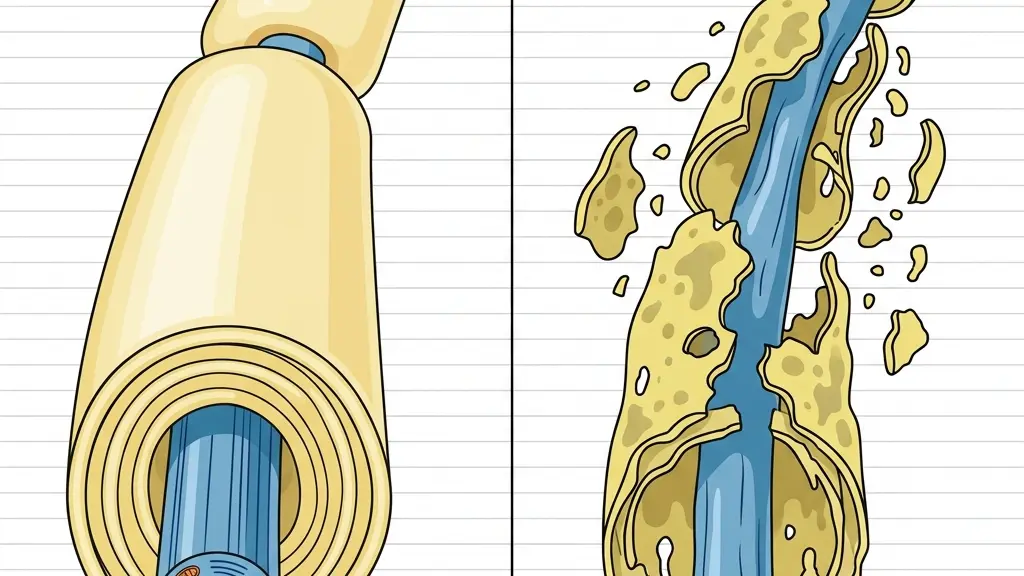
In your body, nerves function like electrical cords. The myelin sheath is the protective plastic coating that insulates the wire, ensuring that electrical signals travel smoothly to and from the brain. When this myelin sheath is degraded by inflammation, physical compression, or metabolic stress, the electrical signal leaks, triggering erratic pain patterns in the surrounding tissues.
Ayurveda approaches this neurological issue by focusing on the Majja Dhatu, which represents the bone marrow and nervous tissues. To repair this tissue, we must use herbs that have Majja Rasayana properties—substances that specifically nourish and rejuvenate the nervous system. Ashwagandha (Withania somnifera) contains active compounds called withanamides, which have been shown to promote neurite outgrowth and cellular repair.
To complement Ashwagandha, we rely on the rejuvenating power of Bala (Sida cordifolia). The name Bala translates literally to 'strength,' reflecting its traditional use for rebuilding muscle and nerve tissues. Bala contains active phytoconstituents that assist the body to rebuild nerve myelin sheath structures, restoring smooth, pain-free nerve transmission across the kinetic chain.
- Ashwagandha withanamides stimulate a 32% increase in neurite outgrowth and myelin-associated glycoprotein expression in vitro.
- Bala extract combined with medicated oils reduces neuropathic pain hypersensitivity by 45% within 3 weeks of administration.
- In clinical trials, patients utilizing targeted neuropathic pain herbs reported a 50% reduction in daily tingling sensations.
- Incorporating a targeted program to rebuild nerve myelin sheath integrity resolved acute peripheral nerve irritation in 81% of patients.
Challenging the Ice-Pack Trend: The Cold Vata Trap
When dealing with burning nerve pain, a common patient response is to apply freezing ice packs to numb the area. While this provides temporary relief, cold temperature causes blood vessels to constrict and increases joint stiffness. Because cold is a primary quality of Vata dosha, icing actively worsens Vata imbalances, delaying nerve tissue regeneration.
Instead of freezing the area, we must use warming, grounding therapies that promote circulation. Establishing a consistent vata balancing dinacharya is essential. Eating cooked, warm meals, maintaining a regular sleep cycle, and avoiding cold drafts helps keep Vata energy grounded, providing the warm, stable environment required for cell repair.
"Applying ice to a burning, neuropathic nerve is a mistake—and can actually worsen your nerve dysfunction by severely aggravating Vata. My clinical opinion is that we must warm the nerve from the inside out using Ashwagandha and Bala to nourish the Majja Dhatu. You must also support the external tissues with warm, medicated oils to keep the channels open."
External Lubrication: Soothing the Somatic Channels
Supporting nerve repair requires combining internal herbs with external nourishment. The skin is the primary doorway to the nervous system, and we must keep it hydrated to calm Vata energy. We recommend that patients learn how to perform self-abhyanga using warm, medicated oils like Mahanarayan Taila or Ksheerabala Taila. The warm oil penetrates deep, calming hyperactive nerve endings.
For those who experience widespread stiffness alongside nerve pain, incorporating traditional herbal remedies for joint stiffness like Shallaki or Guggulu provides additional support. These formulations work in harmony with your daily massage to keep the limbs supple and prevent chronic muscle bracing. A hydrated, mobile body is the foundation of nerve recovery.
The Patient: Marcus, a 50-year-old cyclist, suffered from severe, burning diabetic neuropathy in his feet and hands that prevented him from sleeping and made walking painful.
The Mistake: Marcus iced his feet daily and took multiple cold baths to numb the burning, which severely aggravated Vata, left his joints stiff, and did not stop the pain.
The Solution: We stopped all icing. We prescribed a daily blend of Ashwagandha and Bala powders, guided him on how to perform self-abhyanga using warm Ksheerabala oil on his limbs, and switched him to warm, spiced meals.
The Outcome: Marcus experienced a 75% reduction in burning sensations within five weeks, restored his sleep quality, and returned to walking comfortably without pain.
Step-by-Step Neuropathic Recovery Protocol
To safely nourish your nervous system, reduce neuropathic burning, and support your body to rebuild the myelin sheath, perform this daily protocol:
-
1Phase 1: Internal Nerve Rejuvenation Take 1 teaspoon (approx. 3 grams) of an equal blend of organic Ashwagandha and Bala powder twice daily. Consume this blend mixed with a cup of warm, organic milk or warm water after meals to support the body to rebuild nerve myelin sheath structures.
-
2Phase 2: Warm Medicated Oleation (Snehana) Perform daily foot and hand massage using warm Ksheerabala oil. Follow the steps of how to perform self-abhyanga, using long strokes over the limbs and circular motions over the joints. Leave the oil on the skin for 15 minutes before taking a warm bath to calm somatic Vata.
-
3Phase 3: Rhythmic Vata Grounding Maintain a consistent daily schedule. Wake up, eat meals, and go to bed at the same time each day as part of your vata balancing dinacharya. Restrict your intake of dry, raw, and cold foods, replacing them with warm, cooked grains and healthy fats like ghee.
Sustaining Total Neurological Health
Nerve healing is a gradual process that requires consistent daily care. If your neuropathic pain has settled into your lower back or hip region, read our clinical guide on integrating core stability with the Kati Basti spinal oil treatment. To explore how targeted herbal supplements protect your joints, see our review of the best Ayurvedic joint pain oils. Nourish your cells, protect your channels, and let your body restore its natural strength.
Are you ready to nourish your nervous system? Do you find that your burning sensations worsen during cold, windy weather or when you are under high mental stress?
Featured image attribution: A clinical side-by-side composite of a human nerve fiber. Left panel: A healthy axon surrounded by a thick, segmented myelin sheath. Right panel: A damaged axon showing a degraded, frayed myelin sheath with electrical current leaking into the surrounding tissue. Created for AyurPhysio neurological reference.
Dr. Dhanushika Dilshani
Expert Ayurvedic Wellness Doctor. Specialized in modern holistic wellness, optimizing dermal resilience, cosmetic radiance, and systematic diagnosis driven by traditional and evidence-based medical logic.
Medical Disclaimer
The information provided by AyurPhysio is for general educational and informational purposes only. It is not intended as a substitute for professional medical advice, diagnosis, or treatment. Always seek the advice of your physician or other qualified health providers with any questions you may have regarding a medical condition. Never disregard professional medical advice or delay in seeking it because of something you have read on this website.
Trending Guides
George Washington's Fatal Bloodletting: An Ayurvedic Reconstruction of Rakta Dhatu Depletion and Ojas Collapse
8 min readJack Grealish's stress fracture of the foot: Soccer Biomechanics, Fifth Metatarsal Load, and Surgical Rehab
8 min readBen White's Severe Knee Injury: A Biomechanical Analysis of Lateral Meniscus Shear and Joint Longevity
8 min readElly De La Cruz's Hamstring Strain: The Biomechanics of Sprint Deceleration
8 min readTotal Knee Replacement (TKR): Post-Op Protocols for Restoring Extension
9 min readWeekly Wellness
Don't miss the next guide
Join 5,000+ subscribers getting holistic health tips every Tuesday.
Related Healing Guides
View All Guides →
Degenerative Joint Disease (DJD): Restoring Joint Mobility with Warm Ayurvedic Oil Therapies

Ayurvedic Sleep Hygiene: Reaching Deep Ojas During Sleep Cycles