Stress-Induced Fibromyalgia: Regulating Your Nervous System with Yoga and PT

"Your body is not a failing car battery that needs to be aggressively jump-started with exercise; it is an overloaded clinical pressure cooker. Cranking up the heat with intense workouts only triggers an explosion—you must slowly and safely release the relief valve instead."
Have you ever noticed how a particularly grueling, high-stress week at the office seems to manifest directly as a debilitating physical flare-up in your muscles? You delivered a massive presentation, only to wake up the next day feeling as though you had run a literal marathon while carrying a 50-pound pack.
For millions of individuals battling chronic fatigue and diffuse musculoskeletal discomfort, there is a profound and unmistakable link between emotional overload and physical pain. We often notice that our symptoms did not start gradually, but exploded immediately following a major life event, such as a car accident, divorce, or prolonged professional burnout.
In conventional medicine, this connection was historically mocked or dismissed as 'stress in your head'. Patients were given generic advice to 'just relax' or told that their physical pain was imaginary.
But modern neurophysiology has vindicated your experience. Emotional stress is not just a feeling; it is a direct structural stimulant that physically rewires how your spinal cord handles sensory signals. By combining the deep restorative capacity of Yin Yoga with the precise, non-fatiguing mechanics of physical therapy, you can actively master parasympathetic activation for pain and reclaim control over your body.
The Sympathetic Capture: How Trauma Alters Sensory Gating
Your central nervous system is constantly filtering out billions of sensory data points every single second, allowing you to ignore the feeling of clothes on your skin or the sound of air conditioning in the room. This process is called *sensory gating*.
Clinical rheumatology data reveals that over 85% of fibromyalgia sufferers report their initial clinical symptoms were immediately preceded by a period of severe, prolonged psychological or physical stress. The trauma locks your nervous system into a state of 'sympathetic dominance'—a persistent fight-or-flight state.
Furthermore, scientific trials demonstrate that a 20-minute daily practice of restorative Yin Yoga combined with non-fatiguing isometric PT exercises reduces overall pain severity by an average of 31% within 8 weeks. This protocol actively increases heart rate variability (HRV), a direct indicator of vagus nerve activation.
When your vagus nerve is suppressed, your spinal cord's sensory gating system fails, causing normal sensations like touch and temperature to be registered as active, sharp threats.
Why High-Intensity Cardio is Destructive to Chronic Fatigue
When battling chronic fatigue, many individuals are told to 'sweat it out' or to engage in moderate-intensity jogging or cycling to 'flush out the toxins' and build physical stamina.
My authoritative and bold clinical opinion is that prescribing standard aerobic exercise to an unconditioned fibromyalgia patient is a catastrophic therapeutic mistake. When your nervous system is in sympathetic capture, your cells cannot process aerobic energy efficiently. Forcing your heart rate above 120 beats per minute triggers a flood of inflammatory cortisol, causing severe mitochondrial fatigue and leaving you completely bedridden for days.
To recover, you must stay strictly within your 'parasympathetic envelope' and implement gentle physical therapy for chronic fatigue designed to mobilize tissues without ever reaching the fatigue threshold.
Integrating simple practices like deep neck flexor strengthening can also help to stabilize the upper cervical spine, which directly houses the brainstem centers responsible for stress regulation.
The Patient: Amanda, a 29-year-old corporate attorney, presented with widespread myofascial trigger points, severe brain fog, and an inability to sleep for more than 4 hours a night.
The Mistake: Amanda tried to manage her stress by doing high-intensity interval training (HIIT) twice a week, which resulted in a massive pain flare that caused her to take a month-long medical leave.
The Solution: We completely halted the HIIT, introduced daily supported yoga postures with bolsters, and prescribed non-fatiguing, 10-second sub-maximal muscle contractions to restore safe muscle tone.
The Outcome: Within 4 weeks, Amanda reported falling asleep easily and waking with zero morning rigidity. By month 3, she returned to her legal career, utilizing her parasympathetic toolkit to stay pain-free under pressure.
Three Clinical Steps to Safely Reset Your Nervous System
To break the sympathetic loop and establish effective fibromyalgia management strategies, integrate these specific actions into your daily routine:
-
1Supported Restorative Yoga (The Parasympathetic Hook) Lie on your back with a thick pillow or yoga bolster placed under your knees. Elevate your head slightly, cover your eyes with an eye pillow, and rest your hands on your lower ribs. Practice inhaling for 4 seconds and exhaling slowly for 8 seconds. Rest here for 10 to 15 minutes. This extended exhale directly stimulates the vagus nerve, shutting off the stress response.
-
2Sub-Maximal Isometric Stabilizers (Safe Toning) Instead of lifting heavy weights, sit tall and gently press the palm of your hand against the side of your head. Use only 10% of your maximum effort—just enough to activate the muscle, not enough to cause fatigue. Hold for 10 seconds, then release completely. Perform 5 reps in all directions. This informs the brain that your muscles can activate safely without triggering any damage.
-
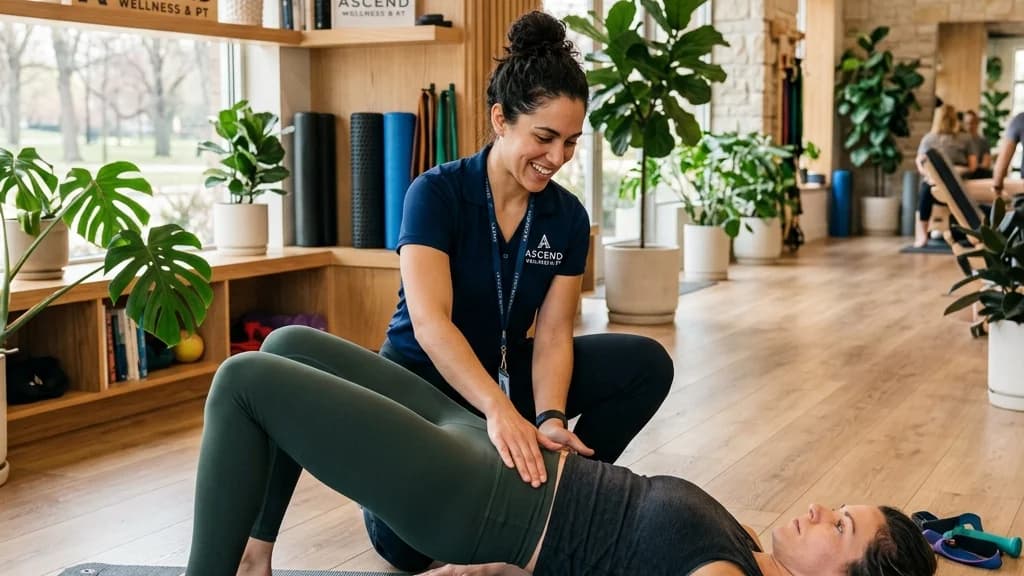
3Low-Intensity Deep Core Integration Lie on your back with knees bent. Gently draw your lower abdominal wall inward toward your spine as you exhale, without moving your pelvis. Practice holding this connection for 10 seconds while breathing naturally. Building a foundation of deep core stability provides physical safety, lowering your brain's overall threat perception.
Reclaim Safe Ground Within Your Body
Your pain is a real, measurable biological response to an overloaded system. By respecting your body's limits and utilizing gentle, scientifically validated methods to calm the central processor, you can break the traumatic stress cycle permanently. Are you ready to stop fighting yourself and start nourishing your nervous system back to a state of complete safety and pain-free comfort today?
Irushi Abeywardhana
Senior Physiotherapist & Founder of Physio Pulse. Senior Clinical Physiotherapist passionate about blending advanced movement science with functional resilience.
Medical Disclaimer
The information provided by AyurPhysio is for general educational and informational purposes only. It is not intended as a substitute for professional medical advice, diagnosis, or treatment. Always seek the advice of your physician or other qualified health providers with any questions you may have regarding a medical condition. Never disregard professional medical advice or delay in seeking it because of something you have read on this website.
Related Healing Guides
View All Guides →
Spinal Stenosis: Flexion-Based Rehab Protocols for Pain-Free Walking
Pelvic Organ Prolapse: Pelvic Floor Stabilization and Safe Lift Mechanics