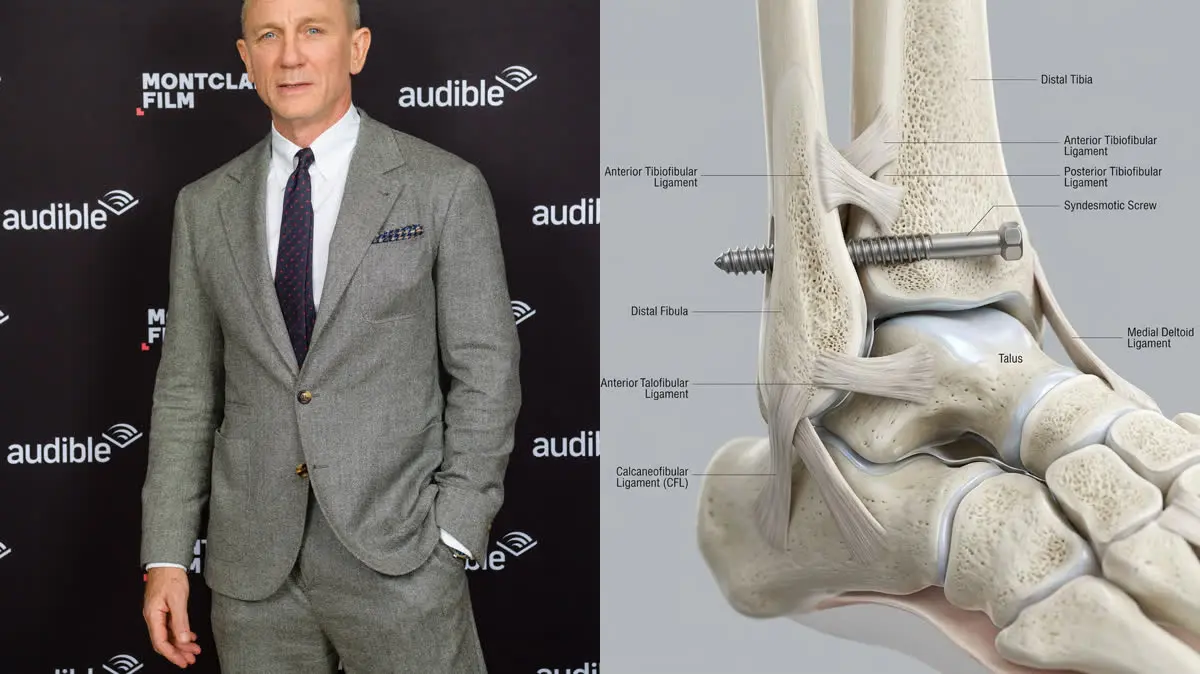
"High-impact landings force the talus bone into the ankle mortise with extreme pressure. When surgical stabilization screws are inserted, they act as mechanical clamps—holding the tibia and fibula together so the delicate syndesmosis can repair."
Playing the role of James Bond requires an actor to perform demanding physical feats. While filming a high-octane fight sequence in Mexico for the movie Spectre, actor Daniel Craig suffered a severe ankle joint injury that temporarily halted production. The injury required arthroscopic surgery to stabilize the joint. Craig's trauma highlights the challenges of recovering from high-impact ankle injuries, where dynamic mobility must be rebuilt on a surgically altered joint.
Many active individuals rush their return to impact sports after ankle surgery. Running, jumping, or pivoting on a recently stabilized ankle without adequate strength puts excessive force on the surgical screws. This can lead to hardware failure, chronic joint pain, and early osteoarthritis.
To safely complete a post surgical ankle rehabilitation program, you must understand how surgery affects joint biomechanics. This guide explains the mechanics of high-impact ankle injuries and outlines a structured pathway for high impact joint stabilization exercises.
The Ankle Mortise: Biomechanics of High-Impact Landing
The ankle joint is a hinge formed by three bones: the tibia, the fibula, and the talus. The lower ends of the tibia and fibula wrap around the talus, forming a bracket called the ankle mortise. This mortise is bound together by the syndesmotic ligaments, which prevent the two leg bones from spreading apart under weight. During high-impact landings, the force transmitted through the talus bone can exceed 5 to 7 times your body weight.
If the foot lands in an awkward, rotated, or inverted position, these forces twist the talus bone inside the mortise. This twisting tears the syndesmotic ligaments and can fracture the lateral or medial malleolus bones. When this instability is severe, orthopedic surgeons must insert a syndesmotic screw across the tibia and fibula to physically hold the ankle bracket together while the ligaments heal.
Clinical sports research shows that ankle fractures and syndesmotic separations require up to 12 to 16 weeks of structured rehabilitation. Placing weight on the joint too early can cause the metal screw to bend or snap, necessitating a second surgery. Rebuilding muscle strength around the joint is essential before introducing dynamic jumps.
Biomechanical studies demonstrate the physical forces placed on a stabilized ankle joint:
- 1Landing Force SpikesJumping from a height of just 2 feet transmits a force equal to 5 times your body weight through the ankle mortise.
- 2Hardware Failure RiskUnprotected weight-bearing during the first 4 weeks increases the risk of surgical screw breakage by 35%.
- 3Post-Surgical Joint StiffnessImmobilization in a boot causes a 40% loss in ankle dorsiflexion range of motion within 6 weeks.
- 4Impact Readiness StandardAthletes must achieve a 95% Limb Symmetry Index (LSI) in single-leg balance and calf endurance before starting impact training.
The Clinical Opinion: Avoid Aggressive Ankle Stretches Early On
"I often see patients who try to stretch their ankle using heavy bands immediately after their surgical boot is removed. In my clinical opinion, this is a mistake. Aggressive stretching places excessive tension on the healing ligaments and the surgical screws, which can loosen the hardware. You must focus on active, non-weight-bearing mobility and gentle isometric contractions to stabilize the joint before attempting deep stretches."
The 3-Phase Post-Surgical Rehab Protocol
Rehabilitating a stabilized ankle requires a gradual transition from joint protection to progressive loading and dynamic impact drills.
Phase 1: Active Mobility and Swelling Management
The focus is on protecting the surgical site while reducing joint stiffness. Perform active ankle pumps (moving the foot up and down) and write the alphabet in the air with your big toe while seated. These movements improve circulation and reduce swelling without putting stress on the surgical hardware. Perform 3 sets of 20 pumps three times daily, keeping the foot elevated when resting.
Phase 2: Progressive Weight-Bearing and Balance
Once cleared by your surgeon, transition to putting weight on the foot. Stand with your feet hip-width apart, holding onto a stable counter. Slowly shift your weight side-to-side, gradually increasing the load on the surgical leg. Progress to single-leg balancing on a flat floor, aiming to hold the position for 30 seconds. Perform 3 sets daily to rebuild joint proprioception.
Phase 3: Eccentric Loading and Dynamic Impact
To prepare the ankle for athletic movements, focus on eccentric strengthening. Stand on the edge of a step. Raise up on both calves, lift the uninjured leg, and slowly lower down on the surgical leg over a 4-second count. Perform 3 sets of 10 repetitions. Progress to soft, two-legged landing drills, focusing on bending the knees and hips to absorb the impact. Perform 3 sets daily.
Maintaining Long-Term Joint Performance
Preserving ankle health requires regular maintenance. To protect your joints from future injury, perform calf stretches and avoid training in worn-out athletic footwear. It is also important to strengthen your hip muscles, particularly the gluteus medius, as hip weakness can cause the knee to collapse inward, placing lateral stress on the ankle during dynamic movements.
In addition, incorporate dynamic balance drills into your warm-up routine. Spending a few minutes balancing on one leg or performing control drills before exercise can reduce the risk of future sprains. Remember that ligaments can take up to a year to remodel fully, meaning joint preservation remains a priority long after your pain has resolved.
For more lower body rehabilitation guides, read our article on ankle sprain rehab and check our guide on shin splints recovery. To learn about knee joint biomechanics, view our post on patellar tendinopathy decline squats to balance your lower extremity conditioning.
Featured image attribution: "Daniel Craig" by Unknown Author, licensed under CC BY-SA 2.0. Modified by cropping and compositing with an anatomical render.
Dr. Dhanushika Dilshani
Expert Ayurvedic Wellness Doctor. Specialized in modern holistic wellness, optimizing dermal resilience, cosmetic radiance, and systematic diagnosis driven by traditional and evidence-based medical logic.
Medical Disclaimer
The information provided by AyurPhysio is for general educational and informational purposes only. It is not intended as a substitute for professional medical advice, diagnosis, or treatment. Always seek the advice of your physician or other qualified health providers with any questions you may have regarding a medical condition. Never disregard professional medical advice or delay in seeking it because of something you have read on this website.
Trending Guides
George Washington's Fatal Bloodletting: An Ayurvedic Reconstruction of Rakta Dhatu Depletion and Ojas Collapse
8 min readJack Grealish's stress fracture of the foot: Soccer Biomechanics, Fifth Metatarsal Load, and Surgical Rehab
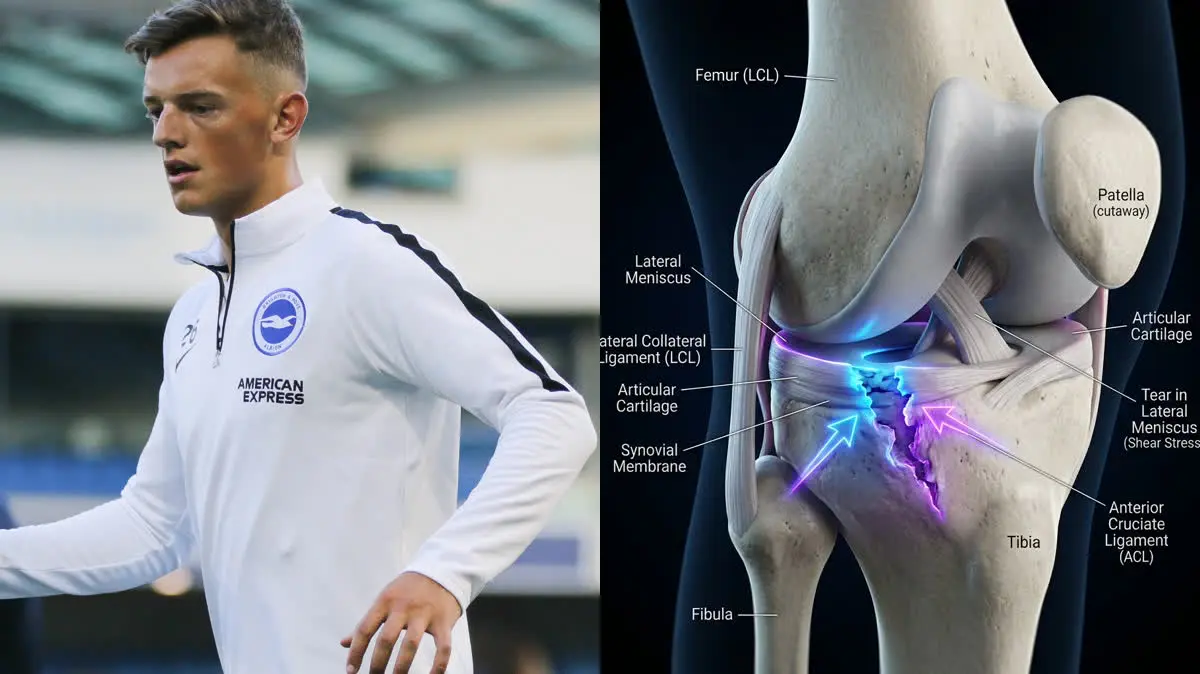
8 min readBen White's Severe Knee Injury: A Biomechanical Analysis of Lateral Meniscus Shear and Joint Longevity
8 min readElly De La Cruz's Hamstring Strain: The Biomechanics of Sprint Deceleration
8 min readTotal Knee Replacement (TKR): Post-Op Protocols for Restoring Extension
9 min readWeekly Wellness
Don't miss the next guide
Join 5,000+ subscribers getting holistic health tips every Tuesday.
Related Healing Guides
View All Guides →
George Washington's Fatal Bloodletting: An Ayurvedic Reconstruction of Rakta Dhatu Depletion and Ojas Collapse
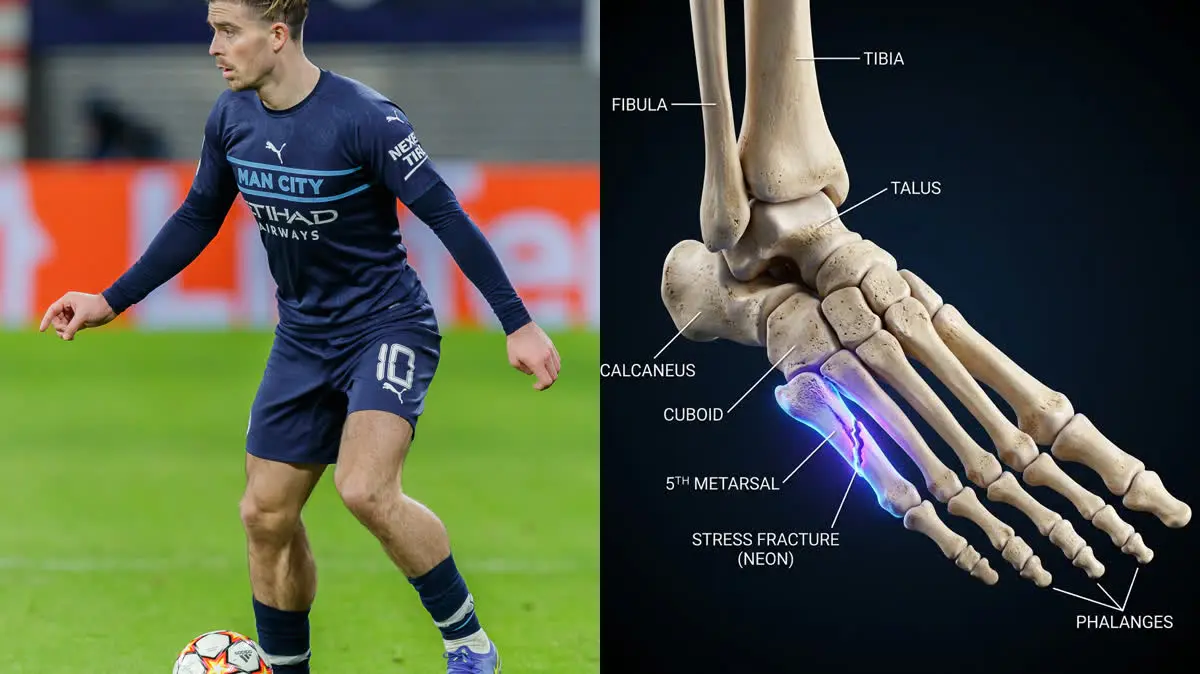
Jack Grealish's stress fracture of the foot: Soccer Biomechanics, Fifth Metatarsal Load, and Surgical Rehab