Ergonomic Setup Guide for Remote Workers: Avoiding Upper Cross Syndrome

"Your head is essentially a 12-pound bowling ball balanced on a stack of fragile teacups. If you tilt that ball forward just a few inches for eight hours a day, those teacups—your cervical vertebrae—will eventually crack under the pressure."
The "work from home" revolution was supposed to be a triumph of freedom and flexibility. Instead, for millions of remote workers, it has become a slow-motion architectural disaster for the human body. Without the professional ergonomic home office setup of a corporate headquarters, we have retreated to kitchen stools, soft couches, and the ultimate spinal enemy: the "lap" top.
If you find yourself finishing the workday with a burning sensation between your shoulder blades, a stiff neck, or frequent tension headaches, you aren't just "tired." You are likely developing Upper Cross Syndrome—a specific pattern of muscle imbalance where your chest and upper back muscles essentially "switch roles," leading to a permanently hunched, turtle-like posture.
Slumping over a laptop is like driving your car with the parking brake on—eventually, something is going to smoke. In this case, the "smoke" is chronic inflammation, nerve impingement, and structural spinal degeneration. To reclaim your health, you must move beyond generic postural advice and implement a precision-engineered postural correction for remote workers.
The Silent Catalyst: What is Upper Cross Syndrome?
Upper Cross Syndrome (UCS) is not a sudden injury; it is a gradual "re-wiring" of your musculoskeletal system. It is characterized by an X-shaped pattern of imbalances: the muscles in the front of your chest (pectorals) and the back of your neck (upper trapezius and levator scapulae) become chronically tight and overactive.
Conversely, the muscles that are supposed to hold your shoulder blades back (rhomboids and serratus anterior) and the deep stabilizers in the front of your neck (deep neck flexors) become weak and inhibited. This creates a feedback loop where your body "forgets" how to sit upright, making neck pain from remote work an almost inevitable daily companion.
Clinical data from the Journal of Physical Therapy Science suggests that for every 1 inch your head drifts forward from your center of gravity, you add an additional 10 lbs of mechanical load to your cervical spine. By the time you are deeply hunched over a spreadsheet, your neck might be supporting the equivalent weight of a medium-sized dog.
My strong clinical opinion is that laptops are the single worst invention for human spinal health. By design, they force a structural disconnect between eye level and hand level. You cannot have the keyboard at an ergonomic height for your wrists while simultaneously having the screen at a healthy height for your eyes.
If you are working directly off a laptop without an external monitor or stand, you are choosing to sacrifice your cervical lordosis for portability. To achieve true upper cross syndrome relief, the very first step is to "de-couple" your screen from your keyboard. Your spine is not negotiable; your hardware setup is.
The 3-Point Ergonomic Reset
Fixing your posture isn't about "trying harder" to sit up straight; it's about making it physically impossible to slump. Here is how to set up your desk for back health using the 90-90-90 rule.
-
1The Eye-Level Horizon The top third of your monitor should be at direct eye level. If you use a laptop, buy a riser or a stack of sturdy books. This prevents the "forward head tilt" that causes text neck syndrome. If you are looking down, you are losing.
-
2The Elbow Float Your keyboard and mouse should be positioned so your elbows are bent at 90 degrees and tucked close to your ribs. Your wrists should remain neutral, not cocked upward. This relaxes the upper traps and prevents the "shrugged" posture that drives UCS.
-
3The Pelvic Foundation Your hips should be slightly higher than your knees. Use a lumbar support (or a rolled-up towel) to maintain the natural inward curve of your lower back. If your lower back flattens, your upper back will compensate by rounding—it's a kinetic chain reaction.
For more detail on the specific loads placed on your spine during device use, check out our deep dive into Understanding Text Neck Syndrome and Cervical Loads.
Many remote workers turn to "posture corrector" straps that pull their shoulders back. While these provide a temporary sensation of uprightness, they are a biological trap. By doing the work *for* your muscles, they cause your rhomboids and traps to atrophy further through disuse.
You cannot outsource your stability to a piece of elastic. The only way to fix Upper Cross Syndrome is to strengthen the weak muscles and release the tight ones. Relying on a brace is like putting a cast on a healthy arm—it will only come out weaker.
The "Desktop Decompression" Routine
Even a $2,000 ergonomic chair cannot save you if you remain static for four hours. You must introduce "movement snacks" every 30 minutes to reset your nervous system.
The most effective tool in your arsenal is the Brugger’s Relief Position. Sit at the edge of your chair, spread your knees, turn your palms outward, and gently squeeze your shoulder blades together while tucking your chin. Hold for 30 seconds. This move "un-crosses" the syndrome by simultaneously stretching the tight anterior chain and activating the weak posterior chain.
The Patient: Sarah, a 29-year-old software engineer, presented with "pins and needles" in her hands and a relentless burning pain in her neck that made concentration impossible.
The Mistake: Sarah assumed she had Carpal Tunnel Syndrome and was wearing wrist braces. In reality, her "pins and needles" were coming from a compressed brachial plexus in her neck—a direct result of her severe forward-head posture.
The Solution: We ditched the wrist braces and moved her laptop to a riser with an external keyboard. We introduced deep neck flexor strengthening and pectoral releases using a tennis ball against a doorframe.
The Outcome: Her hand numbness vanished within 10 days. By week four, her "permanent" headaches had reduced by 90%, and her "hump" was noticeably diminished.
Building a Resilient Workspace
Your home office should be a temple of productivity, not a chamber of torture. By investing 15 minutes today in adjusting your screen height and desk layout, you are preventing decades of chronic pain and potential spinal surgery.
If your neck tension has already reached a point of chronic stiffness that stretches cannot touch, it may be time to look at strengthening the underlying support structures. Explore our guide on Deep Neck Flexor Strengthening for Chronic Headaches to rebuild your internal postural "scaffolding."
Are you ready to stop being a turtle? Raise your monitor by three inches today and feel the immediate relief as that 12-pound bowling ball finally finds its proper home on your shoulders.
Irushi Abeywardhana
Senior Physiotherapist & Founder of Physio Pulse. Senior Clinical Physiotherapist passionate about blending advanced movement science with functional resilience.
Medical Disclaimer
The information provided by AyurPhysio is for general educational and informational purposes only. It is not intended as a substitute for professional medical advice, diagnosis, or treatment. Always seek the advice of your physician or other qualified health providers with any questions you may have regarding a medical condition. Never disregard professional medical advice or delay in seeking it because of something you have read on this website.
Trending Guides
George Washington's Fatal Bloodletting: An Ayurvedic Reconstruction of Rakta Dhatu Depletion and Ojas Collapse
8 min readJack Grealish's stress fracture of the foot: Soccer Biomechanics, Fifth Metatarsal Load, and Surgical Rehab
8 min readBen White's Severe Knee Injury: A Biomechanical Analysis of Lateral Meniscus Shear and Joint Longevity
8 min readElly De La Cruz's Hamstring Strain: The Biomechanics of Sprint Deceleration
8 min readTotal Knee Replacement (TKR): Post-Op Protocols for Restoring Extension
9 min readWeekly Wellness
Don't miss the next guide
Join 5,000+ subscribers getting holistic health tips every Tuesday.
Related Healing Guides
View All Guides →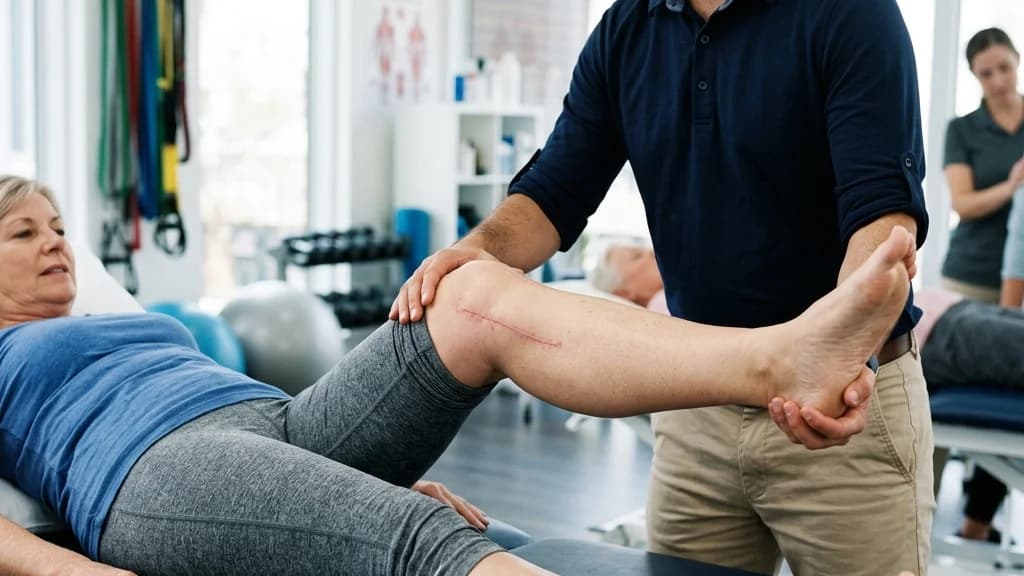
Total Knee Replacement (TKR): Post-Op Protocols for Restoring Extension
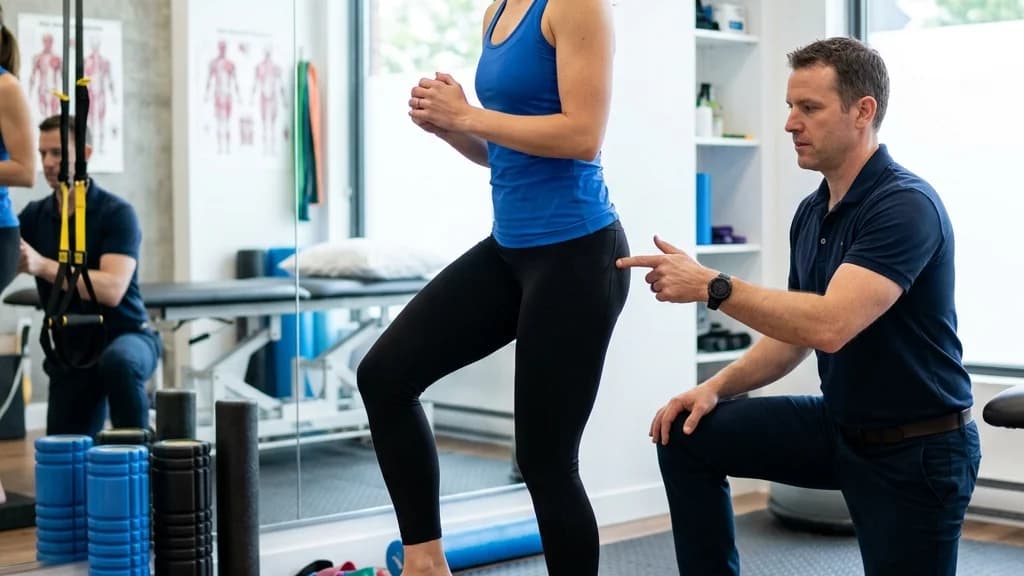
The Gluteus Medius Connection: Preventing Lumbar Compensation