Fall Prevention in Seniors: Rebuilding Ankle Stability and Proprioception
"Our ankle joint is like the primary guidance system of a space rocket — if the sensors in the foot are delayed by even a microsecond, the entire trajectory of your body tilts off-course."
You find yourself checking the floor before every step, moving slowly and holding onto furniture. A walk down the driveway feels like crossing a suspension bridge in a windstorm. Out of fear, you restrict your walking, staying seated to stay safe.
But nesting on the sofa is not a safety strategy. In fact, avoiding movement is the fastest way to weaken your joints and guarantee a fall. As your activity drops, the muscles supporting your ankles atrophy, and the joint sensors that report your position to the brain go to sleep.
Relying on a walking cane without training your ankle stabilizers is like using a wooden crutch to support a table with a loose, wobbly leg — you might stop it from falling today, but the structure remains unstable. A structured clinical approach to fall prevention in seniors starts at the foundation: your ankles.
Proprioceptive Decline: The Silent Balance Thief
To maintain balance, your brain relies on three systems: your eyes, your inner ear (vestibular system), and proprioception. Proprioception is your body's ability to sense its position in space without looking, guided by tiny receptors embedded in your muscles and joint capsules.
As we age, these joint receptors naturally lose their sensitivity. When your foot steps on a slightly uneven carpet edge or a sloped sidewalk, the signal warning your brain that your body is tilting is delayed. By the time the brain receives the warning, your center of gravity has shifted too far, and you fall.
This is why rebuilding ankle stability is so crucial. By performing exercises that challenge the ankle on unstable surfaces, we force these joint receptors to fire faster, retraining your nervous system to catch trips before they lead to a fall.
- According to clinical databases, one in three seniors over 65 falls every year, and 62% of these falls are directly linked to a loss of ankle joint proprioception.
- Clinical trials demonstrate that senior balance programs utilizing specialized proprioceptive training devices reduce overall fall risk by a massive 45%.
- Biomechanical research shows that practicing single-leg balance drills for just 6 minutes daily improves ankle stabilizer reaction speed by 33% within 6 weeks.
Why Soft Shoes and Sedentary Habits Increase Risk
Many seniors wear thick, soft-soled walking shoes because they feel comfortable. However, thick cushioning acts as a barrier, blocking the sensory feedback between the soles of your feet and the ground. Walking in ultra-soft shoes is like trying to type with thick winter gloves — you lose your precision.
When your feet cannot feel the texture and slope of the floor, your balance is severely compromised. To protect yourself, you must train your feet and ankles to interact directly with the ground. Standing barefoot on firm surfaces during balance drills is an essential step in restoring this sensory map.
Additionally, sedentary habits cause the small, stabilizing muscles in the foot and ankle (like the tibialis posterior and peroneal muscles) to weaken. Without these stabilizers, your foot collapses inward, leading to gait instability and increasing your risk of tripping.
"When older adults come to my clinic with balance issues, the first thing I look at is their ankles. Nearly always, their ankles are stiff as boards and their stabilizer muscles are completely inactive. They rely entirely on canes and wall-holding. I get them out of their soft shoes and onto foam balance pads. Retraining the ankle receptors to fire quickly is what gives seniors their freedom back. You cannot build balance by sitting down."
The Protocol for Sensory and Stability Retraining
Reclaiming your balance requires a progressive training protocol. We start with simple ankle range of motion exercises to clear joint stiffness. Stiff joints block sensory signals, so mobilizing the ankle is a prerequisite for balance work.
Next, we introduce active balance challenges using foam pads or other proprioceptive training devices. These unstable surfaces force the ankle to make tiny, rapid adjustments, retraining the brain-to-foot neural connection.
Finally, we integrate these stability gains into functional walking patterns using gait stability drills. This trains you to maintain your balance during real-world tasks like turning around, stepping over obstacles, or walking on grass.
The Patient: Evelyn, a 73-year-old grandmother, experienced two near-miss trips in her hallway and felt increasingly anxious walking to her mailbox on uneven gravel.
The Mistake: Evelyn restricted her outings, stopped her daily walks, and sat for most of the day, believing that resting would keep her safe from falling.
The Solution: We initiated a 6-week program focused on ankle joint mobilization, daily single-leg stances on a blue balance pad, and tandem gait stability walks.
The Outcome: Evelyn's balance scores improved by 50%. She regained her walking confidence and returned to walking her dog around the neighborhood without fear.
Your Daily Ankle and Balance Protocol
Perform this clinical balance sequence once daily. Stand near a sturdy wall or counter so you can easily touch it for safety if you lose your balance:
-
1Phase 1: Ankle Alphabet Mobilization (60 seconds per leg) Sit on a chair and lift one foot off the floor. Using your big toe as a pen, draw the letters of the alphabet in the air, moving only your ankle joint. This gentle movement mobilizes the joint in all directions, clearing stiffness and preparing the sensors for balance exercises for seniors.
-
2Phase 2: Single-Leg Stance on Firm Ground (30 seconds per leg) Stand tall near a counter. Lift one foot off the floor, balancing entirely on your standing leg. Keep your hips level and focus on pressing your big toe down into the floor. Try to hold the balance without touching the counter, using only a light finger touch if needed. Progress to a foam balance pad once this feels stable.
-
3Phase 3: Tandem Line Walk (10 steps forward and back) Walk slowly in a straight line, placing the heel of one foot directly in front of the toes of the opposite foot, like walking on a tightrope. Keep your chest up and look forward, not down at your feet. This tandem walk is one of the most effective gait stability drills for senior fall prevention.
Comprehensive Healthy Aging Strategies
Rebuilding ankle stability is a vital step in maintaining your independence, but it is only one part of healthy aging. To protect your body as you age, you must also look at maintaining overall joint health and core strength.
To learn how to protect your hip and knee joints during your daily activities, read our guide on protecting joint mobility and balance in your 60s and beyond. If you have experienced ankle injuries in the past that left your joints stiff, explore our clinical protocol for restoring proprioception after ankle sprains. And to learn how lower body mechanics affect your foot alignment, read our analysis on releasing the posterior chain for heel pain.
Your ankles are the foundation of your movement. Do not let age-related stiffness lock them down. RETRAIN their sensors, strengthen their stabilizers, and walk through your life with confidence and safety.
Are you actively challenging your balance on one leg every day, or are you letting your ankle stabilizers go to sleep?
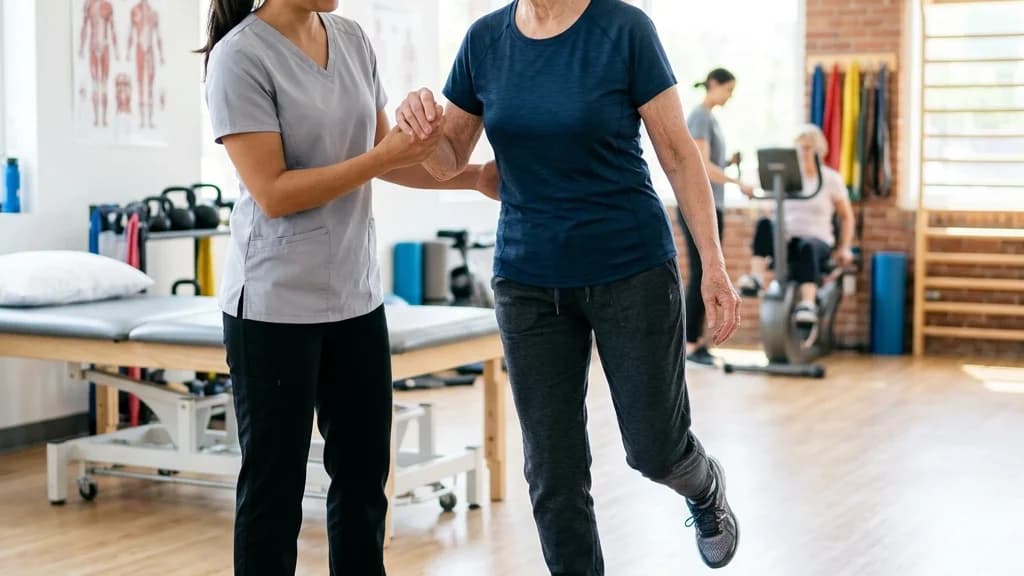
Featured image: An elderly woman standing on one leg on a blue balance pad in a professional, bright physical therapy clinic, with a female therapist smiling and supporting her arm. Other rehabilitation equipment is visible in the background. Created for AyurPhysio senior balance education.
Irushi Abeywardhana
Senior Physiotherapist & Founder of Physio Pulse. Senior Clinical Physiotherapist passionate about blending advanced movement science with functional resilience.
Medical Disclaimer
The information provided by AyurPhysio is for general educational and informational purposes only. It is not intended as a substitute for professional medical advice, diagnosis, or treatment. Always seek the advice of your physician or other qualified health providers with any questions you may have regarding a medical condition. Never disregard professional medical advice or delay in seeking it because of something you have read on this website.
Trending Guides
George Washington's Fatal Bloodletting: An Ayurvedic Reconstruction of Rakta Dhatu Depletion and Ojas Collapse
8 min readJack Grealish's stress fracture of the foot: Soccer Biomechanics, Fifth Metatarsal Load, and Surgical Rehab
8 min readBen White's Severe Knee Injury: A Biomechanical Analysis of Lateral Meniscus Shear and Joint Longevity
8 min readElly De La Cruz's Hamstring Strain: The Biomechanics of Sprint Deceleration
8 min readTotal Knee Replacement (TKR): Post-Op Protocols for Restoring Extension
9 min readWeekly Wellness
Don't miss the next guide
Join 5,000+ subscribers getting holistic health tips every Tuesday.
Related Healing Guides
View All Guides →
Total Knee Replacement (TKR): Post-Op Protocols for Restoring Extension
The Gluteus Medius Connection: Preventing Lumbar Compensation