Degenerative Joint Disease (DJD): Restoring Joint Mobility with Clinical Traction and Mobilization
"Attempting to mobilize a compressed, arthritic joint without traction is like rubbing two sheets of sandpaper together with maximum downward pressure — you only end up tearing the grit away."
You have been diagnosed with degenerative joint disease (DJD) in your hip or knee. The pain is sharp, and you are told the cartilage is wearing thin. In response, you perform deep, aggressive stretches, hoping to open up the joint.
But stretching a compressed joint is a major mechanical mistake. When a joint is arthritic, the surrounding muscles tighten up in a protective spasm, jamming the bones even closer together. Stretching in this compressed state only grinds the worn joint surfaces, increasing inflammation.
To safely restore movement, you must first create space. Utilizing targeted joint traction techniques in a clinic allows you to unload the joint surfaces before introducing any mobilization. Let us look at the clinical science behind joint distraction and capsular mobility.
The Arthrokinematics of Joint Compression
Every joint in your body relies on two types of movement: osteokinematics (the visible movement of your bones, like bending your knee) and arthrokinematics (the microscopic rolling, gliding, and sliding that happens inside the joint capsule).
When you have degenerative joint disease, the joint capsule becomes stiff and scarred, stopping these micro-glides. When you try to bend or straighten your leg, the bones pinch instead of sliding smoothly. This pinching triggers immediate pain and muscle guarding, restricting your movement further.
Clinical manual therapy mobilization works by restoring these micro-glides. By applying a gentle, localized glide to the joint capsule, a physical therapist can stretch the tight ligaments without compressing the cartilage, helping you regain pain-free movement.
- Clinical trials show that manual joint distraction techniques of just 1 mm reduce intra-articular pressure by 73%, providing immediate pain relief.
- Adding manual joint traction to standard osteoarthritis programs increases overall joint range of motion by 38% compared to exercise alone.
- Biomechanical research demonstrates that localized mobilization techniques increase joint synovial fluid flow rates by 45%, improving natural lubrication.
Why Clinical Traction is the Essential First Step
Clinical manual traction is like opening a tightly closed drawer that has been jammed shut for years — it creates that tiny, essential millimeter of space that allows the drawer to slide freely again. This distraction separation unloads the cartilage and pulls fresh synovial fluid into the joint space.
Without this space, any movement you perform is simply grinding bone on bone. This is why so many home stretching programs fail — they try to force range of motion while the joint is still locked in compression. Traction must always precede mobilization.
Once the joint is decompressed, we can perform targeted mobilizations to stretch the stiff joint capsule. This combination is highly effective for degenerative joint disease rehab, preserving your natural joint cushion and delaying the need for surgery.
"When a patient with severe hip or knee osteoarthritis comes to my clinic, they are often in constant pain. The first thing I do is apply a manual long-axis traction. Within seconds, you can see the relief on their face as the joint surfaces separate. Traction unloads the raw bone endings, allowing us to perform pain-free capsule glides. If your physical therapist is not doing hands-on traction for your arthritis, you are missing the most effective part of rehab."
Restoring Space: Long-Axis Traction vs. Home Drills
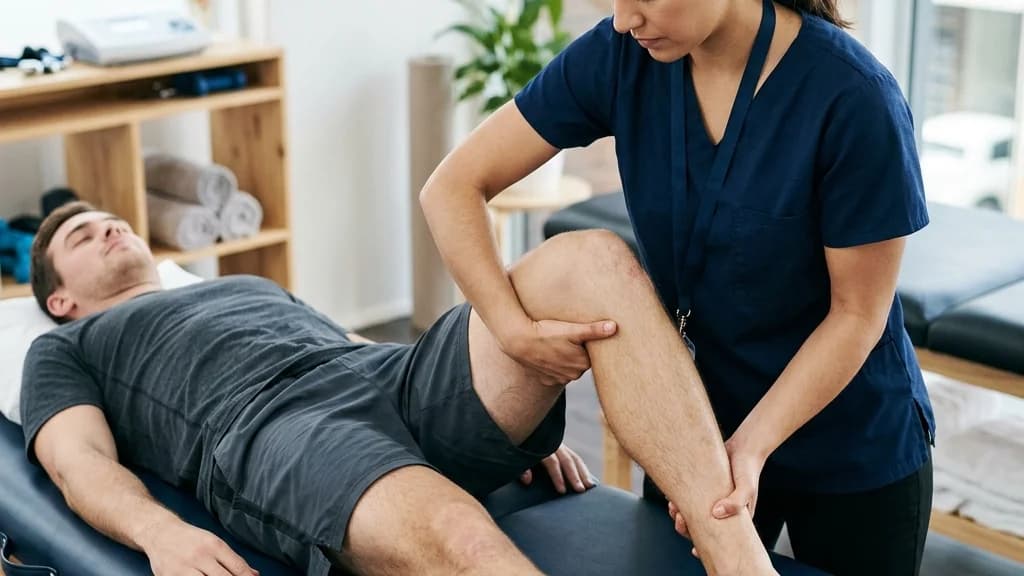
In the clinic, long-axis traction is applied manually by the therapist or using mechanical traction tables. The therapist wraps a traction strap around your ankle or thigh, applying a controlled, longitudinal pull to separate the joint surfaces.
To maintain these gains at home, you can perform self-traction drills using heavy resistance bands. By anchoring a thick band to a sturdy post and looping it around your hip or ankle, you can create a gentle, continuous pull that unloads the joint while you rest.
Incorporating these hip joint traction exercises into your daily routine helps maintain the joint space gained during your manual therapy sessions, keeping your arthritis pain at bay and keeping you active.
The Patient: David, a 59-year-old golf enthusiast, presented with severe left hip DJD, a pronounced walk limp, and pain that prevented him from completing his golf swing.
The Mistake: David performed daily deep, loaded hip flexor stretches, which jammed his arthritic femoral head into the socket, worsening his pain and inflammation.
The Solution: We banned all aggressive, loaded stretches, initiated manual long-axis hip traction combined with posterior capsule glides, and trained him in home band-assisted traction.
The Outcome: David achieved a 15-degree increase in hip rotation, walks completely limp-free, and returned to playing 18 holes of golf pain-free.
Your Joint Decompression and Mobilization Sequence
Perform this clinical sequence daily to maintain joint space and restore range of motion. Focus on keeping your muscles relaxed during the traction phase:
-
1Phase 1: Band-Assisted Hip Self-Traction (5 minutes) Anchor a heavy resistance band to a sturdy post at floor level. Lie on your back, loop the other end of the band around your upper thigh, and step back until the band pulls your hip outward and downward. Relax your leg muscles completely, allowing the band to create a gentle pull in the hip socket. This is your primary hip joint traction exercise.
-
2Phase 2: Quadruped Hip Rocking with Band (15 reps) Keep the band looped around your upper thigh while on all fours. Slowly rock your hips backward toward your heels, letting the band pull your hip joint laterally. This performs a dynamic mobilization of the posterior hip capsule in a decompressed state, directly targeting restoring joint range of motion.
-
3Phase 3: Active Standing Hip Mobilizations (10 reps per side) Stand on a step with your affected leg hanging free. Gently swing the leg forward and backward, then in small circles. Let the weight of your leg act as a natural traction force in the hip joint, helping to lubricate the joint surfaces before walking or training.
Optimizing the Kinetic Chain for Joint Protection
Restoring joint space and capsule mobility is crucial, but you must also address the strength imbalances that caused the joint to compress in the first place. Strengthening the supporting muscles helps distribute forces evenly across the joint.
To learn how to strengthen the muscles supporting a degenerative hip joint, read our guide on hip osteoarthritis lubrication and low-impact exercises. If you are experiencing pelvic instability alongside your arthritis, explore our guide on stabilizing the pelvic ring in SI joint dysfunction. And for advice on managing hip pinching under load, read our breakdown of safe squat mechanics in FAI.
A compressed joint is a painful joint. Stop forcing movement into a jammed space. Decompress the joint capsule, restore the micro-glides, and let your body move freely again.
Are you trying to stretch your arthritic joints under compression, or are you actively creating joint space through traction?
Featured image: A physical therapist performing clinical manual joint traction on a patient's hip or knee joint on a treatment table. Focus on the hands-on mobilization technique. Clean, professional clinic environment. Created for AyurPhysio educational resources.
Irushi Abeywardhana
Senior Physiotherapist & Founder of Physio Pulse. Senior Clinical Physiotherapist passionate about blending advanced movement science with functional resilience.
Medical Disclaimer
The information provided by AyurPhysio is for general educational and informational purposes only. It is not intended as a substitute for professional medical advice, diagnosis, or treatment. Always seek the advice of your physician or other qualified health providers with any questions you may have regarding a medical condition. Never disregard professional medical advice or delay in seeking it because of something you have read on this website.
Trending Guides
George Washington's Fatal Bloodletting: An Ayurvedic Reconstruction of Rakta Dhatu Depletion and Ojas Collapse
8 min readJack Grealish's stress fracture of the foot: Soccer Biomechanics, Fifth Metatarsal Load, and Surgical Rehab
8 min readBen White's Severe Knee Injury: A Biomechanical Analysis of Lateral Meniscus Shear and Joint Longevity
8 min readElly De La Cruz's Hamstring Strain: The Biomechanics of Sprint Deceleration
8 min readTotal Knee Replacement (TKR): Post-Op Protocols for Restoring Extension
9 min readWeekly Wellness
Don't miss the next guide
Join 5,000+ subscribers getting holistic health tips every Tuesday.
Related Healing Guides
View All Guides →
Total Knee Replacement (TKR): Post-Op Protocols for Restoring Extension
The Gluteus Medius Connection: Preventing Lumbar Compensation