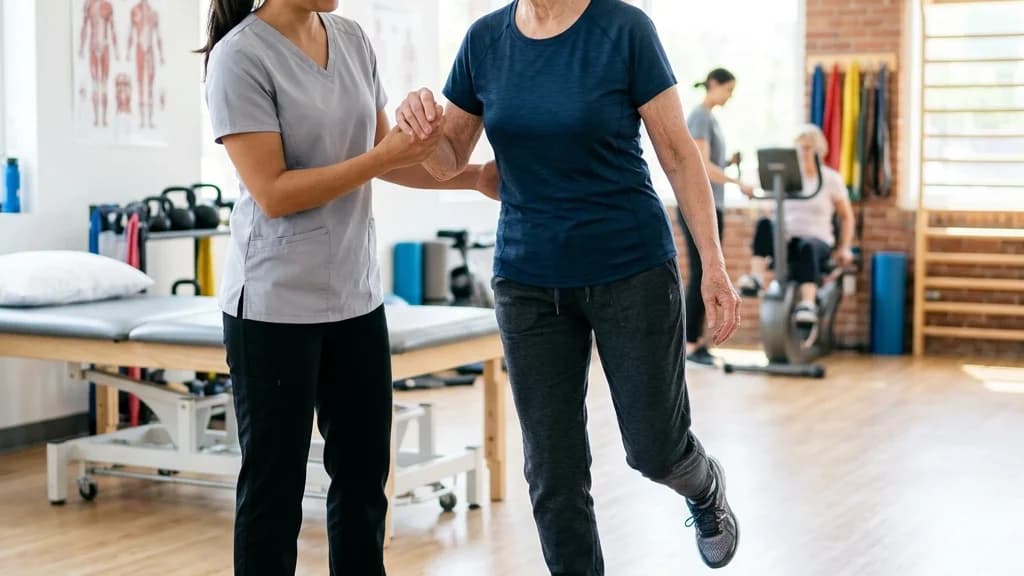
Hip Osteoarthritis: Joint Lubrication Through Low-Impact Strengthening
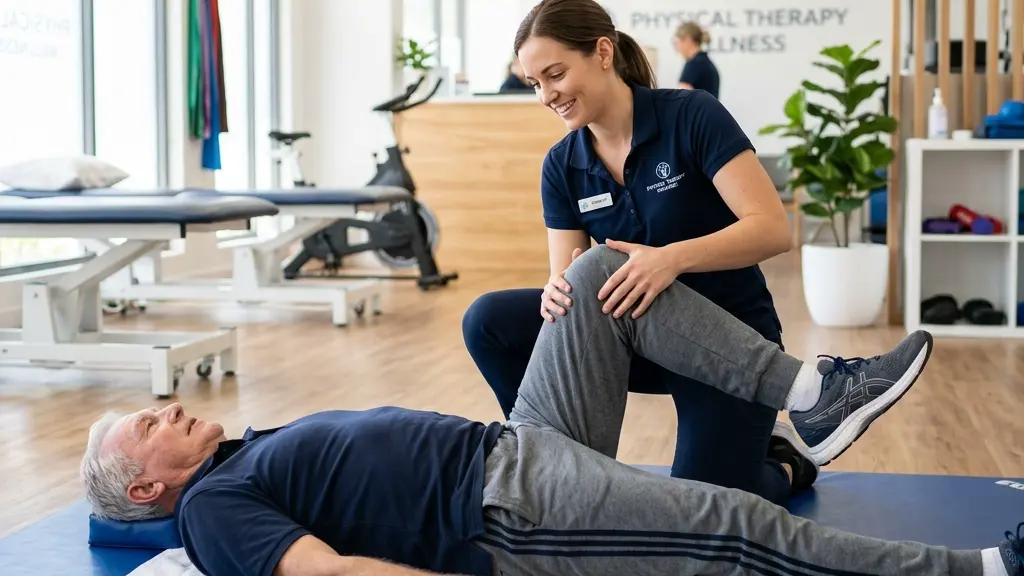
"An osteoarthritic hip joint is the mechanical equivalent of a metal door hinge left out in the rain—dry, creaky, and begging for oil. Resting a painful, arthritic joint to save the cartilage is like parking a classic sports car in a garage forever to save the tires—it only guarantees that the mechanism will seize up and dry out from disuse."
If your hip joint feels like two rough grinding stones rubbing together during your morning walk, or if rising from a low chair triggers a sharp, pinching sensation in your groin, you are likely dealing with joint degeneration. This common condition results in progressive stiffness, loss of movement, and deep discomfort that limits your daily mobility.
Many individuals try to manage this by completely avoiding walking and resting on the couch for hours, or by taking pain relievers daily. While resting temporarily reduces irritation, it actively accelerates joint damage by drying out the cartilage. To preserve your hip function, you must encourage the joint to produce its own natural lubricant.
By utilizing targeted hip osteoarthritis exercises and low-impact loading, you can stimulate synovial fluid flow, stabilize the pelvic ring, and enjoy comfortable, pain-free movement.
The Physiology of Joint Lubrication: The Synovial Pump
Your hip is a deep ball-and-socket joint lined with smooth articular cartilage and surrounded by a joint capsule. The inner lining of this capsule, the synovial membrane, secretes a thick fluid that reduces friction and delivers essential nutrients to the cartilage.
Because articular cartilage has no direct blood supply, it relies entirely on a physical process called the sponge effect to absorb nutrients. When you bear weight through the leg, waste products are squeezed out of the cartilage. When the weight is lifted, nutrient-rich synovial fluid is sucked back in, keeping the tissue healthy and hydrated.
Clinical trials and orthopedic research demonstrate the heavy impact of arthritic wear and the positive effects of active movement:
- Epidemiological data shows that symptomatic hip osteoarthritis affects over 10% of adults aged 55 and older.
- Gentle joint movement reduces the friction coefficient within the socket, promoting up to an 80% decrease in localized resistance.
- Clinical studies reveal that structured, low-impact exercise programs reduce patient pain scores by 35%, matching the efficacy of NSAID medications.
If you stop moving the joint due to discomfort, this crucial pumping action ceases. The synovial fluid dries up, the cartilage becomes brittle, and the joint space begins to narrow rapidly. Active joint loading is the primary way to protect the remaining cartilage from wear.
Why Strict Joint Rest is a Degenerative Trap
When groin pain flares up, many patients are told to rest completely, avoid stairs, and sit in soft, deep armchairs to protect their joints.
My decisive clinical opinion is that restricting joint movement and avoiding all weight-bearing activity accelerates hip degeneration and weakens the surrounding stabilizers. Articular cartilage requires cyclic pressure to survive. Sitting for long hours places your hip in a tight, flexed position that cuts off nutrient flow, while allowing the gluteal muscles to weaken and increase joint shear forces.
To protect the joint, you must focus on a protocol of joint lubrication strengthening. This involves performing low-impact movements that build the muscles around the hip socket without grinding the bone, providing a safe way to achieve low impact hip pain relief.
The Patient: Robert, a 62-year-old retired pilot, presented with severe groin stiffness, a noticeable limp, and difficulty putting on his shoes.
The Mistake: Robert stopped all walking and spent his days sitting with his leg crossed, which worsened his muscle weakness and joint pain.
The Solution: We initiated low-load isometric contractions, gluteus medius strengthening, daily water walking, and avoided deep, heavy hip flexion.
The Outcome: Within eight weeks, Robert resolved his limp, reported a 40% increase in pain-free walking distance, and successfully delayed total hip replacement surgery.
Three Clinical Steps to Lubricate and Strengthen Your Hip
To stimulate fluid production and build stability using targeted gluteus medius osteoarthritis rehab, perform these three exercises daily:
-
1Low-Load Isometric Hip Distraction and Activation Lie on your back with a soft belt or strap looped around both thighs, just above your knees. Push your legs outward against the resistance of the belt, contracting your outer hip muscles at about 30% of your maximum effort. Hold this gentle contraction for 10 seconds, then slowly relax. Repeat 10 times to stimulate fluid secretion and reduce joint pressure. This is a foundational step in safe hip mobility osteoarthritis management.
-
2Sidelying Clamshells with Pelvic Stabilization Lie on your side with your hips bent to 45 degrees and knees bent to 90 degrees. Keep your heels glued together and slowly raise your top knee outward without letting your pelvis roll backward. Focus on contracting your upper gluteal muscle, holding for 2 seconds at the top before lowering. Perform 2 sets of 12 repetitions on each side to build lateral stability and protect the joint socket.
-
3Low-Impact Closed-Chain Glute Squeezes Stand tall with your feet placed hip-width apart and knees slightly bent. Squeeze your buttocks together as tightly as possible, holding the contraction for 5 to 8 seconds. Release slowly, repeating the squeeze 15 times. This exercise builds essential muscle support around the hip joint without placing grinding forces through the arthritic socket.
Stabilize the Kinetic Chain for Pain-Free Walking
Your hip joint does not operate in isolation. It forms the central link in the lower body kinetic chain, connecting your lumbar spine to your knee, ankle, and foot. When your foot strikes the ground during walking, the mechanical force travels upward. If your hip stabilizers are weak, your thigh bone rotates inward, placing abnormal torque on the knee joint and increasing the grinding pressure inside the hip socket.
By building strength in your gluteus medius and core, you control this rotation and keep your leg in alignment. This reduces the friction in your joint and protects your knees and lower back from compensation injuries. Nourishing your hip cartilage through gentle, regular movement and strengthening your lateral glutes are key steps in managing arthritis.
To understand how stabilizing the pelvis protects your joints, read our guide on hip labral tears and core stability. If you are experiencing knee issues as well, explore our protocols for patellofemoral pain and hip abductor weakness. For lower back alignment, see our guidelines on sacroiliac joint stabilization.
But if your hip pain is under control, how is the fascial tissue at the very base of your kinetic chain supporting your steps each morning?
Irushi Abeywardhana
Senior Physiotherapist & Founder of Physio Pulse. Senior Clinical Physiotherapist passionate about blending advanced movement science with functional resilience.
Medical Disclaimer
The information provided by AyurPhysio is for general educational and informational purposes only. It is not intended as a substitute for professional medical advice, diagnosis, or treatment. Always seek the advice of your physician or other qualified health providers with any questions you may have regarding a medical condition. Never disregard professional medical advice or delay in seeking it because of something you have read on this website.
Trending Guides
George Washington's Fatal Bloodletting: An Ayurvedic Reconstruction of Rakta Dhatu Depletion and Ojas Collapse
8 min readJack Grealish's stress fracture of the foot: Soccer Biomechanics, Fifth Metatarsal Load, and Surgical Rehab
8 min readBen White's Severe Knee Injury: A Biomechanical Analysis of Lateral Meniscus Shear and Joint Longevity
8 min readElly De La Cruz's Hamstring Strain: The Biomechanics of Sprint Deceleration
8 min readTotal Knee Replacement (TKR): Post-Op Protocols for Restoring Extension
9 min readWeekly Wellness
Don't miss the next guide
Join 5,000+ subscribers getting holistic health tips every Tuesday.
Related Healing Guides
View All Guides →
Total Knee Replacement (TKR): Post-Op Protocols for Restoring Extension
The Gluteus Medius Connection: Preventing Lumbar Compensation