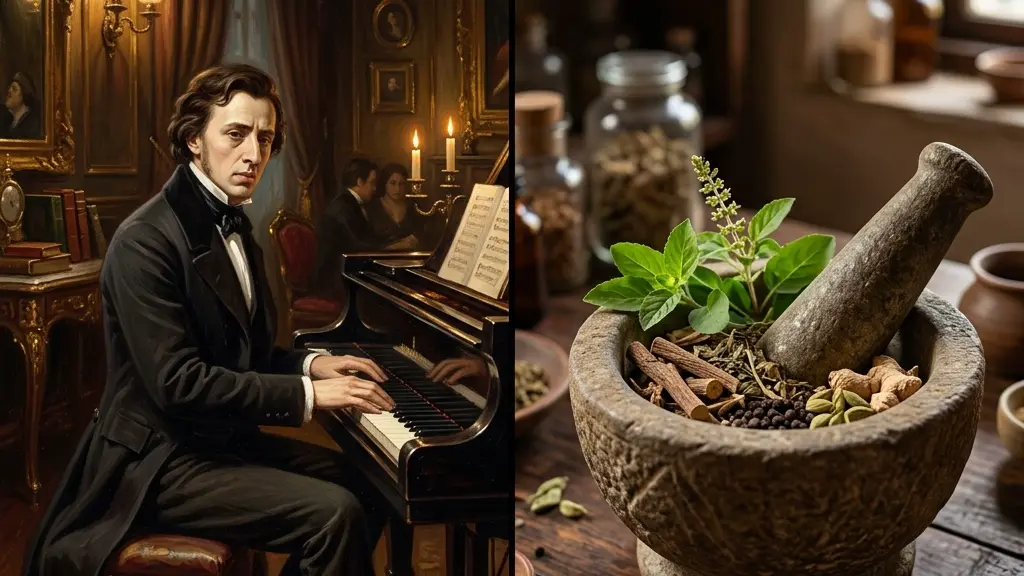
"Chopin's respiratory system was like a delicate piano with damp, swollen keys—no matter how beautiful the music, the physical board could not support the vibration. Wasting disease is like a slow leak in a water tank—your body's vital juices (Ojas) slowly drip away until the vessel is completely dry and empty."
The legendary Romantic composer Frédéric Chopin left behind a musical legacy of profound emotional depth and technical complexity. Yet, parallel to his brilliant creativity was a lifelong, agonizing struggle with a chronic, debilitating condition. Historically diagnosed as tuberculosis, the frederic chopin tuberculosis illness slowly consumed his physical form, reducing him to a state of extreme emaciation, weakness, and respiratory failure by his premature death at the age of 39.
Historical records detail Chopin's battle with recurring hemoptysis (coughing up blood), chronic chest infections, persistent fevers, and profound gastrointestinal sensitivity. In a desperate bid to cure him, 19th-century doctors subjected Chopin to bloodletting, severe fasting, and harsh chemical laxatives. In the light of classical Ayurvedic clinical medicine, these aggressive interventions did not help. Instead, they accelerated his decline by exacerbating a condition known as ayurvedic rajayakshma wasting.
By analyzing Chopin's symptoms and historical medical files, we can reconstruct his illness through a unified metabolic framework. From this perspective, his collapse was not just a localized bacterial infection of the lungs, but a classic systemic depletion of prana srotas lung health and vital tissue reserves.
The Pathophysiology of Rajayakshma: The King of Diseases
In the ancient Ayurvedic compendium Charaka Samhita, Rajayakshma (often translated as the wasting syndrome or the king of diseases) is described as a condition where the body’s tissues undergo progressive degeneration. Rajayakshma is initiated by one of four primary causes: excessive physical strain beyond one's capacity, suppression of natural physical urges, irregular eating and sleeping routines, and the depletion of basic bodily tissues (Dhatu Kshaya).
For Chopin, a life of relentless artistic passion, emotional stress, and irregular schedules severely compromised his digestive fire (Agni). When Agni is weakened, the sequential transformation of food into tissue layers is disrupted. The body cannot properly manufacture Rasa Dhatu (plasma) and Rakta Dhatu (blood). Without adequate nourishment, the deeper tissues—muscle, fat, bone, marrow, and reproductive fluids—begin to wither in a downward cascade.
As the tissues waste away, the body's immune essence, or Ojas, is depleted. Chopin exhibited the exact, classic ojas depletion symptoms: extreme fatigue, susceptibility to recurring infections, severe cold sensitivity, and persistent digestive sensitivity. This systemic depletion left his respiratory channels (Prana Srotas) unprotected, allowing chronic inflammatory and infectious processes to settle in his lungs.
Studies and historical medical audits highlight the immense physiological loads placed on the respiratory system and the effects of chronic wasting:
- Historical archives show Chopin's body weight dropped to under 100 lbs (45 kg) during his final years, indicating severe muscle and fat tissue wasting.
- The respiratory channels (Prana Srotas) transport over 11,000 liters of air daily, requiring a healthy mucosal barrier to protect the lungs from pathogens.
- Clinical trials on traditional Ayurvedic respiratory formulations (like Pippali and Chyawanprash) indicate up to a 32% improvement in lung vital capacity and tissue oxygenation.
Why 19th-Century Medical Treatments Accelerated His Decline
Chopin's physicians, operating under the humoral theories of the time, believed that his fevers and bleeding were signs of "congestion" and "excess heat." To counter this, they prescribed regular bloodletting, mustard plasters that blistered the skin, and a diet consisting primarily of arrowroot and starvation portions.
From an Ayurvedic perspective, this approach was a clinical disaster. Bloodletting directly drains Rakta Dhatu, which is the very vehicle of life force (Prana) and the precursor to muscular integrity. Draining blood from a patient who is already emaciated and exhausted directly intensifies Vata Dosha. It dries out the tissues, compromises oxygen transport, and further weakens the heart.
Furthermore, starving a patient with a weak, irregular digestive fire prevents the body from rebuilding its lost tissues. The cold, damp climate of Mallorca where Chopin stayed during the winter of 1838–1839 further aggravated Vata and Kapha in his chest. Without a hot, nurturing diet and stabilizing lifestyle, his body was unable to arrest the systemic wasting.
The Patient: Frédéric Chopin, a highly sensitive artist presenting with chronic cough, blood-tinged sputum, emaciation, digestive distress, and severe cold intolerance.
The Mistake: Physicians drained his blood, starved his body, and applied irritating plasters, which further depleted Rakta Dhatu and aggravated Vata, accelerating his tissue wasting.
The Solution: Rebuilding tissue mass through warm, highly nourishing soups, medicated ghee, and stabilizing daily routines, paired with herbs like Pippali to heal the lung mucosa.
The Outcome: Reconstruction suggests that restoring digestive fire and nourishing the tissues could have preserved his strength, stabilized his lungs, and prolonged his life.
An Ayurvedic Protocol for Rebuilding Lung and Tissue Vitality
If classical Ayurveda were to manage a profile like Chopin’s, the clinical goal would be a comprehensive ayurvedic respiratory treatment. This protocol focuses on rebuilding tissues (Brimhana) and tonifying the respiratory channels:
-
1Brimhana Rasayana (Nourishing Tissue Therapy) To halt tissue wasting and restore Ojas, the patient must consume warm, sweet, and nourishing preparations. Formulations like Chyawanprash, mixed with warm milk or water, deliver adaptogenic herbs to rebuild tissue mass. Medicated ghee prepared with herbs like Ashwagandha helps calm Vata and restore the fat and muscle layers.
-
2Prana Srotas Mucosal Restoration To soothe the inflamed lung tissues and arrest hemoptysis, herbs like Pippali (long pepper) and Yashtimadhu (licorice root) are administered. Pippali helps dilate the airways and clear mucus, while Yashtimadhu provides a soothing, demulcent coating to protect the delicate mucosal lining of the lungs from irritation.
-
3Agni Deepana & Dinacharya Alignment Restoring a regular daily routine (Dinacharya) is vital to stabilize Vata. Eating warm, spiced, easily digestible meals at the same times each day strengthens Agni. Restricting activities during the cold, damp early morning and evening hours prevents Kapha congestion, protecting the lungs from environmental stress.
Reclaiming Structural and Respiratory Balance
The tragic history of Chopin highlights a timeless clinical truth: you cannot heal a chronic, wasting illness by draining the body of its vital fluids or starving the digestive fire. Rebuilding tissue mass and protecting the mucosal barrier are fundamental to respiratory health.
To understand how chronic depletion impacts other historical figures, read our analysis of Florence Nightingale's chronic fatigue and Ojas depletion. If you want to learn about the link between digestive fire and systemic health crises, read our reconstruction of Charles Darwin's chronic digestive and skin illness. For tips on aligning your lifestyle with seasonal changes to boost respiratory immunity, explore our guide on Ayurvedic seasonal routines (Ritucharya).
But as we restore the balance of our internal tissues and respiratory channels, how does the quality of our blood directly affect joint and tendon repair?
Dr. Dhanushika Dilshani
Expert Ayurvedic Wellness Doctor. Specialized in modern holistic wellness, optimizing dermal resilience, cosmetic radiance, and systematic diagnosis driven by traditional and evidence-based medical logic.
Medical Disclaimer
The information provided by AyurPhysio is for general educational and informational purposes only. It is not intended as a substitute for professional medical advice, diagnosis, or treatment. Always seek the advice of your physician or other qualified health providers with any questions you may have regarding a medical condition. Never disregard professional medical advice or delay in seeking it because of something you have read on this website.
Trending Guides
Clinical Audit: The Best Knee Unloader Braces for Osteoarthritis & Joint Compartment Unloading (2026 Ratings)
10 min readUsain Bolt's Elite Sprinting with Scoliosis: A Biomechanical Breakdown of Asymmetrical Kinetic Chain Compensation and Hamstring Strain Risk
8 min readRetrolisthesis: Understanding Posterior Vertebral Slippage and Rehab
6 min readQuadratus Lumborum Trigger Points: The Secret Driver of Deep Hip Pain
7 min readNerve Flossing Techniques for Sciatic Nerve Mobilization
6 min readWeekly Wellness
Don't miss the next guide
Join 5,000+ subscribers getting holistic health tips every Tuesday.
Related Healing Guides
View All Guides →
Usain Bolt's Elite Sprinting with Scoliosis: A Biomechanical Breakdown of Asymmetrical Kinetic Chain Compensation and Hamstring Strain Risk
The Platelet-Rich Plasma (PRP) Revolution: Autologous Growth Factors vs. Ayurvedic Rakta Dhatu and Ojas Revitalization