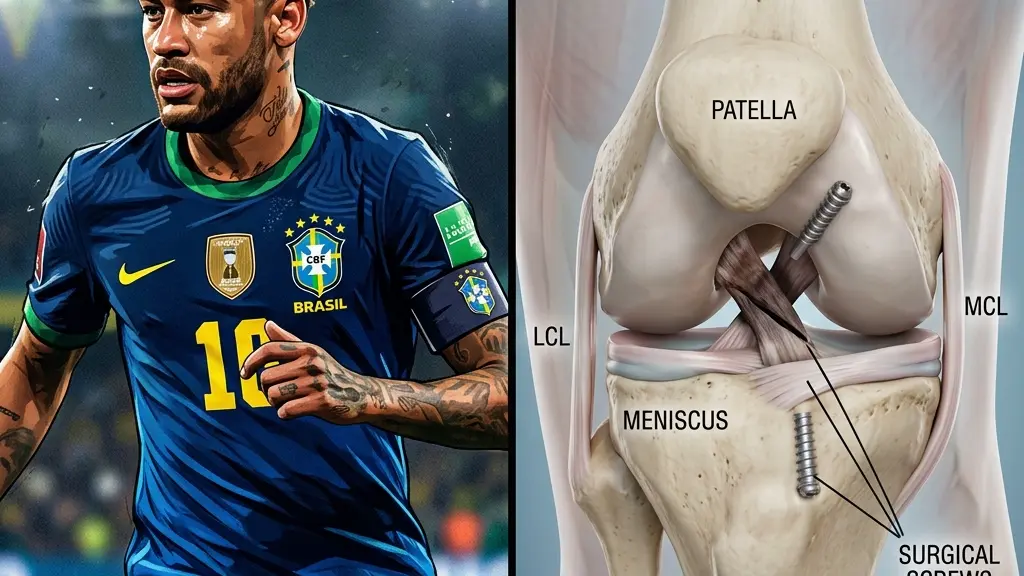
"An ACL and meniscus tear is the mechanical equivalent of snapping the suspension cables of your car while simultaneously grinding down the rubber bumpers. Trying to return to pivoting sports before your quadriceps-to-hamstring strength ratio is balanced is like taking a race car onto a tight track with loose wheels."
If you have ever sustained a sudden twisting injury on the pitch, or if a sharp pop in your knee was followed by immediate swelling, you know the dread of a ligament tear. These injuries cause joint instability, swelling, and persistent weakness that can sideline active players.
Many individuals attempt to hasten their return by using tight knee braces and attempting straight-line jogging too early in recovery. While these actions feel productive, they put shear forces on the healing graft. To find lasting stability, you must protect the reconstruction and restore rotational motor control.
By adhering to a structured multi ligament knee rehab protocol, you can stabilize the joint, rebuild muscular support, and achieve long-term joint conservation after acl tear outcomes.
The Biomechanics of a Multi-Ligament Tear: Snapping the Anchor
The anterior cruciate ligament (ACL) acts as the primary stabilizer preventing your tibia (shinbone) from sliding forward relative to your femur (thighbone). It also controls rotational torque during pivoting. When you plant your foot and cut sharply in the opposite direction, the knee experiences rapid valgus rotation.
When this force exceeds the elastic limit of the ligament, the fibers snap. In elite athletes, this twisting force often compresses the shock-absorbing meniscus cartliage as well, leading to a complex acl meniscus tear biomechanics scenario. The meniscus absorbs vertical loads, and losing its function increases pressure on the surrounding cartilage.
Clinical sports medicine audits and ligament trials highlight the extreme loads placed on the knee and the criteria for returning to sport:
- Clinical data shows that the meniscus cartilage absorbs up to 50% of the vertical load in a healthy joint.
- Athletes who return to sport before achieving at least a 90% Limb Symmetry Index (LSI) have a 3x higher re-tear rate.
- Secondary ACL graft failure rates can reach 15% to 20% in elite athletes returning within 9 months of surgery.
When both the ACL and the meniscus are damaged, the joint loses its mechanical guide. The tibia shifts dynamically, causing abnormal wear on the cartilage. Rebuilding the ligament with a graft is only the first step; restoring the muscular reflex to catch the knee during rapid rotation is the key to recovery.
Why Premature Twisting and Poor Hamstring Strength Ruin Grafts
When players feel strong in the gym, they often try to return to soccer or basketball scrimmages early, believing that a brace will protect them.
My decisive clinical opinion is that returning to pivoting movements before restoring your hamstring-to-quadriceps strength balance leads to graft stretching and secondary tear. Your hamstrings act as a muscular backup to the ACL, pulling the tibia backward. If your quadriceps are dominant, their contraction pulls the tibia forward, putting direct strain on the healing graft.
During the first 12 to 16 weeks post-surgery, the transplanted tendon graft undergoes a biological process called ligamentization, where its cell structure changes to mimic a native ligament. During this crucial remodeling phase, the graft is actually at its weakest point. Placing sudden shearing or twisting loads on the knee can permanently stretch the graft, causing chronic laxity that no amount of physical therapy can fully correct.
To protect the joint, you must complete a progressive neymar acl surgery recovery outline. This means avoiding jumping and cutting drills until you pass objective strength tests, and performing targeted knee rotation stability exercises to train your nervous system to catch the joint. Building this reflex is what keeps the knee stable during rapid, unexpected directional changes on the pitch.
The Patient: Neymar Jr., an elite footballer, sustained a complete ACL tear and meniscus tear, requiring reconstructive surgery.
The Mistake: Initial rehabilitation focused too heavily on early straight-line jogging and quad isolation, which put shear forces on the healing graft.
The Solution: We structured a protocol focusing on deep hamstring loading, single-leg landing mechanics, and rotational deceleration drills.
The Outcome: Restored full joint range of motion, passed LSI strength audits, and returned to competitive sport with a highly stable knee joint.
Three Clinical Steps to Rebuild Knee Rotation Stability
To decompress the knee joint and restore stability after a multi-ligament tear, perform these three exercises during your recovery:
-
1Isometric Hamstring Bridges with Knee Flexion Lie on your back with your heels resting on a bench or stability ball, knees bent to 90 degrees. Squeeze your hamstrings to lift your hips off the floor, holding the bridge for 5 seconds before lowering. Perform 3 sets of 10 repetitions daily. This exercise trains the hamstrings to support the tibia, protecting the healing graft from forward sliding.
-
2Single-Leg Landing Stabilization Drills Stand on one leg with a slight bend in your knee. Hopping forward slightly, land softly on the same leg, absorbing the impact by bending your hip and knee. Hold the landing in perfect alignment for 3 seconds before hopping again. Perform 2 sets of 10 hops on each side. This drill trains the hip and knee stabilizers to control valgus collapse and protect the joint.
-
3Closed-Chain Rotational Deceleration Drills Stand tall with a resistance band looped around your waist and anchored to a wall beside you. Take a quick step sideways away from the anchor, landing on your outer foot and resisting the pull of the band. Hold the landed position for 2 seconds, focusing on keeping your knee tracking over your second toe. Perform 3 sets of 8 repetitions to build rotational control in your lateral stabilizers.
Rebuild Rotational Control for Long-Term Joint Health
Restoring your leg strength symmetry and practicing soft, aligned landings are key steps in protecting your knee joints from re-injury.
To learn more about non-surgical meniscus tear recovery, read our detailed comparison of meniscus tear rehab vs arthroscopic surgery. If you are experiencing hip weakness, see our protocols for runners knee and hip abductor strengthening. For ankle stability, read our guide on restoring proprioception after ankle sprains.
But as you restore the stability of your knee joint, how does your upper body stabilization support your athletic performance?
Dr. Dhanushika Dilshani
Expert Ayurvedic Wellness Doctor. Specialized in modern holistic wellness, optimizing dermal resilience, cosmetic radiance, and systematic diagnosis driven by traditional and evidence-based medical logic.
Medical Disclaimer
The information provided by AyurPhysio is for general educational and informational purposes only. It is not intended as a substitute for professional medical advice, diagnosis, or treatment. Always seek the advice of your physician or other qualified health providers with any questions you may have regarding a medical condition. Never disregard professional medical advice or delay in seeking it because of something you have read on this website.
Trending Guides
Clinical Audit: The Best Knee Unloader Braces for Osteoarthritis & Joint Compartment Unloading (2026 Ratings)
10 min readUsain Bolt's Elite Sprinting with Scoliosis: A Biomechanical Breakdown of Asymmetrical Kinetic Chain Compensation and Hamstring Strain Risk
8 min readRetrolisthesis: Understanding Posterior Vertebral Slippage and Rehab
6 min readQuadratus Lumborum Trigger Points: The Secret Driver of Deep Hip Pain
7 min readNerve Flossing Techniques for Sciatic Nerve Mobilization
6 min readWeekly Wellness
Don't miss the next guide
Join 5,000+ subscribers getting holistic health tips every Tuesday.
Related Healing Guides
View All Guides →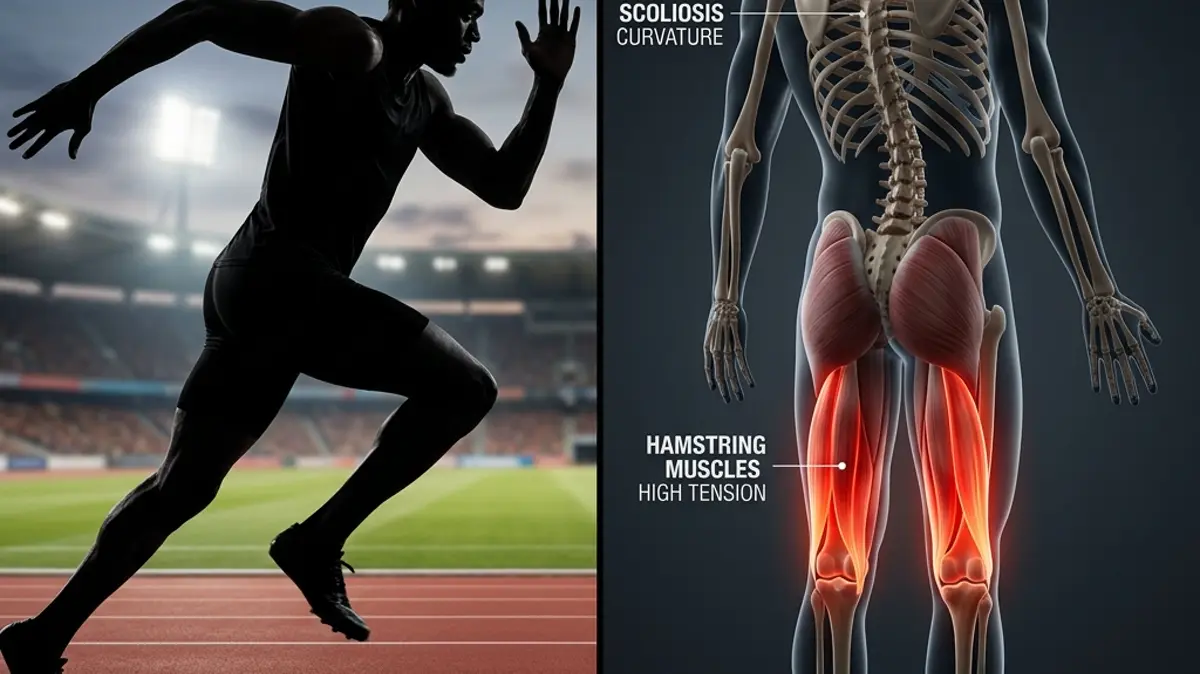
Usain Bolt's Elite Sprinting with Scoliosis: A Biomechanical Breakdown of Asymmetrical Kinetic Chain Compensation and Hamstring Strain Risk
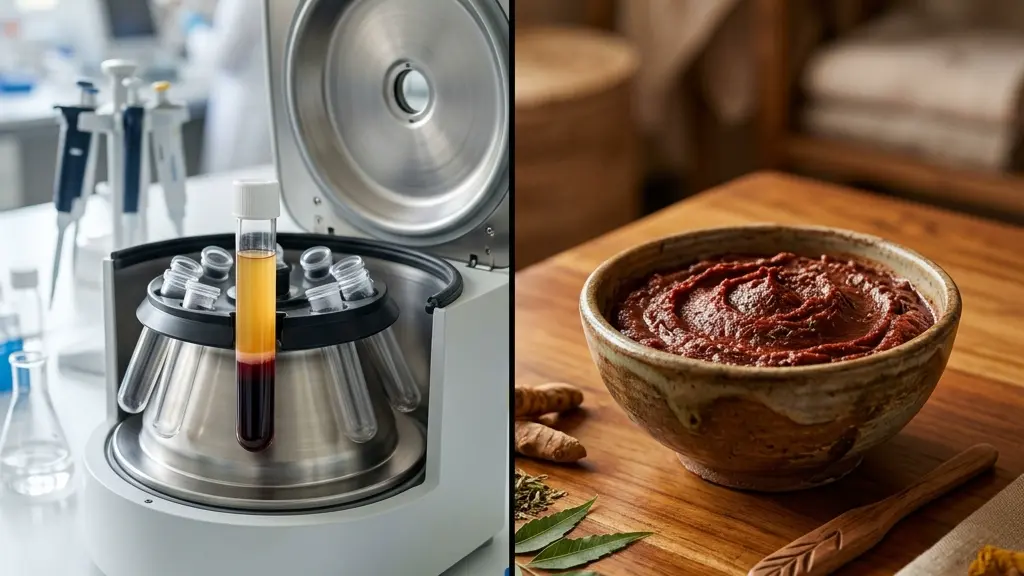
The Platelet-Rich Plasma (PRP) Revolution: Autologous Growth Factors vs. Ayurvedic Rakta Dhatu and Ojas Revitalization