Post-Mastectomy Shoulder Rehab: Restoring Full Range of Motion and Lymph Flow
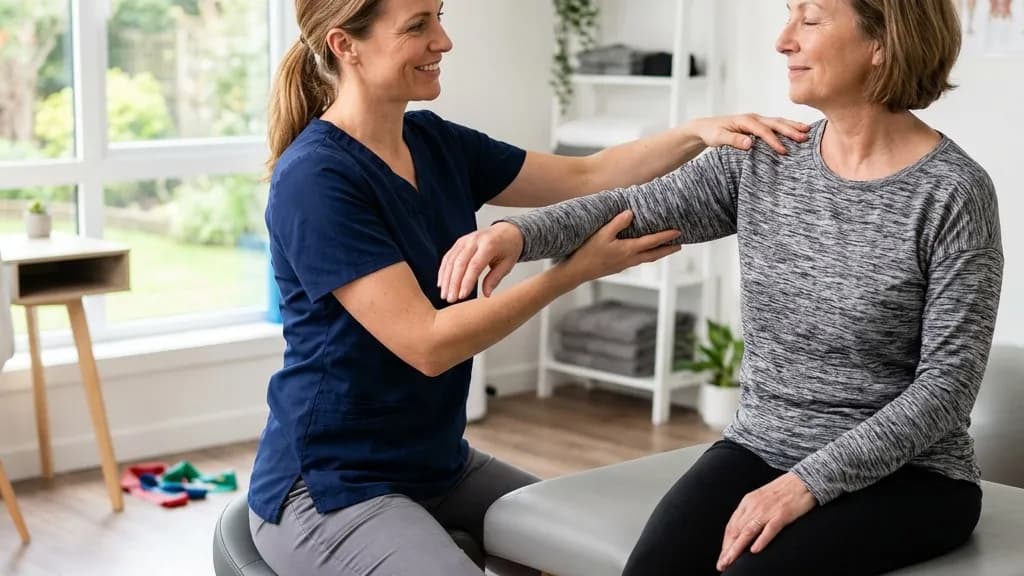
"Failing to mobilize your shoulder after breast surgery is like letting wet concrete dry on your car's steering column. The longer you wait to turn the wheel, the harder it becomes to move freely."
Surviving a mastectomy is an immense, life-altering achievement. Following the clearance of cancer and the completion of surgical recovery, most women believe the hardest physical battles are behind them.
However, many patients quickly realize that simple daily tasks—like reaching into an overhead cupboard, washing their hair, or fastening a bra—have suddenly become agonizingly difficult. Your chest feels bound in a tight, unforgiving iron vest, and your arm feels heavy, swollen, and structurally detached from your torso.
Often, postoperative patients are instructed to "just rest and let the incisions heal," with very little guidance on physical restoration. Fearing they might rupture their sutures or aggravate their drains, many women instinctively cradle their affected arm against their body for weeks.
The quiet clinical tragedy is that this prolonged immobilization is the primary driver behind chronic adhesive capsulitis (frozen shoulder) and painful lymphatic congestion. To achieve true physical freedom, you must actively implement a structured post mastectomy shoulder rehab protocol that safely balances wound safety with tissue mobility.
The Hidden Culprit: Cording and Axillary Web Syndrome
Following a mastectomy—particularly when axillary lymph nodes are removed or sampled—many women develop a painful phenomenon called Axillary Web Syndrome (AWS), commonly referred to as "cording."
Cording feels exactly like a tight guitar string running from under your armpit, down your inner arm, and sometimes all the way to your wrist. It is caused by the localized clotting and hardening of severed lymphatic vessels and surrounding connective tissue.
When you attempt to lift your arm, these rigid "cords" physically pull tight, restricting your shoulder motion and creating a sharp, burning sensation. Understanding this distinct pathology is critical, as standard aggressive stretching can exacerbate the discomfort, whereas gentle, progressive manual release and gentle shoulder stretches post-surgery encourage the cords to safely stretch and release.
My bold and definitive clinical opinion is that the outdated advice to avoid moving your arm entirely until you see swelling is actively raising your risk of chronic lymphedema. Early, gentle, pain-free mechanical muscle contractions are actually the 'pump' that drives your lymphatic fluid. By resting passively, you allow lymphatic fluid to pool, which can permanently stretch and damage the remaining vessels.
Clinical oncology data reveals that approximately 20% to 30% of women undergoing axillary lymph node dissection will develop secondary lymphedema if no early proactive rehabilitation strategies are utilized.
Furthermore, clinical research indicates that beginning early, supervised restoring range of motion after mastectomy protocols within the first 3 to 7 days post-op results in an astonishing 85% reduction in long-term frozen shoulder complications.
Anatomical data demonstrates that over 60% of post-mastectomy patients experience significant pectoral tightness, which pulls the shoulder blade forward and places excessive mechanical load on the rotator cuff.
Why Light Mobility is Your Native Lymphatic Pump
Your body's circulatory system has a heart to pump blood. However, your lymphatic system—which clears cellular fluid waste—has no central engine. It relies exclusively on the rhythmic contraction of surrounding skeletal muscles to push fluid back toward the heart.
When you avoid movement, your lymphatic pump is turned off. Introducing very light, non-resistive mobility exercises acts like turning on a faucet, allowing fluid to escape the congested axillary region and preventing localized swelling.
To heal thoroughly, you must combine specific lymphatic breathing techniques with gentle arm glides, which together constitute effective lymphedema prevention exercises.
Understanding the broader perspective of how postmenopausal bone health affects general structural stability provides excellent context for overall long-term physical vitality.
The Patient: Elena, a 54-year-old artist, underwent a unilateral mastectomy with 4 lymph nodes removed. Four weeks post-op, she was unable to lift her arm beyond 90 degrees (shoulder height) due to intense cording.
The Mistake: Elena followed internet forums advising her to aggressively pull her arm upward against a wall, which only caused the cording to tighten further and led to minor fluid pooling.
The Solution: We ceased all aggressive pulling, introduced deep diaphragmatic breathing to clear central lymph channels, and used gentle "skin tractioning" techniques to slowly release the axillary cord.
The Outcome: Within 6 weeks of gentle, systematic rehabilitation, Elena achieved 175 degrees of overhead reach (fully vertical) with zero cording pain. She returned to her canvas painting with zero lingering heaviness.
Three Clinical Steps to Safely Regain Your Reach
To break the grip of postoperative scar tissue and encourage active fluid clearing, implement this progressive axillary web syndrome cording treatment progression daily:
-
1Diaphragmatic "Pump" Breathing (Central Clearance) Lie on your back with your knees bent. Place your hands gently on your belly. Inhale deeply through your nose, letting your belly rise while keeping your chest still. Exhale slowly through pursed lips. Perform 10 deep breaths. This creates negative pressure in the thoracic duct, actively "vacuuming" lymphatic fluid upward from your arm.
-
2Passive Shoulder Pendulums (Gravity Mobilization) Lean forward, supporting your non-operated arm on a stable table. Let your operated arm hang straight down like a rag doll, completely relaxed. Gently sway your torso to make the arm swing in small, gentle circles. Complete 15 circles in each direction. This maintains joint fluid without contracting the healing chest muscles.
-
3Supported Wand/Stick Glides (Guided Range) Lying on your back, hold a light wooden stick or dowel with both hands. Using your non-operated arm to provide 90% of the power, slowly push the stick overhead until you feel a mild, comfortable stretch in your operated side. Hold for 5 seconds, then lower. Perform 10 controlled repetitions. This ensures the shoulder joint remains lubricated and free.
Reclaim Your Body, Reclaim Your Life
Surviving surgery is only the first half of the victory; reclaiming the native movement of your body is the final, triumphant half. By adopting gentle, clinical movement and supporting your lymphatic highway, you prevent structural tightness from defining your new chapter. Are you ready to step out of the "cradling" posture and begin reaching for your full physical potential today?
Irushi Abeywardhana
Senior Physiotherapist & Founder of Physio Pulse. Senior Clinical Physiotherapist passionate about blending advanced movement science with functional resilience.
Medical Disclaimer
The information provided by AyurPhysio is for general educational and informational purposes only. It is not intended as a substitute for professional medical advice, diagnosis, or treatment. Always seek the advice of your physician or other qualified health providers with any questions you may have regarding a medical condition. Never disregard professional medical advice or delay in seeking it because of something you have read on this website.
Trending Guides
George Washington's Fatal Bloodletting: An Ayurvedic Reconstruction of Rakta Dhatu Depletion and Ojas Collapse
8 min readJack Grealish's stress fracture of the foot: Soccer Biomechanics, Fifth Metatarsal Load, and Surgical Rehab
8 min readBen White's Severe Knee Injury: A Biomechanical Analysis of Lateral Meniscus Shear and Joint Longevity
8 min readElly De La Cruz's Hamstring Strain: The Biomechanics of Sprint Deceleration
8 min readTotal Knee Replacement (TKR): Post-Op Protocols for Restoring Extension
9 min readWeekly Wellness
Don't miss the next guide
Join 5,000+ subscribers getting holistic health tips every Tuesday.
Related Healing Guides
View All Guides →
Total Knee Replacement (TKR): Post-Op Protocols for Restoring Extension
The Gluteus Medius Connection: Preventing Lumbar Compensation