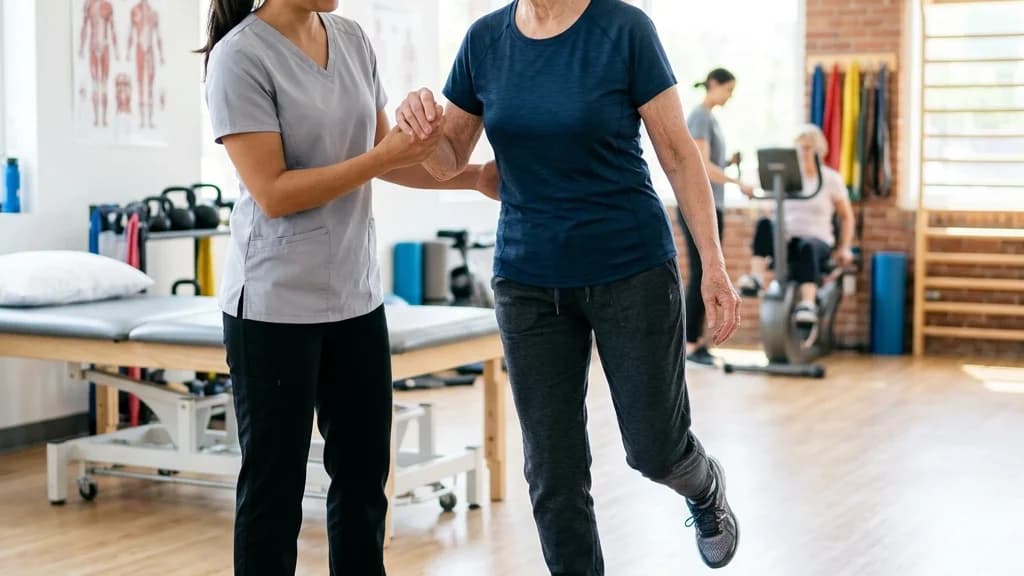
Pregnancy-Induced Lower Back Pain: Safe Spinal Alignment and Core Exercises

"Pregnancy is a beautiful, dynamic engineering challenge. As your center of gravity drifts forward, your lower back is forced to act like a highly compressed accordion, bearing double its native structural load."
If you are currently in your second or third trimester of pregnancy, you are likely intimately familiar with the "prenatal ache"—the deep, nagging tightness in your lower back or the sharp, pinching sensation in your buttocks that reliably appears after just 15 minutes of walking. To many, this is dismissed as an inevitable, unavoidable tax of motherhood.
To a clinical physical therapist, however, this is a clear warning sign of muscular fatigue and micro-structural joint overload. During pregnancy, your body is undergoing rapid, profound biomechanical shifts that alter how your skeletal system distributes weight.
By learning the exact physical mechanisms of prenatal spinal loading and implementing safe prenatal core exercises, you can achieve lasting pregnancy back pain relief and protect your joints through every trimester.
The Biomechanical Shift: Relaxin and Pelvic Ring Laxity
To understand why pregnancy back pain occurs, we must look at how the body prepares for childbirth. From the earliest weeks of pregnancy, your ovaries and placenta flood your system with a powerful hormone called relaxin.
Clinical obstetric research reveals the profound physical changes occurring within your musculoskeletal system:
- Up to 70% of pregnant women experience lower back pain or pelvic girdle pain during their gestation.
- The hormone relaxin spikes ligament laxity by over 200% to allow the pelvic bones to expand for delivery.
- As your belly grows, your center of gravity drifts forward, pulling your pelvis into an extreme anterior tilt that increases lumbar disc shear by over 150%.
Relaxin does a wonderful job of softening your pelvic ligaments so the baby can pass through the birth canal. However, it does not target the pelvis alone—it softens every ligament in your body. Because your ligaments are now lax and soft, they can no longer hold your spinal joints together passively. Your body is forced to rely entirely on active muscle support to stay upright.
When your growing baby pulls your belly forward, your pelvis rotates forward into an extreme anterior pelvic tilt. This exaggerates your lower back curve, compressing your lumbar facet joints and placing severe mechanical shear on your sacroiliac (SI) joints—leading to that characteristic sharp pinching in your hip or groin.
Why Deep Hamstring Stretches are Destabilizing Your Pelvis
When pregnant women feel tight in their lower back and hips, their first instinct is often to perform deep, passive stretches. They do deep forward folds, wide-angle seated hamstring stretches, or deep lunges in generic prenatal yoga classes.
My strong, decisive professional opinion is that performing deep, passive hamstring and hip stretches during pregnancy is highly dangerous—and can permanently destabilize your pelvic ring. Because your ligaments are already softened by relaxin, overstretching your muscles deprives your joints of their last remaining support system. Deep hamstring stretches pull on your ischial tuberosities, worsening sacroiliac joint pain pregnancy and increasing pelvic instability.
To protect your spine, you must replace passive stretching with active, stabilizing prenatal physical therapy exercises that tighten your deep core and support your hips.
The Patient: Sarah, a 31-year-old marketing manager in her 26th week of pregnancy, presented with severe, sharp pain on the right side of her lower back and buttocks that made walking highly painful.
The Mistake: Sarah was doing deep hamstring stretches daily and wearing a tight belly band that compressed her stomach but did not stabilize her pelvic ring.
The Solution: We immediately discarded the deep stretches, coached her in deep transversus abdominis core bracing, initiated gluteus medius strengthening, and guided her to sleep with a structured pillow between her knees.
The Outcome: Within 10 days, Sarah's sharp SI joint pain reduced by 90%, and she maintained comfortable, active walking through her third trimester.
Three Safe Prenatal Exercises for Active Spinal Alignment
To stabilize your pelvis, correct your anterior pelvic tilt, and achieve lasting spinal support, perform these three safe exercises daily:
-
1Deep Core Bracing (The "Hug the Baby" Exercise) Lie on your back with knees bent or sit tall in a chair. Take a deep breath in, letting your belly expand. As you exhale slowly through your mouth, gently draw your lower abdomen inward and upward as if "hugging" your baby tightly with your deep core muscles. Hold for 5 seconds, then relax. Repeat 10 times. This is the gold standard of safe prenatal core exercises, activating your transversus abdominis.
-
2The Prenatal Clamshell (Gluteus Medius Activator) Lie on your side with your knees bent at 90 degrees, supporting your head with a pillow. Place a pillow between your knees to maintain hip alignment. Keeping your feet touching, slowly raise your top knee upward as far as comfortable without rocking your hips backward. Hold for 2 seconds, then lower slowly. Perform 3 sets of 12 repetitions on each side. This is crucial for how to correct anterior pelvic tilt and stabilizing the SI joints.
-
3The Standing Pelvic Tilt (Wall-Assisted) Stand with your back flat against a wall, keeping your feet about 6 inches forward. Place your hand in the space behind your lower back. Gently contract your lower abdominal muscles to rock your hips backward, flattening your lower back curve into the wall. Hold for 5 seconds, then release. Repeat 10 times. This relieves acute lumbar facet joint compression instantly.
Stabilize Your Path
Ultimately, pregnancy back pain is not an inevitable tax of motherhood—it is a manageable biomechanical challenge. By replacing passive stretching with active, stabilizing core exercises and maintaining healthy spinal alignment, you can support your growing baby, protect your joints, and enjoy a comfortable, active pregnancy.
Irushi Abeywardhana
Senior Physiotherapist & Founder of Physio Pulse. Senior Clinical Physiotherapist passionate about blending advanced movement science with functional resilience.
Medical Disclaimer
The information provided by AyurPhysio is for general educational and informational purposes only. It is not intended as a substitute for professional medical advice, diagnosis, or treatment. Always seek the advice of your physician or other qualified health providers with any questions you may have regarding a medical condition. Never disregard professional medical advice or delay in seeking it because of something you have read on this website.
Trending Guides
George Washington's Fatal Bloodletting: An Ayurvedic Reconstruction of Rakta Dhatu Depletion and Ojas Collapse
8 min readJack Grealish's stress fracture of the foot: Soccer Biomechanics, Fifth Metatarsal Load, and Surgical Rehab
8 min readBen White's Severe Knee Injury: A Biomechanical Analysis of Lateral Meniscus Shear and Joint Longevity
8 min readElly De La Cruz's Hamstring Strain: The Biomechanics of Sprint Deceleration
8 min readTotal Knee Replacement (TKR): Post-Op Protocols for Restoring Extension
9 min readWeekly Wellness
Don't miss the next guide
Join 5,000+ subscribers getting holistic health tips every Tuesday.
Related Healing Guides
View All Guides →
Total Knee Replacement (TKR): Post-Op Protocols for Restoring Extension
The Gluteus Medius Connection: Preventing Lumbar Compensation