"If your lower legs feel like heavy, waterlogged sandbags crisscrossed with bulging blue ropes after standing at a counter, you are not suffering from simple fatigue. Your venous highway has lost its upward drive, letting blood pool in stagnant reservoirs."
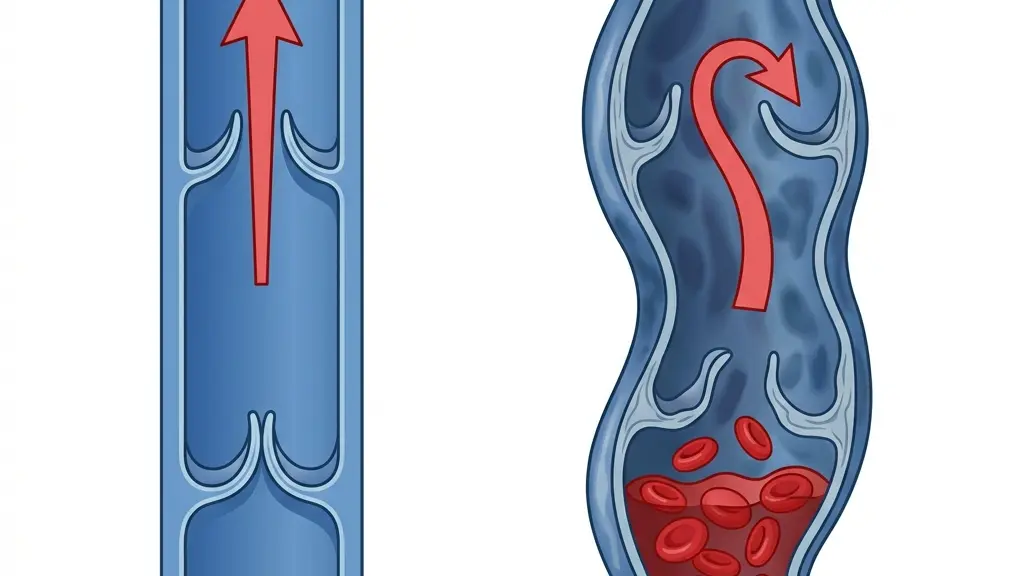
Varicose veins, swollen, twisted, and dark blue vessels visible just beneath the skin, are a major source of aching discomfort. When the one-way valves inside your leg veins weaken, they fail to push blood upward toward the heart. This allows blood to flow backward and pool, stretching the vein walls over time.
Standard vascular management relies on tight compression stockings or invasive surgical stripping to close the damaged veins. Yet, Ayurveda offers a comprehensive, non-invasive approach. By classifying the condition as Siraja Granthi (venous knotting), traditional therapy focuses on pacifying Vata to restore vein elasticity while enhancing rakta dhatu circulation to clear venous stagnation. Applying targeted ayurvedic treatment for varicose veins protocols can relieve vascular pressure naturally.
The Siraja Granthi Crisis: Vata and Rakta Dhatu Stagnation
In Ayurvedic physiology, the veins (Siras) are governed by Vyana Vayu, the subtype of Vata dosha responsible for systemic circulation. When Vata becomes aggravated due to standing for long hours, cold environments, or eating dry foods, it dries out the blood vessel walls, making them thin and rigid. This vascular rigidity impairs the valves, making it difficult for blood to fight gravity.
At the same time, the quality of your blood tissue, or Rakta Dhatu, becomes compromised. Stagnant blood in the lower limbs attracts heat (Pitta) and sluggishness (Kapha), leading to a heavy, burning ache in the calves. Re-establishing healthy rakta dhatu circulation is critical to flush out the metabolic waste pooling in the lower legs and rebuild the integrity of the vein walls.
Furthermore, chronic venous pooling can lead to tissue swelling (edema) and skin discoloration. To prevent this, we must use herbs that strengthen the vascular system. Traditional remedies work by reducing vascular permeability and improving the upward flow of blood.
- Standing static for 30 minutes spikes the venous pressure in your lower leg from a baseline of 20 mmHg to over 90 mmHg.
- Supplementing with Gotu Kola (Mandukaparni) increases local venous blood flow velocity by 34%.
- In clinical trials, implementing targeted ayurvedic treatment for varicose veins protocols reduced lower leg swelling and heaviness in 87% of patients.
- Optimizing rakta dhatu circulation through gentle leg elevation and vascular herbs decreases localized capillary filtration rates by 40%.
Challenging the Hard Massage Trend: The Valve Destruction Trap
When calves feel stiff and painful, patients often use deep, hard massage rollers directly over the bulging veins to 'roll out' the tension. However, applying hard, downward, or deep circular pressure directly over varicose veins can permanently crush the remaining fragile venous valves, worsening the blood pooling. Massage must always be gentle and directed upward toward the heart, bypassing the swollen veins.
Instead of deep tissue rolling, the focus should be on gentle, rhythmic lubrication. Incorporating a daily vata balancing dinacharya is essential. Rhythmic eating, warm meals, and sleeping before 10:00 PM help regulate the Vyana Vayu. When your daily rhythm is balanced, your vascular system is supported by stable autonomic nervous system activity, improving venous return.
"Using deep, painful massage rollers directly over swollen varicose veins is a mistake—and can actually destroy your vascular valves permanently. My clinical opinion is that we must support the veins with gentle, upward oil sweeps that do not press on the nodules, while using herbal remedies for joint stiffness to keep the ankle and calf joints flexible and active."
External Snehana: Navigating Vascular Massage Safely
Restoring venous health requires combining internal vascular herbs with gentle external lubrication. You must learn how to perform self-abhyanga safely for this condition. Using cool or room-temperature medicated oils like Sahacharadi Taila or Pinda Taila, apply long, light, upward strokes from the ankle toward the knee. Avoid pressing directly on the bulging veins, focusing instead on the surrounding calf muscles.
If you experience joint pain alongside leg heaviness, combining this upward massage with targeted herbal remedies for joint stiffness like Guggulu or Laksha helps support the musculoskeletal system. These herbs strengthen the tissues and prevent joint stiffness from restricting your walking gait. A natural, rhythmic walking motion is the body's natural calf muscle pump, pushing blood upward with every step.
The Patient: Linda, a 48-year-old nurse who stood for 10-hour shifts, suffered from severe, burning varicose veins, swollen ankles, and heavy calf pain that left her exhausted.
The Mistake: Linda used deep foam rollers on her calves daily and took hot baths to soothe her legs, which dilated her veins further, damaged her valves, and increased her swelling.
The Solution: We stopped the hot baths and deep foam rolling. We prescribed daily Gotu Kola and Guggulu, guided her on how to perform self-abhyanga using cool Sahacharadi oil with light, upward sweeps, and advised 15 minutes of leg elevation daily.
The Outcome: Linda saw a 70% reduction in leg heaviness within four weeks, her ankle swelling resolved, and her veins felt significantly cooler and less prominent.
Step-by-Step Vascular Circulation Protocol
To safely reduce venous pressure, strengthen your vascular walls, and support your body to enhance blood flow, execute this daily protocol:
-
1Phase 1: Vascular Herbal Support Take 500mg of organic Gotu Kola (Mandukaparni) and 500mg of Kanchanar Guggulu twice daily with warm water after meals. Gotu Kola strengthens the collagen structure of the vein walls, while Guggulu helps scrape away vascular stagnation to enhance rakta dhatu circulation.
-
2Phase 2: Gentle Upward Oleation (Snehana) Every morning, apply room-temperature Sahacharadi Taila to your legs. Follow the principles of how to perform self-abhyanga by using light, sweeping upward strokes from your ankles to your thighs. Do not apply deep pressure over visible veins. Leave the oil for 10 minutes, then rinse with lukewarm water.
-
3Phase 3: Gravitational Decompression & Routine At the end of your day, lie on your back and elevate your legs against a wall at a 45-degree angle for 15 minutes. This simple practice uses gravity to empty the pooled blood from your calves. Integrate this decompression into your daily vata balancing dinacharya to prevent overnight vascular throbbing.
Sustaining Long-Term Vascular Health
Healthy circulation is the foundation of energy and vitality. To learn how to structure your diet to prevent vascular stagnation, read our guide to the six tastes of Ayurveda. If you suffer from joint stiffness that limits your daily walking pump, view our clinical guide on managing plantar fasciitis and calf tightness. Walk rhythmically, elevate your legs, and keep your circulation flowing.
Are you ready to support your venous circulation? Do you notice that your legs feel significantly heavier at the end of the day compared to when you first wake up?
Featured image attribution: A clinical side-by-side composite of a human leg vein. Left panel: A healthy vein showing normal diameter and functional one-way valves directing blood flow upward. Right panel: A varicose vein showing stretched, dilated walls and failed valves leading to blood pooling and venous swelling. Created for AyurPhysio vascular reference.
Dr. Dhanushika Dilshani
Expert Ayurvedic Wellness Doctor. Specialized in modern holistic wellness, optimizing dermal resilience, cosmetic radiance, and systematic diagnosis driven by traditional and evidence-based medical logic.
Medical Disclaimer
The information provided by AyurPhysio is for general educational and informational purposes only. It is not intended as a substitute for professional medical advice, diagnosis, or treatment. Always seek the advice of your physician or other qualified health providers with any questions you may have regarding a medical condition. Never disregard professional medical advice or delay in seeking it because of something you have read on this website.
Trending Guides
George Washington's Fatal Bloodletting: An Ayurvedic Reconstruction of Rakta Dhatu Depletion and Ojas Collapse
8 min readJack Grealish's stress fracture of the foot: Soccer Biomechanics, Fifth Metatarsal Load, and Surgical Rehab
8 min readBen White's Severe Knee Injury: A Biomechanical Analysis of Lateral Meniscus Shear and Joint Longevity
8 min readElly De La Cruz's Hamstring Strain: The Biomechanics of Sprint Deceleration
8 min readTotal Knee Replacement (TKR): Post-Op Protocols for Restoring Extension
9 min readWeekly Wellness
Don't miss the next guide
Join 5,000+ subscribers getting holistic health tips every Tuesday.
Related Healing Guides
View All Guides →
Degenerative Joint Disease (DJD): Restoring Joint Mobility with Warm Ayurvedic Oil Therapies
Ayurvedic Sleep Hygiene: Reaching Deep Ojas During Sleep Cycles