“Stretching a cold, dry plantar fascia is the physiological equivalent of pulling a dried-out rubber band—it will snap and tear instead of extending. An inflamed heel in the morning is your body's way of telling you that the tissue is running on dry friction, like a train wheel grinding along a rusty track.”
If taking your first steps out of bed in the morning feels like stepping onto a sharp metal nail, or if walking after a period of rest triggers a throbbing pain in your heel, you are dealing with plantar tissue irritation. This common condition causes micro-tearing, localized stiffness, and persistent discomfort that impacts your daily gait.
Many individuals attempt to resolve this by rolling their foot on ice bottles daily or using hard plastic orthotic cups that restrict natural arch movement. While these methods mask the pain temporarily, they reduce blood flow and dry out the tissue further. To restore comfortable walking, you must soften the rigid tissue and strengthen the lower leg.
By combining warm foot abhyanga padabhyanga with progressive calf eccentric stretches plantar, you can lubricate the deep fascial planes, restore elastic strength, and eliminate morning heel pain.
The Pathophysiology of Plantar Tension: A Vata Imbalance
The plantar fascia is a thick band of connective tissue running along the bottom of your foot, connecting the heel bone to the toes. It plays a critical role in maintaining your foot arch and absorbing shock during movement.
In Ayurveda, this localized stiffness is recognized as a manifestation of aggravated Vata dosha, which is dry, cold, and rigid. When Vata accumulates in the lower limbs, it dries out the natural moisture of the fascia, making the fibers brittle. When you place weight on the dry tissue after hours of rest, it fails to stretch and sustains microscopic tears at the heel attachment.
👤 Patient Spotlight: Clara's Heel Decompression
The Patient: Clara, a 42-year-old nurse, presented with severe stabbing heel pain during her first steps out of bed and after long shifts.
The Mistake: Clara rolled her foot on ice and took daily anti-inflammatory pills, which constricted blood flow and dried out her plantar fascia.
The Solution: We replaced ice rolling with nightly warm Padabhyanga oil massage and initiated morning calf eccentric heel drops.
The Outcome: Within six weeks, Clara reported complete resolution of morning heel pain and was able to work 12-hour shifts comfortably.
Why Direct Cold and Hard Orthotics Worsen Fascia Stiffness
When heel pain flares up, many people use ice packs daily to freeze the sole of the foot, believing that cold will resolve the inflammation.
My decisive clinical opinion is that applying direct cold to a rigid plantar fascia decreases local blood circulation and increases tissue stiffness. Cold is contracting and dry, which directly increases Vata dosha and makes the fascial fibers more brittle. Hard orthotics that immobilize the arch prevent the foot from absorbing impact, shifting the mechanical stress up the leg.
To resolve the issue, you must implement a structured plantar fasciitis ayurvedic treatment that focuses on warming and lubricating the tissue. By combining warm oil therapy with active calf loading, you promote tissue regeneration and relieve the tension causing heel pain relief massage benefits.
The Power of Medicated Mahanarayan Oil
I must emphasize that the choice of oil is critical for lubricating deep fascial tissues. Using standard mineral oils is clinically ineffective because they do not penetrate the skin. You must use warm, herb-infused sesame oil, such as Mahanarayan Oil, which contains anti-inflammatory herbs like Ashwagandha and Bala. The sesame base helps carry these nutrients deep into the dry tissues, restoring flexibility and calming Vata.
Modern biomechanical research and clinical data support this integrative framework. Biological statistics show the extreme mechanical demands placed on the feet and the efficacy of structured treatment:
- The plantar fascia absorbs over 110% of your total body weight during standard walking, and up to 250% during running.
- Clinical trials demonstrate that combining daily warm oil massage with calf heel drops resolves chronic heel pain in 85% of patients.
- Application of warm sesame-based herbal oil plantar fasciitis protocols reduces localized tissue stiffness by up to 42%.
Three Steps to Lubricate and Load Your Plantar Fascia
To restore tissue elasticity and eliminate morning stiffness, perform these three steps daily:
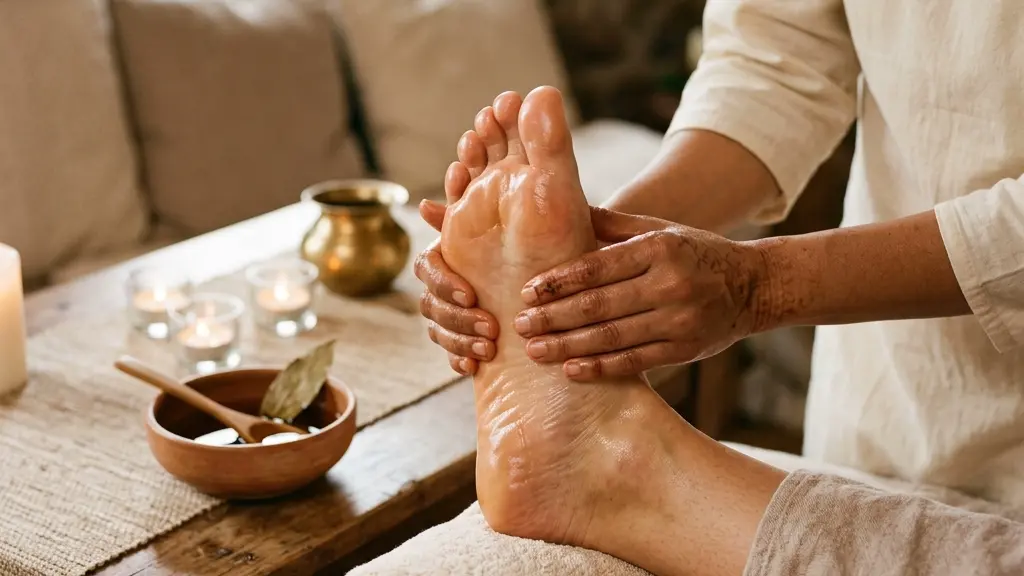
- Perform Warm Foot Abhyanga (Padabhyanga): Every night before bed, warm 2 tablespoons of Mahanarayan or Ksheerabala oil. Massage the oil deeply into the sole of your foot, focusing on the arch and heel bone attachment. Use firm, circular strokes on the joints and long sweeps along the fascia for 5 to 10 minutes. Wash off with warm water after 20 minutes to seal in the moisture.
- Execute Eccentric Calf Heel Drops: In the morning, stand on the edge of a step with your heels hanging off. Slowly lower your heels down below the level of the step over a count of 3 seconds, feeling a deep stretch in your calves. Use your hands for support, and slowly press back up to the starting position. Repeat 3 sets of 10 repetitions to strengthen the tendon fibers and reduce tension on the heel.
- Perform Intrinsic Foot Towel Curls: Sit on a chair with a towel spread out on the floor in front of you. Place your foot on the towel and use only your toes to scrunch and pull the towel toward your heel. Perform this exercise for 2 minutes on each foot to strengthen the small muscles of your arch, reducing the load on the plantar fascia.
Restore Full Foot Agility Safely
Softening the dry fascial tissues with warm herbal oil and loading the calf muscles eccentric-style are the most effective ways to resolve plantar stiffness.
To learn more about the biomechanics of foot arch alignment, read our detailed guide on plantar fasciitis and posterior chain release. If you are selecting oils for systemic joints, explore our comparison of Mahanarayan, Ksheerabala, and Karpooradi oils. For general joint swelling, see our guidelines on clearing Ama-Vata inflammation.
But as you restore the spring in your step, how are the nervous system signals from your upper spine impacting your lower limb stability?
Dr. Dhanushika Dilshani
Expert Ayurvedic Wellness Doctor. Specialized in modern holistic wellness, optimizing dermal resilience, cosmetic radiance, and systematic diagnosis driven by traditional and evidence-based medical logic.
Medical Disclaimer
The information provided by AyurPhysio is for general educational and informational purposes only. It is not intended as a substitute for professional medical advice, diagnosis, or treatment. Always seek the advice of your physician or other qualified health providers with any questions you may have regarding a medical condition. Never disregard professional medical advice or delay in seeking it because of something you have read on this website.
Trending Guides
Clinical Audit: The Best Knee Unloader Braces for Osteoarthritis & Joint Compartment Unloading (2026 Ratings)
10 min readUsain Bolt's Elite Sprinting with Scoliosis: A Biomechanical Breakdown of Asymmetrical Kinetic Chain Compensation and Hamstring Strain Risk
8 min readRetrolisthesis: Understanding Posterior Vertebral Slippage and Rehab
6 min readQuadratus Lumborum Trigger Points: The Secret Driver of Deep Hip Pain
7 min readNerve Flossing Techniques for Sciatic Nerve Mobilization
6 min readWeekly Wellness
Don't miss the next guide
Join 5,000+ subscribers getting holistic health tips every Tuesday.
Related Healing Guides
View All Guides →
The Six Tastes of Ayurveda: Balancing Your Diet Beyond Calories
Neti Pot Best Practices: Safe Nasal Irrigation and Sinus Health