“Treating a trigger point with superficial cooling creams is like spraying water on the roof of a house when the electrical wiring is smoldering in the walls. You must disrupt the knot directly and feed the tissue to restore peace.”
If your muscles feel like a tangled ball of wire fused together by constant stress, or if a localized spasm in your back makes sitting uncomfortable, you are likely dealing with myofascial trigger points. These tight muscle fibers create hard, painful knots that restrict movement and refer pain to other areas.
Many individuals seek relief by taking muscle relaxers daily or applying cold packs to the sore areas. While these choices offer temporary relief, they do not resolve the localized blood flow crisis inside the muscle knot. To find lasting relief, you must deactivate the trigger point and nourish the surrounding tissue.
By combining clinical myofascial pain syndrome dry needling with traditional warm herbal oils, you can release stubborn knots, restore local blood flow, and establish long-term muscle health.
The Pathophysiology of Trigger Points: Muscle Crises
A myofascial trigger point is a hyperirritable spot within a tight band of skeletal muscle. Under constant stress or repetitive strain, the muscle cells fail to pump calcium back into their storage sacs, resulting in a sustained localized contraction.
This persistent contraction squeezes the surrounding blood vessels, cut off the local supply of oxygen and nutrients. The tissue enters a localized energy crisis, allowing metabolic waste products to accumulate. In Ayurvedic terms, this combination of stagnant metabolic waste and tight tissue is recognized as Ama (toxins) blocking Vata (movement).
👤 Patient Spotlight: Linda's Muscle Knot Resolution
The Patient: Linda, a 50-year-old administrative manager, presented with deep, burning muscle knots in her lower back that made standing difficult.
The Mistake: Linda took prescription muscle relaxers daily, which caused severe daytime fatigue and brain fog without resolving the deep back knots.
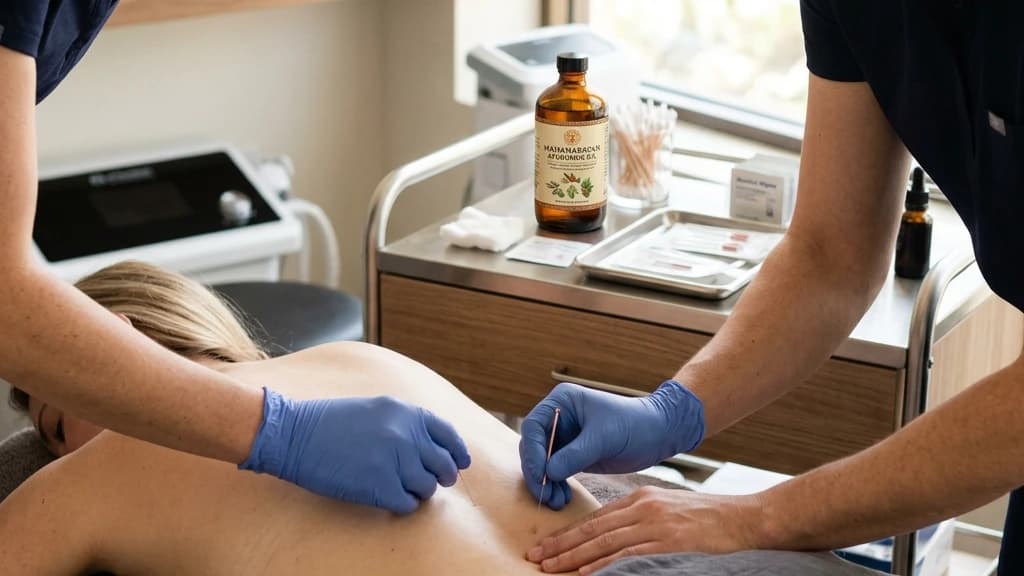
The Solution: We performed dry needling to release the tight trigger points and followed with warm Mahanarayan oil massage and heat therapy.
The Outcome: Within five weeks, Linda reported complete relief from her muscle knots, stopped taking muscle relaxers, and regained full spinal mobility.
Why Simple Rest and Cold Packs Prolong the Pathology
When deep muscle pain flares up, many patients rest completely and apply ice packs, believing this will soothe the inflamed muscle tissue.
My decisive clinical opinion is that applying ice packs or resting a chronic myofascial trigger point is counterproductive and delays recovery. Cold temperatures constrict blood vessels and increase muscle stiffness, worsening the local lack of oxygen. Rest prevents the muscle from contracting and relaxing, which is necessary to pump out waste products.
To resolve the condition, you must compare dry needling vs oil massage as complementary tools. The needle physically deactivates the tight muscle spindle, while the warm oil penetrates deeply to soothe the local nerve endings and flush the accumulated toxins.
The Synergy of Needle Disruption and Lipid Penetration
I must emphasize that applying warm Mahanarayan oil immediately after a dry needling session provides superior clinical outcomes compared to either therapy alone. Dry needling creates a localized mechanical twitch that resets the muscle, but it leaves the tissue temporarily sore. Massaging warm Mahanarayan oil into the area immediately afterward delivers anti-inflammatory herbs directly to the deeper muscle layers, relieving post-needle soreness and preventing spasm.
Modern clinical research supports this combined approach. Medical statistics demonstrate the effectiveness of combining physical therapy with traditional ayurvedic muscle pain remedies:
- Research indicates that up to 85% of the general population will experience myofascial pain syndrome at some point.
- Biomechanical studies show that active trigger points decrease local blood flow to the muscle tissue by over 70%.
- Combining mechanical dry needling with hot oil massage speeds up trigger point resolution by 45% compared to dry needling alone.
Herbal Synergy: The Biochemical Power of Mahanarayan Oil
Mahanarayan oil is a classical Ayurvedic formulation containing over thirty anti-inflammatory herbs. The base of this formula is sesame oil, celebrated for its high transdermal penetration and Vata-pacifying warmth. When massaged into tight muscle groups, sesame oil acts as a carrier, delivering active herbal constituents deep into the cellular layers.
The formulation features powerful adaptogenic and nourishing herbs like Ashwagandha and Shatavari, which help rebuild and strengthen exhausted muscle fibers. Additionally, active compounds in Dashamula (ten therapeutic roots) and camphor act directly on local nociceptors to reduce pain signals. This synergistic herbal action relaxes the muscle spindle and decreases inflammatory cytokines, facilitating rapid tissue recovery.
Three Steps to Deactivate Knots and Apply Herbal Oils
To release stagnant muscle knots and restore healthy blood flow, implement these three clinical steps during your mahanarayan oil massage for trigger points routine:
- Deactivate the Core Spindle: A clinician inserts a thin filament needle directly into the active trigger point. This triggers a brief local twitch response, which resets the electrical activity of the muscle fiber and immediately releases the tight contraction.
- Apply Warm Mahanarayan Oil: Once the needle is removed, warm a tablespoon of Mahanarayan oil. Massage the oil into the muscle using firm, sweeping strokes. This oil contains over thirty anti-inflammatory herbs, making it one of the premier ayurvedic muscle pain remedies to soothe irritated nerves.
- Implement Localized Heat Therapy: Place a warm moist heating pad or hot herbal compress over the oiled area for 15 minutes. The moist heat dilates local blood vessels, accelerating blood flow and helping the nourishing oil penetrate deeper into the released muscle fibers.
Deactivate Muscle Knots at the Root
True recovery requires deactivating the muscle spasm and nourishing the tissue. By combining mechanical dry needling with warm Mahanarayan oil, you restore normal circulation and help the muscle heal.
To understand how metabolic waste drives tissue pain, read our analysis on how Ama toxins trigger joint inflammation. If you are experiencing systemic Vata issues, explore our guides on managing Vata imbalance.
Ultimately, integrating dry needling with warm oil massage is a highly effective way to relieve chronic muscle knots and maintain healthy, pain-free movement.
Dr. Dhanushika Dilshani
Expert Ayurvedic Wellness Doctor. Specialized in modern holistic wellness, optimizing dermal resilience, cosmetic radiance, and systematic diagnosis driven by traditional and evidence-based medical logic.
Medical Disclaimer
The information provided by AyurPhysio is for general educational and informational purposes only. It is not intended as a substitute for professional medical advice, diagnosis, or treatment. Always seek the advice of your physician or other qualified health providers with any questions you may have regarding a medical condition. Never disregard professional medical advice or delay in seeking it because of something you have read on this website.
Trending Guides
Clinical Audit: The Best Knee Unloader Braces for Osteoarthritis & Joint Compartment Unloading (2026 Ratings)
10 min readUsain Bolt's Elite Sprinting with Scoliosis: A Biomechanical Breakdown of Asymmetrical Kinetic Chain Compensation and Hamstring Strain Risk
8 min readRetrolisthesis: Understanding Posterior Vertebral Slippage and Rehab
6 min readQuadratus Lumborum Trigger Points: The Secret Driver of Deep Hip Pain
7 min readNerve Flossing Techniques for Sciatic Nerve Mobilization
6 min readWeekly Wellness
Don't miss the next guide
Join 5,000+ subscribers getting holistic health tips every Tuesday.
Related Healing Guides
View All Guides →
The Six Tastes of Ayurveda: Balancing Your Diet Beyond Calories
Plantar Fasciitis: Combining Foot Abhyanga (Padabhyanga) with Calf Eccentric Stretches