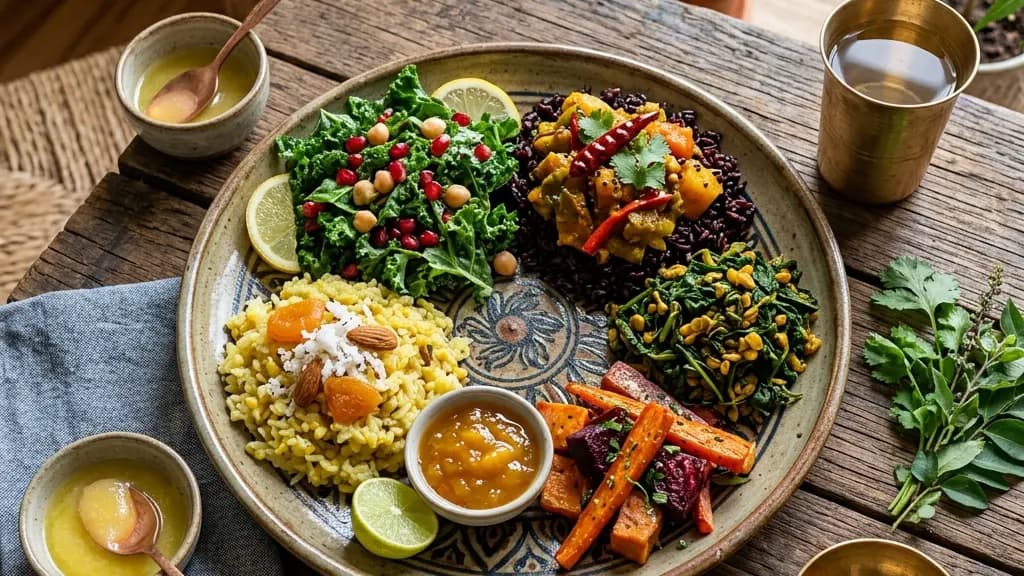
“Treating your body like a simple calorie furnace is the nutritional equivalent of using a Ferrari to haul heavy gravel—it ignores the complex chemical signals under the hood. A diet lacking variety in taste is like painting a sunset using only black and white paint.”
If you track your macro-calories daily but still experience chronic bloating, or if eating a clean salad leaves you with cold hands and low energy, your diet is out of balance. Counting calories provides only a partial picture of nutrition. The energetic quality of the food you consume determines how well your body processes nutrients.
Many individuals try to lose weight by restricting their meals to plain chicken and raw vegetables. While this approach limits energy intake, it often triggers intense cravings and weakens your digestive fire. To achieve true health, you must nourish all parts of your physiology.
By incorporating the six tastes of ayurveda shad rasa into your meals, you can balance your metabolism, prevent digestive stagnation, and support sustained vitality.
The Physiology of Shad Rasa: Beyond Calorie Counting
In traditional Ayurvedic medicine, diet is analyzed through six distinct tastes: Sweet (Madhura), Sour (Amla), Salty (Lavana), Pungent (Katu), Bitter (Tikta), and Astringent (Kashaya). Each taste is composed of specific elements that interact directly with your body's three doshas.
When food touches your tongue, the taste buds signal your brain to prepare the digestive tract for specific elements. A balanced meal should include all six tastes to ensure that every organ receives the sensory and chemical signals required for complete digestion.
👤 Patient Spotlight: Elena's Digestive Reset
The Patient: Elena, a 31-year-old nutritionist, presented with chronic bloating, cold limbs, and intense late-day sugar cravings.
The Mistake: Elena ate a strict low-carb, raw diet dominant in bitter and astringent tastes, which aggravated Vata and slowed her digestion.
The Solution: We introduced warm, cooked grains and root vegetables, emphasizing sweet, sour, and salty tastes to ground Vata and stimulate Agni.
The Outcome: Within three weeks, Elena's bloating resolved completely, her sugar cravings disappeared, and her energy remained stable all day.
Why Simple Caloric Restriction Mismatches Your Doshas
Many modern health programs focus strictly on keeping daily calories below a specific target, ignoring the qualities of the foods being consumed.
My decisive clinical opinion is that counting macro-calories while ignoring the energetic tastes of your food is a clinical dead-end that provokes metabolic imbalances. A meal can be calorically perfect, but if it is excessively bitter or astringent, it will aggravate Vata, leading to gas and constipation. If it is too pungent or sour, it will overheat Pitta, causing acid reflux and skin irritation.
To maintain health, you must learn how to balance tastes in meals based on your unique constitution. Focusing on a balancing diet beyond calories allows your digestive tract to process nutrients efficiently and prevents the accumulation of toxins.
The Metaphysics of Madhura (Sweet) Taste
I must emphasize that the sweet taste is essential for building tissue but must not come from refined sugars. In Ayurveda, the sweet taste (Madhura) is composed of Earth and Water, which builds muscle, bone, and immune reserve. You should obtain this taste from nourishing sources like whole grains, ghee, milk, and sweet fruits, rather than processed foods that weaken your digestive fire.
Modern research and clinical nutrition data support this traditional framework. Biological statistics reveal the close connection between taste receptors and digestive health:
- The human tongue contains approximately 10,000 taste buds, which directly trigger the release of specific stomach enzymes.
- Clinical data shows that including all six tastes in a single meal reduces late-day sugar cravings by up to 78%.
- A balanced Ayurvedic diet is composed of exactly 6 distinct tastes, ensuring comprehensive nourishment for the tissues.
Understanding the Six Tastes (Shad Rasa)
To optimize your nutrition and keep your digestion strong, you must understand the qualities of each taste in ayurvedic nutrition doshas:
- Sweet (Madhura): Composed of Earth and Water. It builds tissues, calms Vata and Pitta, and increases Kapha. Focus on whole grains, sweet potatoes, and ghee for healthy madhura taste digestive health.
- Sour (Amla): Composed of Earth and Fire. It stimulates appetite, improves digestion, and warms the body. Found in lemons, yogurt, and fermented foods. Use in moderation to avoid overheating Pitta.
- Salty (Lavana): Composed of Water and Fire. It maintains electrolyte balance, softens tissues, and stimulates salivary enzymes. Found in sea salt and rock salt.
- Pungent (Katu): Composed of Fire and Air. It clears congestion, stimulates blood flow, and heats the body. Found in ginger, black pepper, and chili. Excellent for clearing excess Kapha.
- Bitter (Tikta): Composed of Air and Space. It purifies the blood, clears toxins (Ama), and reduces inflammation. Found in leafy greens, turmeric, and fenugreek.
- Astringent (Kashaya): Composed of Air and Earth. It absorbs water, cools inflammation, and tightens tissues. Found in pomegranates, green tea, and beans.
The Psychological Impact of the Six Tastes
Beyond their physical actions, the six tastes influence your emotions and mental state. The sweet taste brings comfort, love, and stability, which is why your mind naturally craves it during periods of stress. However, excess sweet can lead to attachment and lethargy, dulling your mental clarity.
In contrast, the pungent taste stimulates focus, enthusiasm, and ambition, but an excess of spicy foods can provoke irritability, impatience, and anger. The bitter taste cools the mind and encourages detachment and clarity, while astringency helps ground floating thoughts but can cause fear or anxiety if consumed in excess.
How to Sequence Tastes in a Single Meal
To ensure optimal digestion, the sequence in which you consume the six tastes is highly important. You should always consume sweet foods at the start of your meal, as they are heavy and require the strongest digestive energy to break down. This includes grains, sweet root vegetables, and sweet fruits.
Follow the sweet foods with sour and salty items, which warm the digestive tract and increase the secretion of stomach acids. Finally, conclude your meal with pungent, bitter, and astringent tastes, such as herbal teas, spices, and light vegetables, which help dry up excess secretions and cleanse the palate.
Rebuild Your Relationship with Food
Balancing your meals with all six tastes ensures that your body receives both the nutrients and the sensory signals it needs to thrive.
To optimize your digestive fire, read our comprehensive guide on the concept of Agni and metabolic immunity. If you are experiencing systemic heaviness, explore our protocols for understanding and clearing Ama toxins. To align your meals with the natural hours of the day, review our step-by-step guide to the Ayurvedic daily routine (Dinacharya).
But as you balance your digestion through the tastes on your plate, how do the structural joints of your lower body support your metabolic vitality during daily movement?
Dr. Dhanushika Dilshani
Expert Ayurvedic Wellness Doctor. Specialized in modern holistic wellness, optimizing dermal resilience, cosmetic radiance, and systematic diagnosis driven by traditional and evidence-based medical logic.
Medical Disclaimer
The information provided by AyurPhysio is for general educational and informational purposes only. It is not intended as a substitute for professional medical advice, diagnosis, or treatment. Always seek the advice of your physician or other qualified health providers with any questions you may have regarding a medical condition. Never disregard professional medical advice or delay in seeking it because of something you have read on this website.
Trending Guides
Clinical Audit: The Best Knee Unloader Braces for Osteoarthritis & Joint Compartment Unloading (2026 Ratings)
10 min readUsain Bolt's Elite Sprinting with Scoliosis: A Biomechanical Breakdown of Asymmetrical Kinetic Chain Compensation and Hamstring Strain Risk
8 min readRetrolisthesis: Understanding Posterior Vertebral Slippage and Rehab
6 min readQuadratus Lumborum Trigger Points: The Secret Driver of Deep Hip Pain
7 min readNerve Flossing Techniques for Sciatic Nerve Mobilization
6 min readWeekly Wellness
Don't miss the next guide
Join 5,000+ subscribers getting holistic health tips every Tuesday.
Related Healing Guides
View All Guides →
Plantar Fasciitis: Combining Foot Abhyanga (Padabhyanga) with Calf Eccentric Stretches

Neti Pot Best Practices: Safe Nasal Irrigation and Sinus Health