Carpal Tunnel Syndrome: Nerve Glides and Wrist Ergonomics
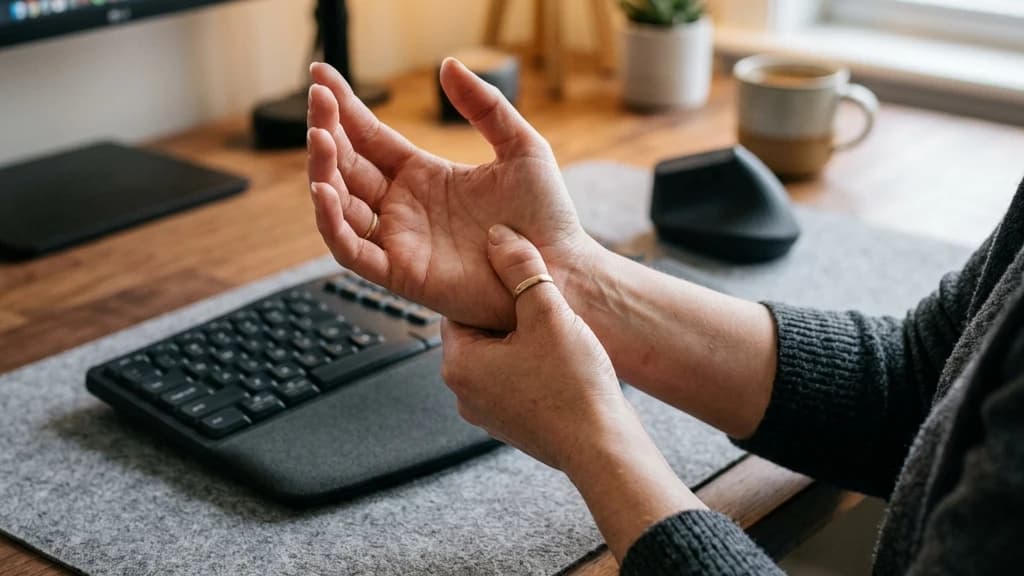
"A compressed median nerve is the physiological equivalent of stepping on a garden hose—flow is choked, signaling is delayed, and the hand eventually starts to wither."
If your hand feels like a collection of pins and needles being dumped onto a cold countertop, or if waking up in the night requires you to vigorously shake your hands to restore feeling, you are likely dealing with carpal tunnel compression. This common condition causes localized tingling, weakness, dynamic hand instability, and persistent discomfort in the thumb, index, and middle fingers.
Many individuals attempt to resolve this by wearing tight wrist wraps during work hours, or by performing heavy grip-strengthening exercises. While these actions feel productive, they often increase the pressure inside the narrow wrist canal. To find a lasting solution, you must relieve the pressure on the irritated nerve.
By utilizing targeted carpal tunnel syndrome nerve glides and optimizing your workstation setup, you can decompress the wrist canal, restore normal nerve conduction, and return to pain-free work.
The Anatomy of Wrist Decompression: The Narrow Canal
The carpal tunnel is a narrow, rigid passageway at the base of your palm. It is bordered by the carpal bones on the bottom and the tough transverse carpal ligament on top. Through this small, congested space pass nine flexor tendons (which control your fingers and wrist flexion) and the highly sensitive median nerve.
When your wrist is held in a bent position for long hours, the pressure inside this canal increases. This mechanical pressure squashes the blood vessels that supply the median nerve, leading to localized ischemia. This lack of blood flow is the primary trigger for the tingling and numbness you experience during repetitive hand work.
Orthopedic research and clinical nerve studies highlight the heavy mechanical load placed on the wrist during typing:
- Clinical statistics show that carpal tunnel syndrome affects up to 5% of the general adult population.
- Typing with bent wrists increases internal carpal tunnel pressure from a baseline of 10 mmHg to over 90 mmHg.
- Early clinical intervention (nerve glides and neutral splinting) resolves symptoms and prevents surgery in 70% of mild cases.
Over time, persistent compression can lead to permanent damage of the nerve's protective sheath. This can result in muscle wasting at the base of the thumb, making it difficult to perform simple tasks like buttoning a shirt or turning a doorknob. Early intervention is essential to prevent chronic hand weakness.
Why Generic Wrist Braces and Squeezing Exercises Fail
When hand numbness develops, many people buy tight, elastic wrist supports from local stores and wear them tightly while typing.
My decisive clinical opinion is that wearing tight, flexible wrist wraps or squeezing stress balls during a flare-up actively worsens carpal tunnel compression. Flexible wraps allow the wrist to bend while typing, while the elastic material puts direct pressure on the carpal ligament. Squeezing exercises force the finger tendons to swell, further compressing the median nerve.
To resolve the irritation, you must follow clinical wrist splinting guidelines. This means wearing a rigid splint that holds the joint in a neutral (straight) position, especially at night, and performing targeted median nerve decompression exercises. Night splinting is critical because most people naturally curl their wrists inward while sleeping, maintaining a high-pressure flexed position for hours that leads to severe morning stiffness and numbness.
The Patient: David, a 45-year-old software programmer, presented with severe hand numbness and tingling that woke him up three times a night.
The Mistake: David wore tight elastic wrist bands during the day and squeezed hand grippers, which worsened his hand numbness and finger weakness.
The Solution: We replaced his elastic bands with a rigid neutral night splint, set up ergonomic keyboards, and initiated daily nerve glides.
The Outcome: Within four weeks, David reported zero nighttime waking, resolved hand numbness, and comfortable, pain-free coding sessions.
Three Clinical Steps to Decompress and Glide Your Median Nerve
To reduce pressure inside the wrist canal and restore nerve health, perform these three targeted steps daily for effective hand numbness physical therapy:
-
1The Median Nerve Gliding Sequence Stand tall with your arm held straight out to the side at shoulder height, palm facing the floor. Slowly tilt your head away from your arm while bending your wrist back toward your forearm. Next, tilt your head toward your arm while relaxing your wrist. Smoothly alternate between these two positions 10 times. This slides the median nerve through the carpal tunnel without creating tension.
-
2Tendon Gliding Drills Hold your hand straight up. First, bend your fingers at the knuckles to make a flat tabletop shape. Second, curl your fingers into a loose fist. Third, extend your fingers out straight. Transition smoothly through these three positions 10 times. This mobilizes the finger tendons to prevent local adhesion and swelling in the wrist.
-
3Optimize Workstation Ergonomics Ensure your keyboard and mouse are positioned so your wrists remain in a neutral, straight alignment while typing. Avoid resting your wrists on hard desk edges or using soft gel wrist rests, as these put direct pressure on the carpal tunnel, a phenomenon known as contact stress. Using a split keyboard and a vertical mouse can help keep your forearms in a neutral handshake position, eliminating wrist twisting. Adjust your chair height so your elbows sit at a 90-degree angle. This is the cornerstone of effective wrist ergonomics for carpal tunnel management.
Decompress the Canal for Long-Term Relief
Restoring nerve mobility and keeping your wrists in a neutral position are key steps in resolving carpal tunnel discomfort.
To optimize your full office workspace, read our comprehensive ergonomic setup guide for remote workers. If you are experiencing upper spine pain, see our guide on cervical spine alignment loads. For systemic stress relief, explore our recommendations for managing Vata imbalance.
Ultimately, combining rigid night splinting with daily nerve gliding is a highly effective way to relieve median nerve compression and restore your hand health.
Irushi Abeywardhana
Senior Physiotherapist & Founder of Physio Pulse. Senior Clinical Physiotherapist passionate about blending advanced movement science with functional resilience.
Medical Disclaimer
The information provided by AyurPhysio is for general educational and informational purposes only. It is not intended as a substitute for professional medical advice, diagnosis, or treatment. Always seek the advice of your physician or other qualified health providers with any questions you may have regarding a medical condition. Never disregard professional medical advice or delay in seeking it because of something you have read on this website.
Trending Guides
George Washington's Fatal Bloodletting: An Ayurvedic Reconstruction of Rakta Dhatu Depletion and Ojas Collapse
8 min readJack Grealish's stress fracture of the foot: Soccer Biomechanics, Fifth Metatarsal Load, and Surgical Rehab
8 min readBen White's Severe Knee Injury: A Biomechanical Analysis of Lateral Meniscus Shear and Joint Longevity
8 min readElly De La Cruz's Hamstring Strain: The Biomechanics of Sprint Deceleration
8 min readTotal Knee Replacement (TKR): Post-Op Protocols for Restoring Extension
9 min readWeekly Wellness
Don't miss the next guide
Join 5,000+ subscribers getting holistic health tips every Tuesday.
Related Healing Guides
View All Guides →
Total Knee Replacement (TKR): Post-Op Protocols for Restoring Extension
The Gluteus Medius Connection: Preventing Lumbar Compensation