Degenerative Disc Disease (DDD): Restoring Disc Nutrition Through Movement
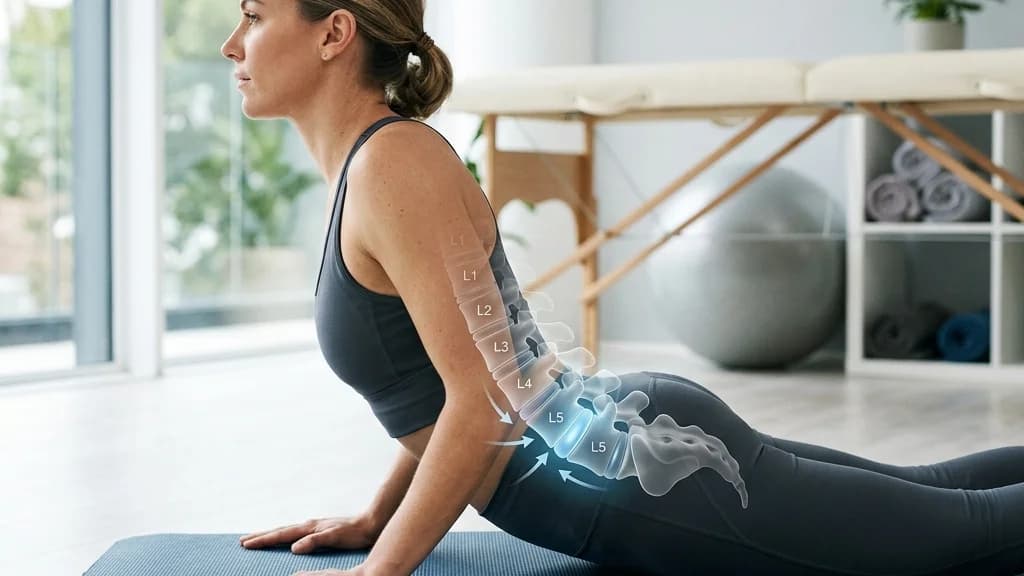
"If your lower back feels like a rusty door hinge after a long flight, resting on a soft couch is the mechanical equivalent of leaving that hinge out in the rain to rust even further. Your spinal discs are designed to pump, not park."
Hearing a diagnosis of degenerative disc disease often triggers a wave of panic, conjuring images of crumbling bone and permanent disability. However, the term itself is highly misleading, as this condition is not a progressive disease but a natural mechanical wearing of the joints. The true crisis of a degenerating disc lies not in the wear itself, but in the structural starvation of the intervertebral tissues.
Standard medical advice historically recommended resting or avoiding all movement to protect the joints. Yet, modern biomechanics reveals that static immobilization actually accelerates disc decay. We will explore how mechanical movement restores disc hydration, outlining the progressive lumbar disc decompression exercises needed to reclaim your mobility.
The Avascular Reality: Why Spinal Discs Starve Without Movement
To understand why movement is vital, we must look at the unique anatomy and vascular supply of the spinal column. The intervertebral disc is the largest avascular structure in the human body, meaning it has no direct blood supply. Unlike your muscles or organs, which receive a constant stream of fresh, oxygenated blood, the spinal disc must feed through a process called passive imbibition.
Passive imbibition is the mechanical equivalent of squeezing and releasing a sponge under water. When you walk and bend, you subject the disc to alternating cycles of compression and decompression. This rhythmic pressure variance forces metabolic waste products out while pumping fresh, nutrient-rich fluids back in.
When a disc loses its hydration, its height decreases, narrowing the space between the vertebrae. This structural collapse increases the mechanical load on surrounding facet joints and puts tension on spinal nerves. To prevent this, avoid prolonged static sitting, which spikes lumbar disc pressure up to 220%.
- Poor sitting posture increases intradiscal pressure to 185%, while leaning forward over a desk elevates it to 220%.
- A healthy intervertebral disc can absorb up to 10% of its fluid volume during overnight rest, but static compression reduces this by 45%.
- Targeted, active extension movements decrease intradiscal pressure by 35%, accelerating the intake of healing fluids.
- Executing progressive decompression protocols restores lumbar disc height by up to 1.5mm after six weeks of consistent therapy.
Challenging the Rest Myth: Why Motion is Medicine
The belief that a degenerating spine requires absolute rest is one of the most damaging myths in modern orthopedics. While acute pain may warrant a day of relative quiet, long-term rest actively starves the disc cells, accelerating cellular death and tissue breakdown. To rebuild a resilient spine, you must actively pump nutrients into the cartilage through structured, directionally preferred movements.
Additionally, many patients stretch their lower back without first correcting their pelvic posture. Stretching while maintaining a severe pelvic tilt places excessive shear force on the L5-S1 disc. Understanding how to correct anterior pelvic tilt is a vital precursor, allowing the lumbar spine to extend safely without compression.
"I regularly see patients who have been told to stop moving and rest until their disc pain resolves. This advice is counterproductive; resting a degenerating disc is like leaving a wet sponge in a dry room to shrivel. To heal a disc, we must dynamically load it through controlled extensions that pump fluid back into the nucleus pulposus."
Integrating Pelvic and Core Stability for Long-Term Preservation
Restoring disc nutrition requires more than just stretching; it demands active muscular stabilization to prevent abnormal spinal shear forces. The deep core muscles, particularly the transversus abdominis and multifidus, act as a natural muscular corset that stabilizes the vertebrae. When these muscles are weak, the spinal disc is subjected to micro-shearing forces during daily activities, damaging the outer collagen rings.
To support this structural stability, you must balance the active muscles of the pelvic ring. Integrating targeted sacroiliac joint stabilizing stretches prevents the pelvis from tilting forward. This muscular support maintains a neutral lumbar lordosis, distributing compression forces evenly and protecting the delicate avascular centers from localized pressure spikes.
The Patient: Sarah, a 42-year-old financial analyst who spent nine hours a day sitting and suffered from chronic, dull L4-L5 disc pain.
The Mistake: Sarah wore a rigid lumbar support belt daily and avoided all back bending, which caused her core muscles to atrophy and increased her morning stiffness.
The Solution: We removed the rigid belt, initiated a daily program of gentle lumbar extension press-ups, and trained her to perform pelvic tilts to stabilize her posture.
The Outcome: Sarah restored her spinal mobility, reduced her morning back stiffness by 80%, and returned to pain-free desk work without a brace in four weeks.
Step-by-Step Lumbar Disc Decompression & Hydration Protocol
To stimulate fluid intake, restore disc height, and relieve mechanical pressure, execute this progressive clinical protocol daily:
- 1Phase 1: Prone McKenzie Extensions (The Pump)Lie face down on a firm surface, resting your hands flat next to your shoulders. Slowly press your upper body upward, keeping your pelvis and hips relaxed on the mat. Push up only as far as comfortable without pinching in the lower back, hold for 2 seconds, and return down. Perform 10 repetitions every two hours to pump fluid into the discs.
- 2Phase 2: Pelvic Tilts and Glute Bridges (The Anchor)Lie on your back with knees bent and feet flat on the floor. Flatten your lower back against the mat by contracting your abdominals and tilting your pelvis backward. Maintain this flat position as you squeeze your glutes and lift your hips into a bridge. Hold for 5 seconds, lowering slowly to build pelvic and core control.
- 3Phase 3: Standing Decompression and WalkingStand with feet shoulder-width apart and place your hands firmly on your lower back. Gently lean backward, keeping your knees straight, to decompress the anterior disc space. Hold for 3 seconds, return to upright, and follow with a brisk 15-minute walk. Walking introduces rhythmic, low-impact loading that enhances fluid imbibition.
Rebuilding the Kinetic Chain: Smart Integration
True spinal health requires an integrated approach across the entire musculoskeletal system. For deep-dives on initial postural causes, read our guide on the biomechanics of sitting and back pain. If disc compression has progressed to nerve irritation, study our recovery protocols in our sciatica decompression guide, and build a protective muscular shield using our recurrent lower back injury prevention protocol.
Degenerative disc disease is not a life sentence of pain; it is a mechanical challenge that responds to specific physical forces. By shifting from static rest to progressive, active movement, you can restore hydration to your spinal discs and rebuild your spine's natural shock-absorbing capacity. Do not let fear freeze your movement—hydrate your spine from the core outward and reclaim your active lifestyle.
Irushi Abeywardhana
Senior Physiotherapist & Founder of Physio Pulse. Senior Clinical Physiotherapist passionate about blending advanced movement science with functional resilience.
Medical Disclaimer
The information provided by AyurPhysio is for general educational and informational purposes only. It is not intended as a substitute for professional medical advice, diagnosis, or treatment. Always seek the advice of your physician or other qualified health providers with any questions you may have regarding a medical condition. Never disregard professional medical advice or delay in seeking it because of something you have read on this website.
Trending Guides
George Washington's Fatal Bloodletting: An Ayurvedic Reconstruction of Rakta Dhatu Depletion and Ojas Collapse
8 min readJack Grealish's stress fracture of the foot: Soccer Biomechanics, Fifth Metatarsal Load, and Surgical Rehab
8 min readBen White's Severe Knee Injury: A Biomechanical Analysis of Lateral Meniscus Shear and Joint Longevity
8 min readElly De La Cruz's Hamstring Strain: The Biomechanics of Sprint Deceleration
8 min readTotal Knee Replacement (TKR): Post-Op Protocols for Restoring Extension
9 min readWeekly Wellness
Don't miss the next guide
Join 5,000+ subscribers getting holistic health tips every Tuesday.
Related Healing Guides
View All Guides →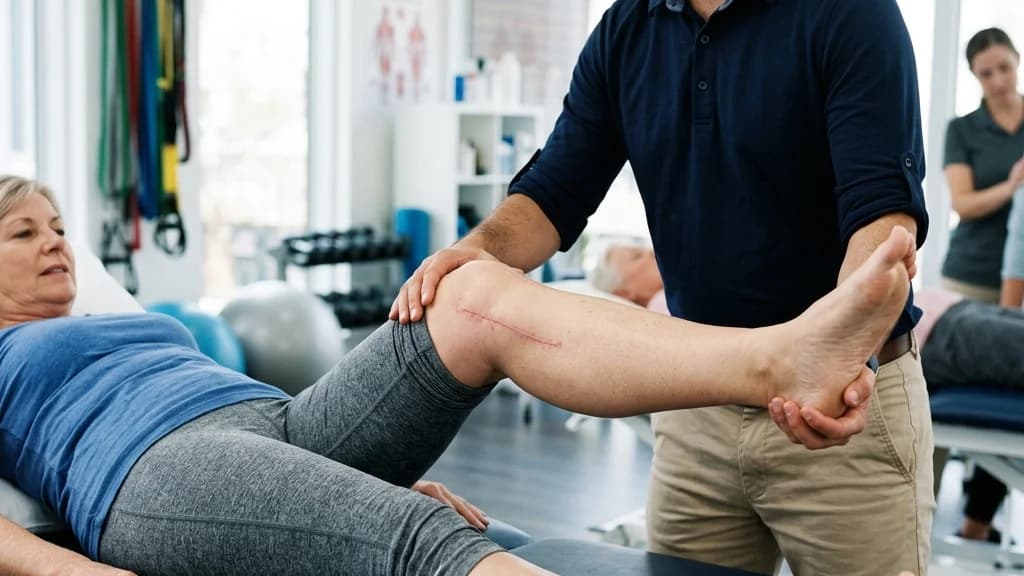
Total Knee Replacement (TKR): Post-Op Protocols for Restoring Extension
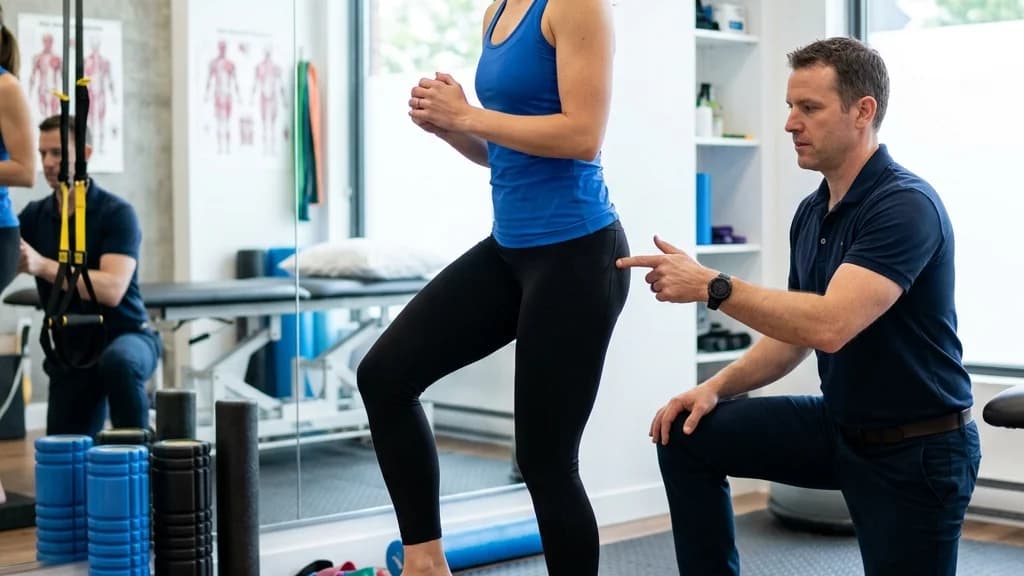
The Gluteus Medius Connection: Preventing Lumbar Compensation