Forward Head Posture: Regaining Cervical Lordosis Through Exercise
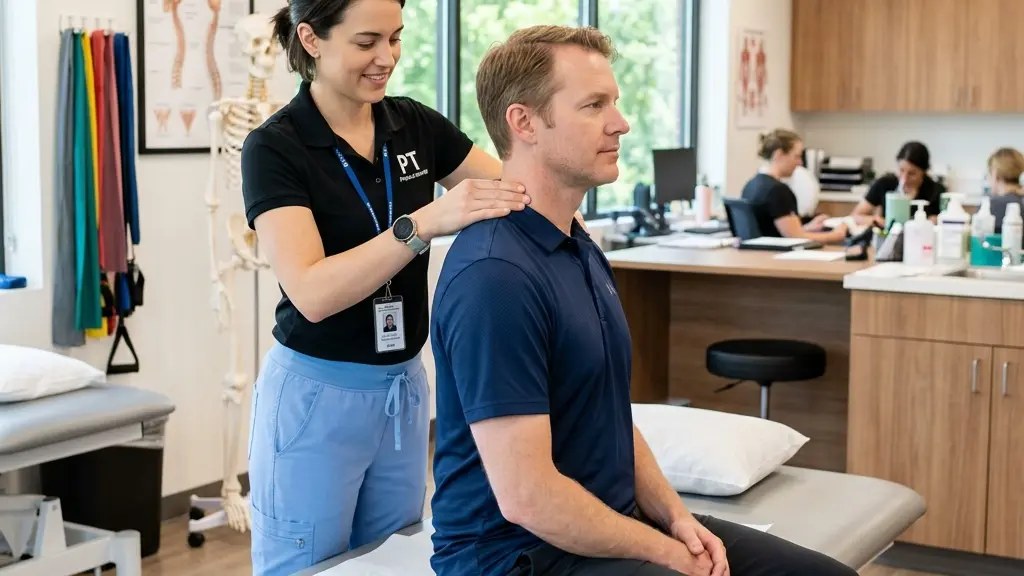
"If your head feels like a heavy bowling ball balanced precariously on a thin toothpick, your cervical spine is carrying a crushing mechanical load. Trying to force your neck back with passive braces is like trying to straighten a collapsing tower by wrapping it in thin duct tape."
If your neck feels like a collection of rusted iron clamps tightening at the base of your skull, or if staring at a screen for an hour triggers a dull, radiating ache behind your eyes, you are likely dealing with cervical misalignment. This common condition results in chronic stiffness, fatigue, and persistent discomfort that impacts your daily focus.
Many individuals attempt to resolve this by purchasing soft neck pillows or using posture support straps that pull the shoulders back. While these devices seem helpful, they do not address the deep muscle weaknesses that allow the head to drift forward. To find lasting relief, you must actively train your neck to support itself.
By utilizing targeted forward head posture exercises and focused mobilization techniques, you can naturally restore your natural spinal curve, release locked muscles, and regain healthy cervical alignment.
The Biomechanics of Cervical Lordosis: The Forward Drift
Your neck is designed to have a natural C-shaped curve pointing forward, a structural alignment known as cervical lordosis. This curve acts as a natural shock absorber, distributing the weight of your head evenly across the cervical vertebrae and surrounding discs.
When you hunch over a phone or lean forward toward a computer monitor, the lower neck flexes forward while the upper neck extends to keep your eyes horizontal. This forward drift places massive shear forces on the lower cervical vertebrae, accelerating disc wear and compressing local nerves.
Biomechanical research and clinical posture audits highlight the heavy mechanical loads placed on the neck as the head drifts forward:
- Clinical measurements show that a healthy, neutral cervical lordosis curve should measure between 30 to 40 degrees.
- For every 1 inch your head drifts forward from your shoulders, an additional 10 lbs of mechanical load is placed on your cervical spine.
- A 60-degree forward head tilt spikes the total weight supported by your neck to a crushing 60 lbs of continuous tension.
Over time, holding this forward position leads to permanent structural changes. The muscles at the back of your skull become hyperactive and short, while the deep stabilizing muscles at the front of your neck stretch out and weaken. This muscle imbalance locks you into a forward slump.
Why Passive Posture Braces and Stretching Fail
When neck pain flares up, many patients buy elastic posture supports online, hoping these straps will pull their spine back into a healthy alignment.
My decisive clinical opinion is that relying on passive posture straps or rigid collars actively worsens your forward head alignment. These external supports act as training wheels, taking over the job of your muscles and allowing your deep neck stabilizers to weaken further. Once you remove the strap, your head slumps forward even more because the supporting muscles have atrophied.
To resolve the issue, you must establish active motor control. This means learning how to restore cervical lordosis by strengthening the deep neck stabilizers and releasing the tight muscles at the base of your skull. Relying on passive devices will only prolong your recovery and weaken your spine.
The Patient: Mark, a 38-year-old software engineer, presented with severe neck stiffness, daily tension headaches, and an obvious forward head posture.
The Mistake: Mark used a rigid neck collar to rest his neck and performed aggressive backward stretching, which hyper-extended his lower cervical joints and increased his headaches.
The Solution: We stopped the use of the collar, initiated targeted suboccipital releases, loaded his deep neck flexors, and set up an active workstation.
The Outcome: Within six weeks, Mark restored 10 degrees of his cervical curve, eliminated his daily tension headaches, and returned to pain-free coding.
Three Clinical Steps to Correct Forward Head Posture
To reduce mechanical load on your lower neck and rebuild healthy cervical spine alignment posture, perform these three targeted steps daily:
-
1Perform a Suboccipital Release Stretch Lie on your back with a firm massage ball or peanut roller placed directly under the base of your skull, just above your neck. Relax your weight onto the ball and slowly tuck your chin downward, feeling a deep release in the tight muscles at the top of your neck. Hold this position for 2 to 3 minutes while breathing deeply. This is the foundation of a targeted suboccipital release stretch that opens the compressed upper cervical joints.
-
2Initiate Deep Neck Flexor Strengthening Sit up straight with your shoulders relaxed. Place your fingers on your chin and gently pull your head straight back, as if making a double chin. Avoid tilting your head down; keep your eyes focused straight ahead. Hold this contraction for 5 seconds, then release. Repeat this sequence 10 to 15 times per set. This isolated movement activates the weak, lengthened muscles at the front of your throat, providing essential deep neck flexor strengthening.
-
3Mobilize the Thoracic Spine Place a foam roller horizontally across your mid-back while lying on your back with knees bent. Support your head with both hands, keep your hips on the floor, and gently arch your upper back over the roller. Hold for 5 seconds, then roll slightly up or down to target different vertebrae. Perform 10 extensions daily to reverse the upper back hunch that forces your neck forward.
Decompress Your Cervical Spine for Long-Term Relief
Actively rebuilding your neck stabilizers and maintaining thoracic mobility are the most effective ways to reverse a chronic head slump.
To understand how mobile screens impact your spine, read our detailed guide on understanding text neck syndrome. If you are suffering from severe headaches, see our targeted drills for deep neck flexor strengthening for cervicogenic headaches. To optimize your computer workstation setup, read our complete ergonomic setup guide for remote workers.
But as you restore the curve in your neck, how are your habits during sleep affecting your spinal alignment overnight?
Irushi Abeywardhana
Senior Physiotherapist & Founder of Physio Pulse. Senior Clinical Physiotherapist passionate about blending advanced movement science with functional resilience.
Medical Disclaimer
The information provided by AyurPhysio is for general educational and informational purposes only. It is not intended as a substitute for professional medical advice, diagnosis, or treatment. Always seek the advice of your physician or other qualified health providers with any questions you may have regarding a medical condition. Never disregard professional medical advice or delay in seeking it because of something you have read on this website.
Trending Guides
George Washington's Fatal Bloodletting: An Ayurvedic Reconstruction of Rakta Dhatu Depletion and Ojas Collapse
8 min readJack Grealish's stress fracture of the foot: Soccer Biomechanics, Fifth Metatarsal Load, and Surgical Rehab
8 min readBen White's Severe Knee Injury: A Biomechanical Analysis of Lateral Meniscus Shear and Joint Longevity
8 min readElly De La Cruz's Hamstring Strain: The Biomechanics of Sprint Deceleration
8 min readTotal Knee Replacement (TKR): Post-Op Protocols for Restoring Extension
9 min readWeekly Wellness
Don't miss the next guide
Join 5,000+ subscribers getting holistic health tips every Tuesday.
Related Healing Guides
View All Guides →
Total Knee Replacement (TKR): Post-Op Protocols for Restoring Extension
The Gluteus Medius Connection: Preventing Lumbar Compensation