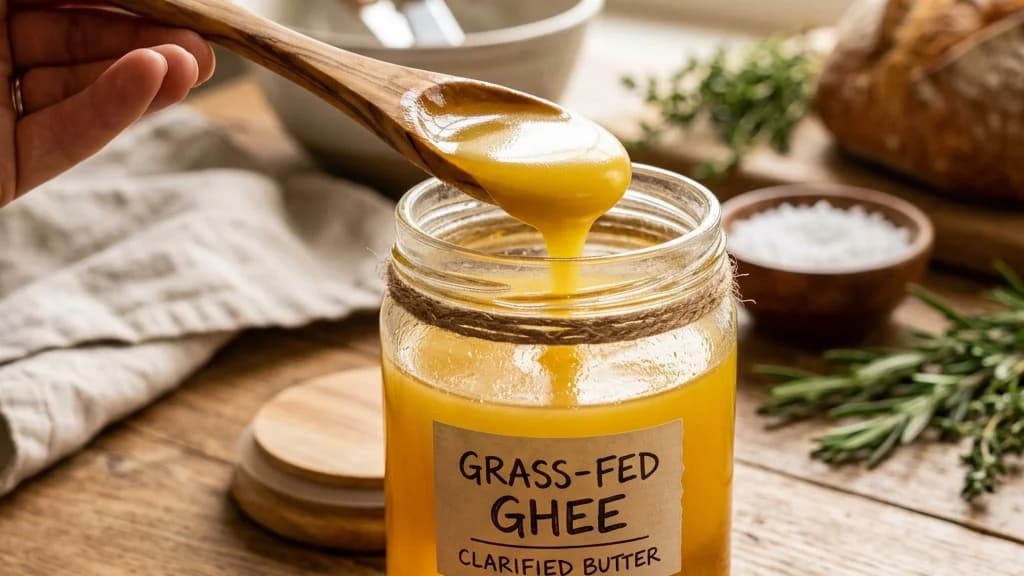
“Like a drop of oil spreading across a dry autumn leaf, pure ghee permeates the cellular barriers, lubricating the channels of life and soothing the agitated wind of Vata.”
If you experience persistent dry skin, cracking joints, and sudden spikes of anxiety in the late afternoon, you are dealing with the classic symptoms of Vata depletion. In modern wellness spaces, fats are often treated with suspicion, replaced by oil-free products and restrictive diets.
However, classical Ayurveda holds a completely opposite view, crowning grass-fed ghee (clarified butter) as the ultimate therapeutic substance. It is not merely an ingredient; it is a vital carrier that helps **nourish body tissues with ghee** at the deepest metabolic level.
Known as the "golden nectar" of cellular healing, ghee possesses the unique ability to penetrate the lipid membranes of your body. In this clinical guide, we will explore the science of ghee in **ghee in ayurvedic medicine**, examine its impact on the digestive fire (Agni), and outline how to use it daily to support your **vata balancing dinacharya**.
The Science of Clarification: Why Ghee is Different
Unlike butter, which contains water, milk solids, and proteins, ghee is pure butterfat. By simmering butter slowly, we evaporate the moisture and caramelize the lactose and casein, which are then strained out.
This process leaves behind a highly stable lipid structure that does not go rancid easily and boasts a very high smoke point. More importantly, it yields a rich source of butyric acid, a short-chain fatty acid that serves as the primary fuel for your gut lining.
Because it is free of milk solids, most lactose-sensitive individuals can digest it without issue. Its light, warm, and sweet qualities make it the perfect vehicle (Anupana) for transporting fat-soluble herbal compounds deep into your organs.
- ✦ Ghee contains approximately 8% lower chain fatty acids, which are absorbed directly by the liver for instant energy without causing arterial plaque.
- ✦ Grass-fed ghee has a high smoke point of 485°F (252°C), preventing the formation of toxic free radicals during high-heat cooking.
- ✦ Clinical studies show that medicated ghee increases the bioavailability of fat-soluble herbal active compounds by up to 300% compared to raw water extracts.
- ✦ For deep oleation (Snehana), clinical Panchakarma protocols utilize progressive doses of 30ml to 150ml of ghee daily to bind and extract deep lipophilic toxins.
Stoking the Flame: Kindling Agni Without the Burn
In Ayurveda, your digestive fire (Agni) is the master regulator of health. If your Agni is weak, you create a sticky metabolic residue called Ama.
Many spices and heating substances kindle Agni but also aggravate Pitta (heat), causing acid reflux and inflammation. Ghee is unique: it stokes Agni while cooling and soothing the mucous membranes of the gut.
Adding a teaspoon of ghee to your meals is like adding a slow-burning hardwood log to a flickering campfire. It provides steady, long-lasting energy that keeps your metabolism active without burning out your tissues.
The Myth of Low-Fat Wellness
My strong clinical opinion is that modern low-fat diets are a primary driver of chronic Vata disorders, including premature joint degeneration, chronic dry skin, and nervous system depletion. The brain is 60% fat, and your nerves require lipid insulation to conduct signals smoothly.
Attempting to treat these issues by simply drinking more water or applying moisturizers is useless. You must lubricate the body from the inside out using grass-fed organic ghee. Ghee serves as the primary **how to use ghee for healing** agent, nourishing your Asthi (bone) and Majja (nerve) tissues directly.
If you want to understand how Agni dictates your overall health and immunity, read our comprehensive guide on nourishing your digestive fire (Agni).
Consume one teaspoon of warm ghee on an empty stomach first thing in the morning. This simple habit stimulates bile secretion, lubricates the digestive tract, and helps clear overnight metabolic accumulation, making it an essential element of a **vata balancing dinacharya**.
By cooking herbs directly in ghee, we create a potent medicine. Ashwagandha ghee strengthens weak muscles and joints, while Brahmi ghee crosses the blood-brain barrier to calm an overactive mind and clear brain fog.
Practical Applications of Ghee in Daily Life
To experience the profound **ayurvedic ghee benefits**, integrate it into your daily routine. Melt a teaspoon of ghee over warm cooked grains, lentils, or roasted vegetables to make them easier to digest.
If you suffer from dry nasal passages or seasonal allergies, apply a drop of warm ghee to the inside of your nostrils (Pratimarsha Nasya) to protect the membranes. For dry, tired eyes from screen use, apply a tiny smear of sterile ghee to your eyelids before bed to restore moisture.
These simple practices help soothe Vata and protect your body's vital essence (Ojas). By feeding your cells the high-quality lipids they need, you build lasting resilience.
👤 Patient Spotlight: Clara's Joint Rejuvenation
The Patient: Clara, a 52-year-old postmenopausal woman, suffered from severe knee cracking (crepitus), chronic dry skin, and mild insomnia.
The Mistake: Clara followed an oil-free, raw-food diet for six months to lose weight, which severely aggravated Vata, drying out her joints and nervous system.
The Solution: We stopped her raw food diet, introduced warm cooked foods, and prescribed one teaspoon of organic grass-fed ghee with warm water in the morning, alongside Ashwagandha ghee at night.
The Outcome: Within four weeks, her knee cracking reduced by 80%, her skin regained its natural luster, and she slept soundly through the night, proving the power of lipophilic tissue nourishment.
Nourishing the Roots of Health
Your body requires high-quality fuel and lubrication to function smoothly. By replacing dry, sterile diets with the nourishing warmth of pure ghee, you feed your Agni and support your cells. To learn how to structure this lubrication into your morning routine, read our guide on the Ayurvedic daily routine (Dinacharya). To understand how to clear existing metabolic waste before starting oleation, read our guide on Understanding Ama and Inflammation.
Ghee is not a modern health fad; it is an ancient, time-tested elixir that bridges the gap between nutrition and medicine. By incorporating it into your cooking and daily self-care, you can protect your joints and calm your mind. Let this golden nectar kindle your inner fire and bring lasting balance to your life.
Dr. Dhanushika Dilshani
Expert Ayurvedic Wellness Doctor. Specialized in modern holistic wellness, optimizing dermal resilience, cosmetic radiance, and systematic diagnosis driven by traditional and evidence-based medical logic.
Medical Disclaimer
The information provided by AyurPhysio is for general educational and informational purposes only. It is not intended as a substitute for professional medical advice, diagnosis, or treatment. Always seek the advice of your physician or other qualified health providers with any questions you may have regarding a medical condition. Never disregard professional medical advice or delay in seeking it because of something you have read on this website.
Trending Guides
Clinical Audit: The Best Knee Unloader Braces for Osteoarthritis & Joint Compartment Unloading (2026 Ratings)
10 min readUsain Bolt's Elite Sprinting with Scoliosis: A Biomechanical Breakdown of Asymmetrical Kinetic Chain Compensation and Hamstring Strain Risk
8 min readRetrolisthesis: Understanding Posterior Vertebral Slippage and Rehab
6 min readQuadratus Lumborum Trigger Points: The Secret Driver of Deep Hip Pain
7 min readNerve Flossing Techniques for Sciatic Nerve Mobilization
6 min readWeekly Wellness
Don't miss the next guide
Join 5,000+ subscribers getting holistic health tips every Tuesday.
Related Healing Guides
View All Guides →
The Six Tastes of Ayurveda: Balancing Your Diet Beyond Calories
Plantar Fasciitis: Combining Foot Abhyanga (Padabhyanga) with Calf Eccentric Stretches