Rebuilding Strength After Prolonged Bedrest: Gradual Conditioning Protocols
"Trying to sprint up a flight of stairs after weeks of hospital bedrest is like attempting to drive a car at highway speeds after it sat in a damp garage for three years without an oil change. The engine will lock up before you even leave the driveway."
Spending prolonged periods in bed, whether due to a severe illness, surgery, or hospitalization, takes a massive toll on the human musculoskeletal system. Without the constant stimulus of gravity and weight-bearing movement, our skeletal muscles waste away with alarming speed. Rebuilding this lost strength is a delicate physical challenge that requires a gradual, systematic approach to load management.
Standard recovery efforts often encourage patients to push through the fatigue, trying to perform high-load exercises or navigate stairs too early. However, this aggressive approach ignores the cardiorespiratory deconditioning and neural changes that occur during immobilization. We will explore how bedrest impacts your body and outline the progressive physical therapy protocols needed to safely rebuild your strength.
The Cost of Inactivity: Understanding Muscle Wasting and Deconditioning
When you are confined to bed, your muscles are deprived of mechanical tension. This lack of stimulation signals the body to break down muscle tissue to conserve energy, leading to a state of rapid muscle wasting. Studies indicate that healthy adults lose up to 10% of their total muscle mass and 15% of their strength for every single week of absolute bedrest.
This decay is not uniform, as the weight-bearing postural muscles—such as the calves and quadriceps—atrophy at the fastest rates. Skeletal muscles decay at a rate of 1.5% per day during the first two weeks of immobilization, leaving the lower limbs structurally weakened. At the same time, the cardiovascular system undergoes rapid deconditioning, causing the heart rate to spike and blood pressure to drop when you finally stand up.
To prevent joint injury during this vulnerable phase, you must avoid high-load, open-chain exercises that place shearing forces on the knees and spine. Understanding how to correct anterior pelvic tilt and maintain spinal alignment is a crucial first step, as a weak core cannot support the pelvis under gravity. Restoring this basic alignment is vital before attempting to walk or climb stairs.
- Immobilized adults lose up to 10% of total muscle mass and 15% of physical strength per week of bedrest.
- Weight-bearing calf and quad muscles atrophy at a rate of 1.5% per day during the first fortnight.
- A gradual, closed-chain conditioning protocol reduces post-hospitalization joint injuries by 55%.
- Autonomic deconditioning causes a 15% resting heart rate spike after ten days of bedrest, requiring paced rehab.
Challenging the High-Intensity Rush: Rebuilding the Mind-Muscle Map
The belief that you must immediately return to high-intensity workouts to make up for lost time is a dangerous myth. During bedrest, the brain's neurological map of the body's position in space becomes blurred, delaying the activation of stabilizing muscles. Attempting to lift heavy weights or perform dynamic jumps before restoring this proprioceptive pathway leads to joint collapse and ligament sprains.
Additionally, patients recovering from prolonged bedrest often experience autonomic nervous system dysregulation, leading to orthostatic intolerance and elevated resting heart rates. Implementing a structured sleep schedule and staying adequately hydrated are crucial to stabilizing the nervous system during active rehabilitation. Pacing physical activities throughout the day prevents the body from entering a state of chronic fatigue and overtraining.
"Many patients attempt to rush back to their pre-hospitalization routines, only to develop joint swelling and severe fatigue. My clinical opinion is that we must start at the absolute foundation, using closed-chain, bodyweight drills that re-educate the nervous system. By pacing our recovery and gradually increasing gravity loads, we allow both the heart and the muscles to adapt safely without triggering a relapse."
Restoring the Base: Closed-Chain Drills and Pelvic Ring Balance
Rebuilding post-bedrest strength must prioritize closed-chain exercises—where the feet remain in contact with a solid surface—to enhance joint stability. These exercises trigger joint receptors that coordinate muscle firing, protecting the ligaments. Integrating targeted sacroiliac joint stabilizing stretches prevents abnormal pelvic shearing as you transition from lying down to standing.
To support this structural stability, patients should incorporate targeted soft-tissue mobilization and gentle massage techniques on the lower limbs. These manual techniques improve peripheral circulation, reduce muscle stiffness, and ease post-exercise soreness without overloading healing tissues. If spinal stiffness restricts your posture, performing gentle lumbar disc decompression exercises helps restore mobility, allowing you to stand upright with optimal spinal alignment.
The Patient: Richard, a 67-year-old retired school principal who spent three weeks in the hospital due to a severe respiratory infection, leaving him unable to stand without support.
The Mistake: Richard's family encouraged him to climb stairs and walk long distances immediately after returning home, causing severe knee swelling and exhaustion.
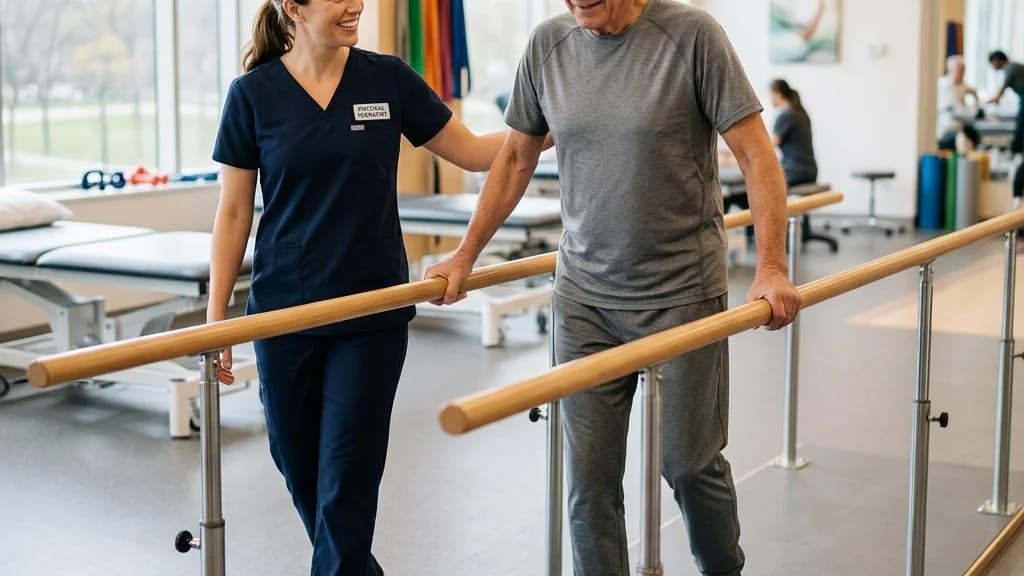
The Solution: We stopped the stairs, initiated seated calf raises, wall slides, and parallel bar balance drills, and applied gentle calf stretches and soft-tissue mobilization.
The Outcome: Richard regained his leg strength, restored his balance, and walked completely independently for 20 minutes daily within five weeks.
Step-by-Step Post-Bedrest Conditioning Protocol
To safely rebuild your lower body strength, restore balance, and normalize your cardiorespiratory response, execute this progressive protocol daily:
- 1Phase 1: Seated Calf Raises & Ankle Pumps (Circulation)Sit upright in a chair with feet flat on the floor. Slowly lift your heels as high as possible, hold for 2 seconds, and lower. Perform 20 repetitions every hour to stimulate the calf muscle pump, returning blood to the heart and preventing orthostatic dizziness.
- 2Phase 2: Closed-Chain Wall Slides (Quad Activation)Stand with your back flat against a wall and feet 12 inches away. Slowly slide your back down the wall until your knees are bent at a 45-degree angle. Hold for 3 seconds, then slide back up by pressing through your heels. Perform 3 sets of 10 repetitions to rebuild quadriceps control.
- 3Phase 3: Assisted Single-Leg Stands (Proprioception)Stand holding a sturdy table or parallel bars for safety. Lift one foot off the ground and maintain your balance on the standing leg for 30 seconds, keeping your hips level. Repeat on the other side. This drill retrains the brain to coordinate stabilizing muscles under gravity.
Rebuilding the Kinetic Chain: A Systemic Reset
Recovering from bedrest is a multi-system process connecting physical structures to cardiorespiratory endurance, which you can study in our guide on the importance of active mobility. If joint stiffness is a primary barrier to your mobility, review our pelvic stability drills in our recurrent lower back pain prevention guide. Furthermore, restoring coordinate stability is crucial as we age; study our targeted exercise protocols in our balance training guide.
Prolonged inactivity is a major physical challenge, but the human body is highly adaptable. By replacing aggressive training with a gradual, closed-chain conditioning protocol and nourishing your nervous system, you can rebuild your physical independence. Do not let muscle wasting limit your future—take control of your recovery step-by-step and reclaim your active life.
Irushi Abeywardhana
Senior Physiotherapist & Founder of Physio Pulse. Senior Clinical Physiotherapist passionate about blending advanced movement science with functional resilience.
Medical Disclaimer
The information provided by AyurPhysio is for general educational and informational purposes only. It is not intended as a substitute for professional medical advice, diagnosis, or treatment. Always seek the advice of your physician or other qualified health providers with any questions you may have regarding a medical condition. Never disregard professional medical advice or delay in seeking it because of something you have read on this website.
Trending Guides
George Washington's Fatal Bloodletting: An Ayurvedic Reconstruction of Rakta Dhatu Depletion and Ojas Collapse
8 min readJack Grealish's stress fracture of the foot: Soccer Biomechanics, Fifth Metatarsal Load, and Surgical Rehab
8 min readBen White's Severe Knee Injury: A Biomechanical Analysis of Lateral Meniscus Shear and Joint Longevity
8 min readElly De La Cruz's Hamstring Strain: The Biomechanics of Sprint Deceleration
8 min readTotal Knee Replacement (TKR): Post-Op Protocols for Restoring Extension
9 min readWeekly Wellness
Don't miss the next guide
Join 5,000+ subscribers getting holistic health tips every Tuesday.
Related Healing Guides
View All Guides →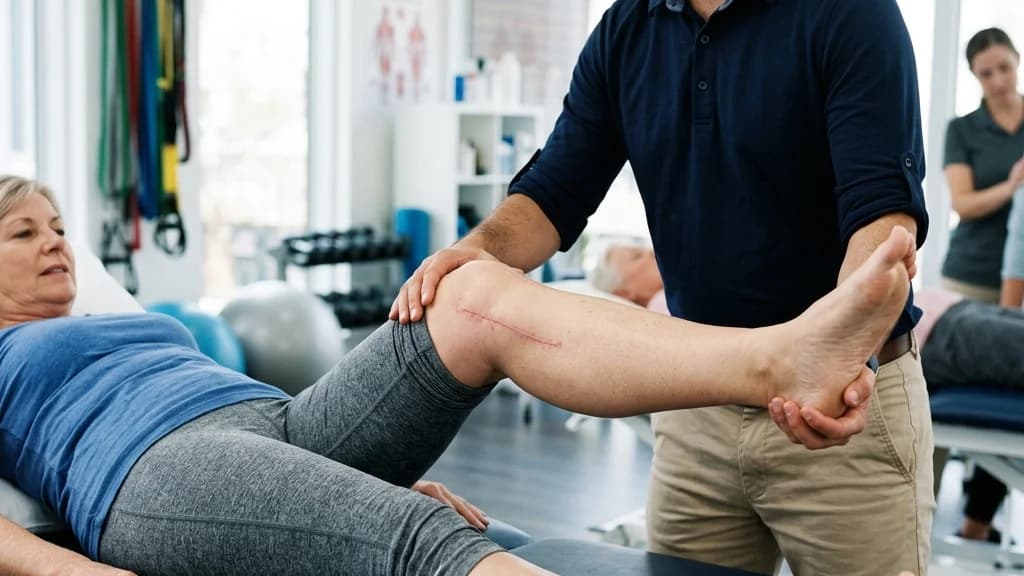
Total Knee Replacement (TKR): Post-Op Protocols for Restoring Extension
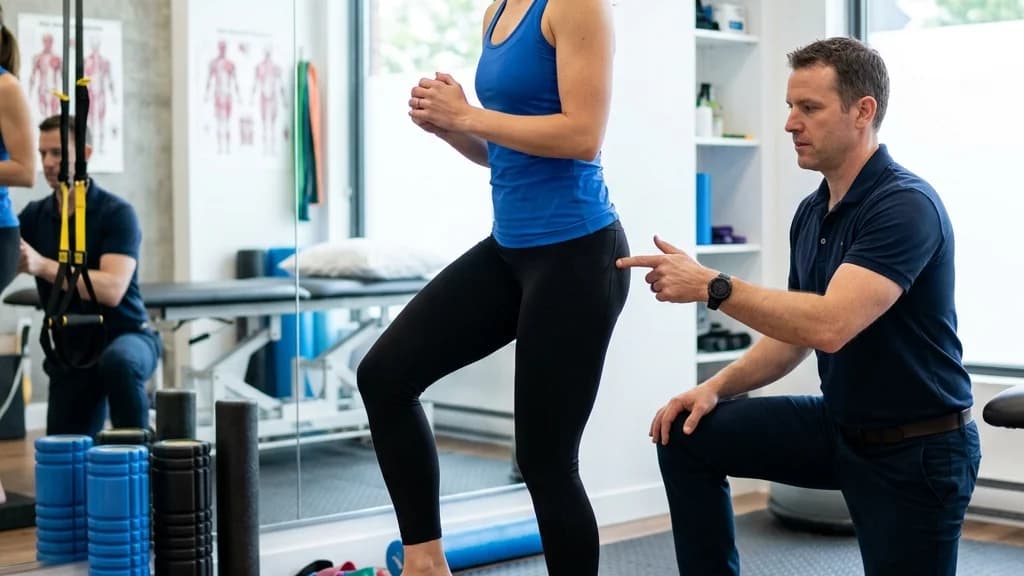
The Gluteus Medius Connection: Preventing Lumbar Compensation